

Survival Gear Outdoors: The Complete Beginner System for Safe Camping & Emergency Preparedness
Survival Gear Outdoors: Complete Beginner Guide for Camping & Emergencies
Imagine you set out for a simple weekend hike. The weather is clear, your route feels familiar, and your backpack is light. But by late afternoon, fog rolls in, trails blur, and your phone battery dies faster than expected. Suddenly, a “quick outdoor trip” turns into a situation where shelter, warmth, and basic survival skills matter more than anything you packed.
This is where survival gear outdoors stops being optional and becomes a system of priorities—not random equipment. The goal is not to carry everything, but to carry the right tools that protect you in the real order of survival needs: shelter, water, fire, signaling, and first aid.
This guide breaks survival gear into a practical system so beginners can confidently build kits for camping, hiking, travel, and emergency preparedness.
Quick Start: The 10 Essential Survival Gear Items Every Beginner Needs
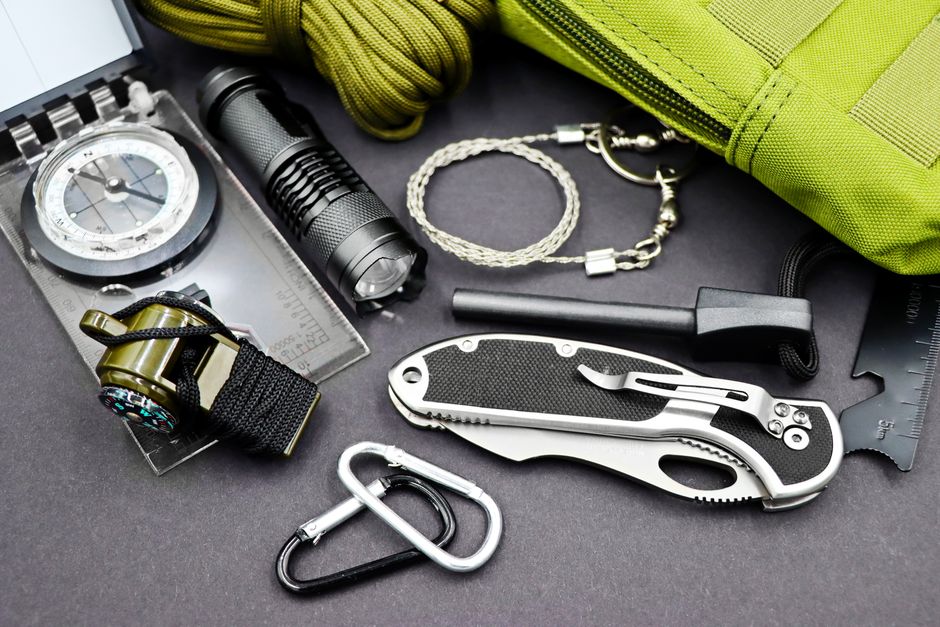
Before diving deep into strategy and scenarios, here is a priority-based survival checklist that covers the absolute essentials for most outdoor situations.
Beginner Survival Gear Checklist (Priority-Based)
- Emergency shelter (tarp, tent, or emergency blanket)
- Water purification tools (filter or tablets)
- Fire starter kit (ferro rod, lighter, or waterproof matches)
- First aid kit for injuries and trauma care
- Navigation tool (map, compass, or GPS device)
- Signaling device (whistle, mirror, or flashlight)
- Multi-tool or survival knife
- Paracord for shelter and repairs
- Food rations or energy bars
- Light source (headlamp or lantern)
These items are not about comfort—they are about extending your ability to survive when conditions change unexpectedly.
Why These Items Matter First in Survival Situations
Survival situations are governed by time-sensitive risks. You can survive days without food, but only hours without shelter in extreme weather. You can survive longer without fire, but hypothermia can develop quickly when wet or cold.
That is why survival gear must follow a hierarchy: protect your body first, then restore stability, and only then focus on convenience or efficiency.
“Survival is not about gear quantity—it’s about controlling exposure, hydration, warmth, and injury risk in that order.” — Outdoor Safety Field Instructor
For structured packing ideas, explore our safety and emergency gear collection designed for layered outdoor protection systems.
Understanding Survival Priorities: The Rule of 3s Explained

The “Rule of 3s” is a foundational survival concept that helps you decide what matters most when resources are limited.
Shelter Comes First: Protection from Environment
Humans can survive roughly 3 hours in harsh exposure without shelter. Wind, rain, and cold are often more dangerous than hunger or thirst.
Essential shelter tools include tarps, tents, and emergency insulation systems. Lightweight emergency blankets can reflect body heat and reduce heat loss significantly.
Explore our camping tents & shelter collection for beginner-friendly protection systems.
Water and Hydration: Avoiding Rapid Dehydration
Most people can survive about 3 days without water. However, performance drops rapidly long before that. Dehydration affects decision-making, coordination, and temperature regulation.
Portable filters and purification tablets are essential for any outdoor kit. Always assume natural water sources require treatment.
Check the personal water filters collection for compact hydration solutions.
Fire and Warmth: Heat, Cooking, and Signaling
Fire is one of the most versatile survival tools. It provides warmth, purifies water, cooks food, and acts as a signaling method.
Beginner fire kits should include waterproof ignition sources and backup methods like ferro rods.
Browse our fire starters & ignition collection for reliable outdoor fire solutions.
Signaling and Navigation: Getting Rescued Faster
If you are lost, visibility and communication matter more than movement. Whistles, mirrors, and bright lights increase rescue probability significantly.
Our emergency whistles & signals collection includes compact tools designed for high-audibility and visibility.
First Aid and Injury Prevention
Even minor injuries can escalate in outdoor environments due to infection risk, mobility issues, or exposure.
A properly structured first aid kit is not optional—it is survival-critical equipment.
Survival Gear as a System (Not a Checklist)

Most beginners make the mistake of collecting random gear instead of building a system. A survival system ensures each item has multiple roles and supports more than one survival priority.
How Each Tool Supports Multiple Survival Needs
A single item like paracord can support shelter building, gear repair, and emergency rescue signaling. Similarly, a flashlight provides navigation, signaling, and psychological reassurance in low visibility environments.
Avoiding Redundancy vs Building Smart Backup Systems
Redundancy is important—but only when it protects critical systems. For example, having two fire-starting methods is smart. Carrying three identical flashlights is unnecessary weight.
Balance is key: one primary system, one backup system, and lightweight multifunction tools.
Deep Dive: Essential Survival Gear Explained (With Use Cases)
Emergency Blanket: Heat Retention and Shelter Support
An emergency blanket is one of the simplest yet most effective survival tools. It reflects body heat and can reduce heat loss in cold environments.
It can also be used as a temporary shelter layer or ground insulation in wet terrain.
Fire Starter: Reliable Fire in Any Condition
Fire starters vary from ferro rods to waterproof matches. Beginners should prioritize tools that work even when wet or windy.
Fire reliability is more important than speed—consistent ignition matters in survival scenarios.
Multitool: Compact Problem Solver
A multitool combines pliers, blades, screwdrivers, and cutters into one compact device. It reduces gear load while increasing versatility.
It is especially useful for shelter repair, food preparation, and emergency fixes.
First Aid Kit: Field Medical Essentials
Medical readiness is critical in outdoor environments. A strong kit should include wound care, bandages, antiseptics, and trauma supplies.

For a ready-made solution, the Survival First Aid Emergency Kit offers a compact MOLLE design with essential medical supplies for outdoor safety.
Water Purification: Filters vs Tablets
Filters provide reusable mechanical purification, while tablets offer lightweight chemical treatment. Many experienced hikers carry both for redundancy.
Headlamp: Hands-Free Visibility
Headlamps outperform flashlights in survival situations because they keep your hands free for climbing, cooking, or repairing gear.
Paracord: Multi-Purpose Lifeline
Paracord can be used for shelter construction, gear repair, fishing lines, or emergency binding. Its versatility makes it essential for all survival kits.
Portable Shelter Options
Tents provide full protection, tarps offer flexibility, and bivy sacks prioritize minimal weight. Beginners should choose based on trip duration and weather risk.
Explore our camping shelter collection for scalable options.
Emergency Whistle and Signaling Tools
A whistle is one of the most effective low-energy signaling tools. It can be heard farther than shouting and requires no battery.
Camping Knife: Fixed vs Folding
Fixed blades offer durability, while folding knives provide portability. Your choice depends on whether strength or compactness is your priority.
Emergency Food Rations
High-calorie, shelf-stable foods provide energy when movement and decision-making are critical. Always store compact, nutrient-dense options.
How to Build Your First Survival Kit (Step-by-Step)
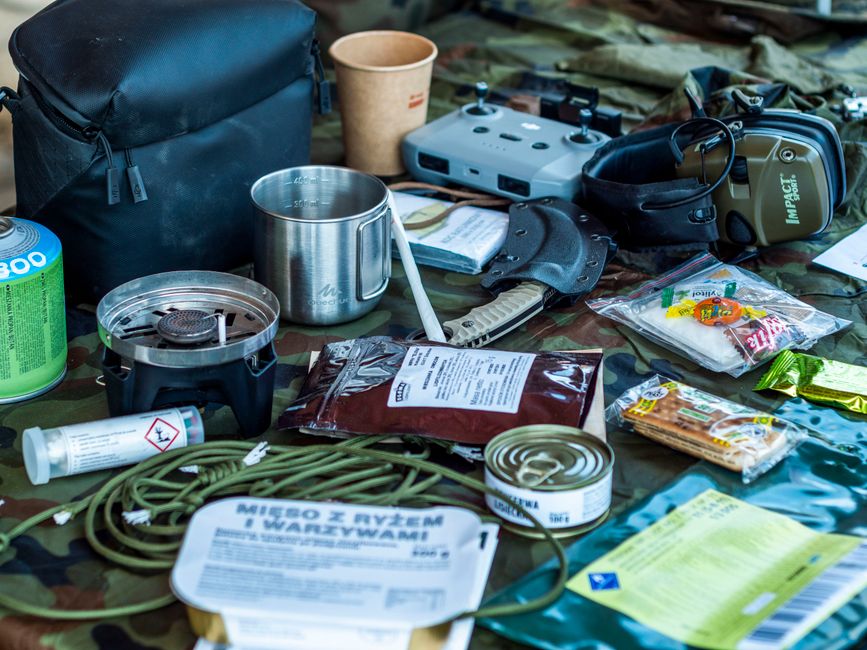
Step 1: Define Your Trip Type and Risk Level
A day hike requires minimal gear, while overnight camping demands full shelter and fire systems.
Step 2: Choose Core Gear by Survival Priority
Start with shelter, water, fire, signaling, and first aid. Everything else is secondary.
Step 3: Add Redundancy Where It Matters
Only duplicate systems that are critical, such as fire starting and navigation.
Step 4: Pack Smart for Weight and Accessibility
Keep emergency items accessible, not buried deep inside your backpack.
For integrated kits, explore our first aid kits collection and backpacking & carry solutions.
Scenario-Based Packing: What to Bring for Different Outdoor Situations

Short Camping Trip (1–2 Days)
Focus on lightweight shelter, basic cooking tools, and a compact first aid kit. Avoid overpacking heavy gear.
Day Hike Emergency Kit
Carry minimal survival essentials: water, fire starter, whistle, emergency blanket, and a small multitool.
Car Emergency Kit for Outdoor Travel
Vehicle kits should include tools for breakdowns, medical emergencies, and extended waiting scenarios.
Car Survival First Aid Kit Emergency SetThe Car Survival First Aid Kit Emergency Set includes tools like a flashlight, paracord, and emergency blanket—ideal for roadside preparedness.
Cold Weather vs Hot Weather Adjustments
Cold environments require insulation, fire redundancy, and calorie-dense food. Hot environments prioritize hydration, shade, and sun protection systems.
Explore our weather protection collection for climate-specific gear.
Common Beginner Mistakes (and How to Avoid Them)
Overpacking vs Underpreparing
Too much gear slows mobility; too little increases risk. Balance is essential.
Buying Gear Without Learning to Use It
Equipment is only effective when you know how to operate it under stress.
Ignoring Weather and Terrain Factors
Always adjust your gear based on environment—not assumptions.
Upgrading Your Survival Gear Over Time

When to Upgrade from Beginner Gear
Upgrade when your trips become longer, more remote, or exposed to extreme conditions.
Best Value Upgrades for Performance and Safety
Focus first on improving shelter systems, water filtration reliability, and navigation tools.
Explore advanced options in our survival accessories collection.
Frequently Asked Questions (FAQ)
What survival gear outdoors should beginners carry first?
Start with shelter, water purification, fire starter, first aid kit, and signaling tools.
How do I build a basic outdoor survival kit?
Begin with survival priorities, then choose compact multi-use tools that cover multiple categories.
What should I pack in a car emergency kit for outdoor trips?
Include medical supplies, flashlight, food, water, tools, and emergency communication devices.
What are the most important survival tools for camping?
Fire starter, shelter system, water filter, first aid kit, and multitool are the most critical.
How much survival gear should I bring for a short camping trip?
Only bring essentials that support survival priorities—avoid overpacking unnecessary equipment.
Conclusion
Survival gear outdoors is not about collecting equipment—it is about building a system that protects you in order of survival priority. Shelter, water, fire, signaling, and first aid form the foundation of every safe outdoor experience.
When your gear is organized around real-world scenarios instead of product lists, you gain not just preparedness—but confidence in any environment.
Related Articles:
- Wilderness Survival Guides: A Beginner’s Roadmap to Real-World Survival Skills
- Sun Protection Gear Guide: Build a Complete Outdoor Survival System
- Camping Hot Weather Survival System: Stay Cool, Safe & Comfortable in Extreme Heat
- Camping Tips for Rain: The Ultimate Rain-Proof Camping System for Cold & Wet Weather
- Survival Tools for Camping: Complete Beginner Guide + Emergency Skills
- First Aid Kit for Outdoor Activities: Complete Safety System + Gear Guide
- What to Pack in an Emergency Kit: Build Smart Survival Kits for Any Outdoor Situation
- Best Camping Multi Tool Guide: Survival Uses, Safety Tips & Buying Advice
- Campfire How to Build: A Beginner System for Safe, Reliable Fires Anywhere





