

Person Hammock With Bug Net: How To Install Without Hassle
What is the easiest way to install a person hammock with bug net?
A person hammock with bug net is easiest to install when you choose two stable anchor points, use adjustable tree straps, and set the hammock at a 30-degree angle. This setup improves comfort, keeps the mosquito net elevated, reduces sagging, and creates a faster, frustration-free camping sleep system.
Person Hammock With Bug Net: How To Install Without Hassle
⏱ 8 min read
Nothing ruins a peaceful campsite faster than tangled straps, sagging fabric, or mosquitoes buzzing around all night. A properly installed person hammock with bug net can transform outdoor sleeping into a lightweight, comfortable, and stress-free experience. Whether you're learning how to choose mosquito net hammock options or searching for the best way set up camping hammock systems quickly, this guide breaks down every step with practical tips, setup mistakes to avoid, and smart gear recommendations for easier adventures.
Ever arrived at camp exhausted and wondered, “What gear actually makes camping easier?” The answer is usually the equipment that reduces setup stress while improving sleep quality.
👉 Ready to simplify your campsite routine?
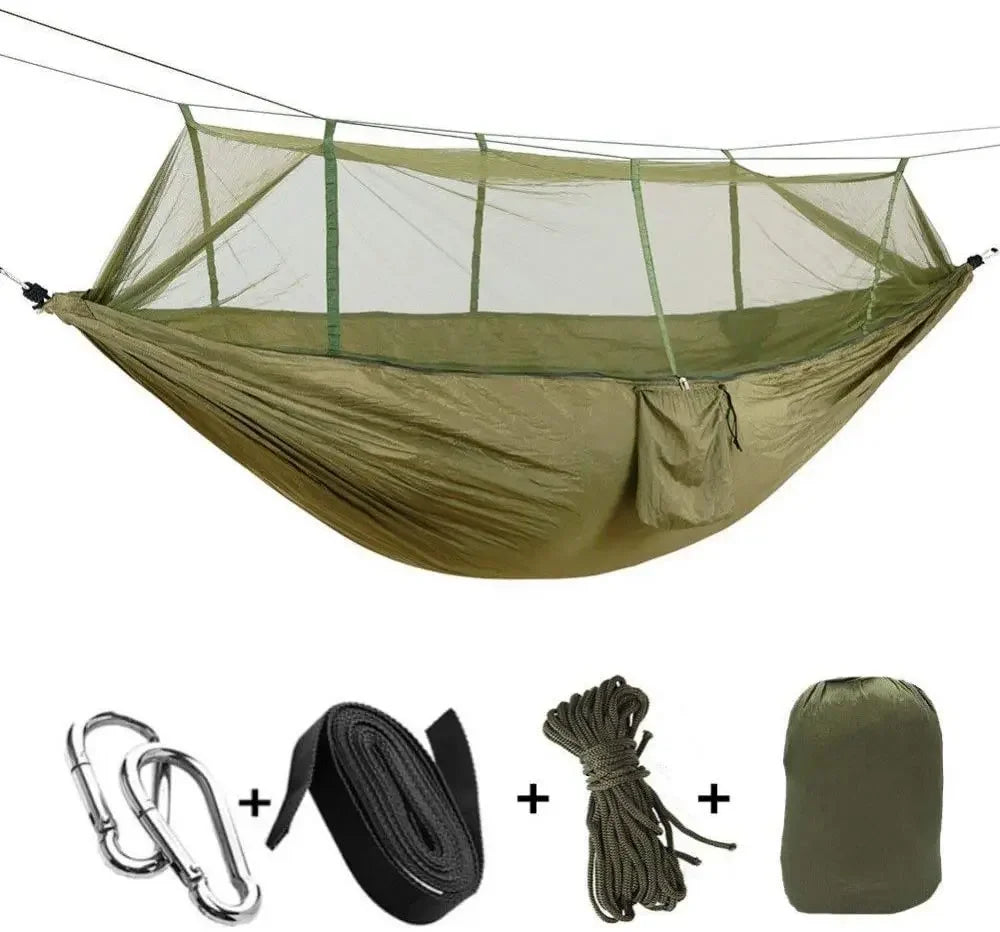
Discover a lightweight hammock system designed for faster setup and better overnight comfort.
💡 See it in action
Why a Person Hammock With Bug Net Makes Camping Easier
A person hammock with bug net improves outdoor sleep by combining elevated comfort, airflow, and insect protection into one compact system. Compared to traditional ground tents, hammock systems reduce setup time, minimize rocky sleeping surfaces, and help campers stay cooler in humid conditions while keeping mosquitoes away.
Many campers switch to hammock camping because it eliminates several common frustrations:
- No need to search for perfectly flat ground
- Reduced contact with mud and wet terrain
- Better airflow during hot weather
- Less bulky packing compared to large tents
- Faster overnight setup after long hikes
When paired with gear from Hammocks & Straps and Ground Sheets & Tarps, hammock systems become even more reliable during changing weather.
Why Campers Prefer Integrated Bug Nets
Integrated mosquito nets save time because they stay attached to the hammock body. Separate bug nets often shift during the night or require extra suspension lines.
| Feature | Integrated Bug Net | Separate Bug Net |
|---|---|---|
| Setup Speed | Fast | Moderate |
| Weight | Lower overall | Can require extra hardware |
| Protection Coverage | Consistent | May leave gaps |
| Ease of Packing | Simple | More components |
One backpacker shared that switching to an integrated system cut campsite setup time from 20 minutes to under 7 minutes during rainy conditions.
How to Choose Mosquito Net Hammock Systems
A quality mosquito net hammock should balance breathability, durability, suspension strength, and ease of installation. Campers should prioritize lightweight fabric, reinforced stitching, adjustable straps, and enough interior room to sleep diagonally without pressing against the netting.
- Choose ripstop nylon for better durability and lower weight.
- Look for breathable mesh with small openings for mosquito protection.
- Select tree-friendly straps with multiple adjustment loops.
- Prioritize integrated ridgelines for faster net setup.
- Pick a size that supports your height and sleeping position.
For longer trips, combining your hammock setup with gear from Compression & Packing Bags helps organize straps, rain tarps, and sleeping accessories efficiently.
Features That Matter Most in Real Campsites
- Quick-access zipper openings
- Low-stretch suspension straps
- Water-resistant storage pouch
- Strong carabiners
- Integrated ridgeline organizer pockets
Many beginners focus only on weight but forget setup convenience. A few extra ounces can save major frustration after sunset.
👉 Learn how to build a more comfortable outdoor sleep setup.
Pair your hammock system with Blankets & Sleeping Comfort and Inflatable Pillows for better overnight recovery during long adventures.
Best Way Set Up Camping Hammock Step By Step
The best way set up camping hammock systems is by using stable anchor trees spaced roughly 12 to 15 feet apart. Proper strap height, suspension angle, and bug net tension create better comfort, improve airflow, and prevent overnight sagging or pressure points.
-
Find Safe Anchor Points
Choose healthy trees at least 6 inches thick. Avoid dead branches overhead. -
Attach Tree Straps
Wrap straps at head height. Adjustable loops make leveling easier. -
Clip the Hammock
Attach carabiners securely and center the hammock evenly. -
Adjust the Angle
Aim for about a 30-degree suspension angle for comfort and stability. -
Set the Ridgeline
Tighten the bug net ridgeline enough to keep mesh elevated. -
Test Before Loading Gear
Sit gently first, then fully recline diagonally to distribute weight.
Campers often combine hammock setups with Headlamps & Wearable Lights for easier nighttime installation and Hooks, Clips & Carabiners for faster gear organization.
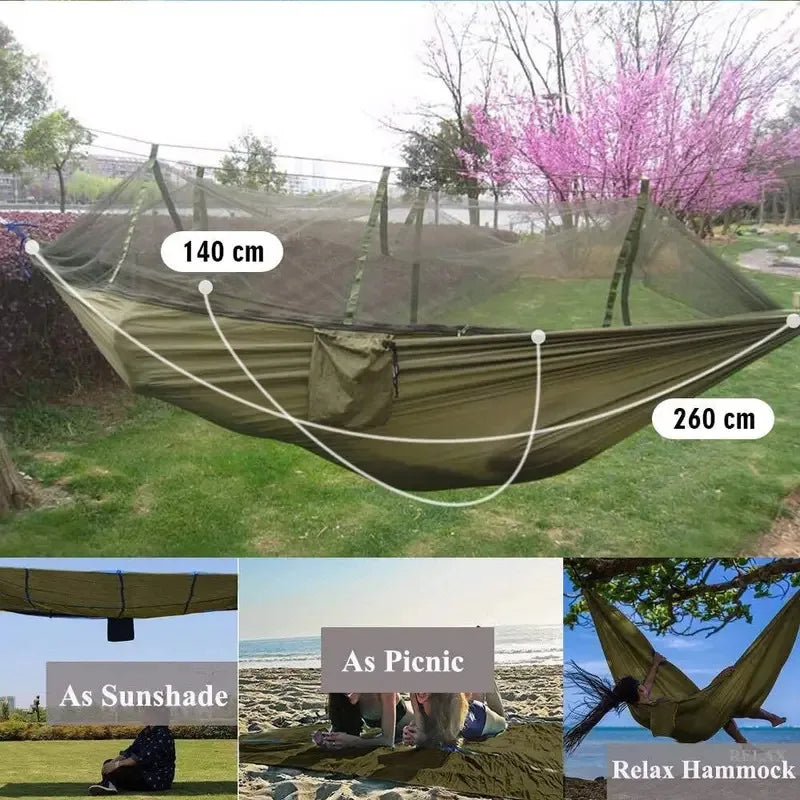
Ideal Hammock Setup Measurements
| Setup Element | Recommended Range |
|---|---|
| Tree Distance | 12–15 feet |
| Strap Height | 5–6 feet |
| Suspension Angle | 30 degrees |
| Seat Height | 18–24 inches |
💡 See it in action
Common Installation Mistakes That Ruin Comfort
Even premium hammock systems feel uncomfortable when installed incorrectly. Most setup problems come from poor strap angles, uneven tension, or incorrect tree spacing.
Mistake #1: Hanging Too Tight
Beginners often stretch hammocks flat like a bed. This creates shoulder squeeze and increases stress on anchor points.
A slight sag improves comfort dramatically.
Mistake #2: Ignoring Wind Direction
Facing directly into strong wind reduces warmth and can push bug netting into your face overnight.
Use tarps from Weather Protection & Environment to create better shelter during changing conditions.
Mistake #3: Poor Bug Net Tension
Loose netting can touch exposed skin while sleeping, allowing mosquitoes to bite through the mesh.
Integrated ridgelines solve this problem more effectively than separate hanging nets.
Mistake #4: Forgetting Gear Organization
Loose straps, wet shoes, and scattered accessories create campsite chaos.
- Store essentials in Gear Organizers & Pouches
- Keep electronics protected using Waterproof & Dry Bags
- Use Portable Power Banks for overnight charging
How to Install on Uneven or Difficult Terrain
One of the biggest benefits of hammock camping is flexibility. Rocky ground, roots, and slopes matter less when your sleeping system stays elevated.
Still, difficult terrain requires smarter setup choices.
Tips for Better Stability
- Use longer straps for wider tree spacing
- Avoid trees growing from loose soil
- Position your tarp slightly downhill for rain runoff
- Keep backpack gear suspended off wet ground
During car camping trips, many outdoor travelers also carry backup shelter systems from Camping Tents & Shelter for severe weather situations.
Cold Weather Hammock Setup
Cold air circulates beneath hammocks faster than ground tents. Insulation becomes critical during fall and winter camping.
Helpful additions include:
Experienced campers often say under-insulation matters more than top blankets in cold hammock conditions.
Why a Quick Setup Double Camping Hammock System Saves Time
A quick setup double camping hammock system gives campers more space, faster installation, and improved flexibility for solo or shared adventures. Double-width hammocks also reduce shoulder pressure, improve diagonal sleeping comfort, and simplify setup because wider fabric naturally creates a flatter sleeping position.
Many solo campers actually prefer double hammocks for comfort alone.
| Single Hammock | Double Hammock |
|---|---|
| Lighter | More spacious |
| Compact packing | Better diagonal sleeping |
| Minimal gear setups | Greater comfort margin |
| Budget-friendly | Better for longer trips |
Travelers preparing for multi-day outdoor trips often combine hammock systems with gear from Lightweight Daypacks and Foldable Travel Gear to simplify transportation and campsite organization.
👉 Upgrade your outdoor sleep system before your next trip.
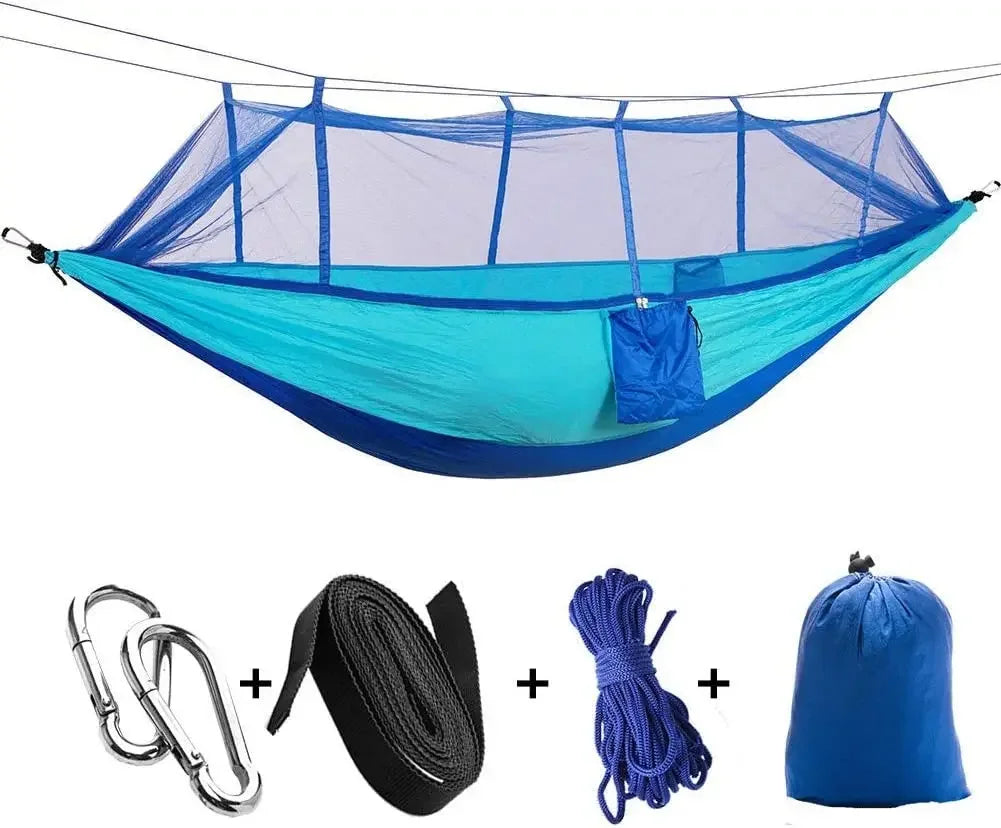
Get a fast-install hammock with integrated bug protection and easier campsite setup.
Essential Gear Checklist for Faster Campsite Setup
Having the right supporting gear often matters as much as the hammock itself.
Recommended Hammock Camping Essentials
- Integrated bug net hammock
- Adjustable tree straps
- Rain tarp
- Compact pillow
- Portable lantern
- Dry bags
- Water filter
- Backup fire starter
Helpful companion collections include:
- Personal Water Filters
- Tent & Camping Lanterns
- Fire Starters & Ignition
- Camping & Picnic
- Car Camping Accessories
Campers who organize gear before departure usually finish setup faster and spend more time actually enjoying the outdoors.
💡 See it in action
Make Every Campsite Setup Faster and More Comfortable
A reliable person hammock with bug net can completely change the camping experience when installed correctly. From learning how to choose mosquito net hammock designs to mastering the best way set up camping hammock systems quickly, small setup improvements create major comfort gains outdoors.
Whether you prefer minimalist backpacking or relaxed weekend car camping, the right hammock system saves time, improves sleep, and keeps bugs from ruining the trip.
👉 Don’t wait until your next campsite frustration. Explore a lightweight quick-install hammock system designed for easier outdoor comfort and reliable bug protection.
FAQ
How high should a person hammock with bug net be off the ground?
Most hammock campers position the seat about 18 to 24 inches above ground level. This height improves safety, comfort, and easier entry while reducing strain on straps and anchor points.
Can a mosquito net hammock be used in cold weather?
Yes, but insulation is important. Adding underquilts, sleeping pads, and wind protection helps retain warmth because cold air circulates underneath hammocks more than tents.
What is the fastest way to set up a camping hammock?
The fastest method uses integrated bug nets, adjustable tree straps, and pre-attached carabiners. Practice at home before trips to reduce setup time significantly.
Is a double camping hammock better for solo campers?
Many solo campers prefer double hammocks because they allow flatter diagonal sleeping positions, reduce shoulder squeeze, and improve overnight comfort during longer adventures.
Pillar Article: Camping Hammock With Bug Net: How To Set Up For Bug-Free Sleep
Other Related Articles:
- Camping Hammocks With Bug Net: How To Set Up In 5 Steps
- Lightweight Camping Hammock: How To Pack And Set Up Fast
- Mosquito Net Hammock Camping: How To Stay Bite-Free Outdoors
Explore More:





