

Camping Hammock With Bug Net: How To Set Up For Bug-Free Sleep
Does a camping hammock with bug net really keep you free from mosquitoes while sleeping outdoors?
A camping hammock with bug net effectively blocks mosquitoes and most flying insects when properly set up and sealed, making it one of the most reliable ways to sleep outdoors. The camping hammock with bug net combines breathable mesh protection with elevated sleeping comfort, reducing ground contact and minimizing bug exposure for safer, more restful nights in nature.
Camping Hammock With Bug Net: How To Set Up For Bug-Free Sleep
Struggling with mosquito bites, uneven ground, and restless nights in the wild? What gear actually makes camping easier when bugs never stop circling your sleeping area? A properly designed camping hammock with bug net solves these frustrations by lifting you off the ground while sealing you inside a protective mesh system designed for comfort and airflow.
Explore essential comfort upgrades that transform your outdoor sleep experience and reduce common camping frustrations instantly.
Why bug-free sleep changes your entire camping experience
If you’ve ever spent a night swatting mosquitoes instead of sleeping, you already know how quickly a great trip can turn frustrating. A camping hammock with bug net creates a protected sleep zone that feels like a private outdoor room suspended between trees.
By elevating your body and sealing you inside a fine mesh enclosure, it reduces exposure to insects, damp ground, and crawling bugs. The result is deeper rest, better recovery, and a much more enjoyable outdoor adventure.
💡 See it in action
Understand what makes a hammock system truly comfortable before your next outdoor trip.
What is a camping hammock with bug net?
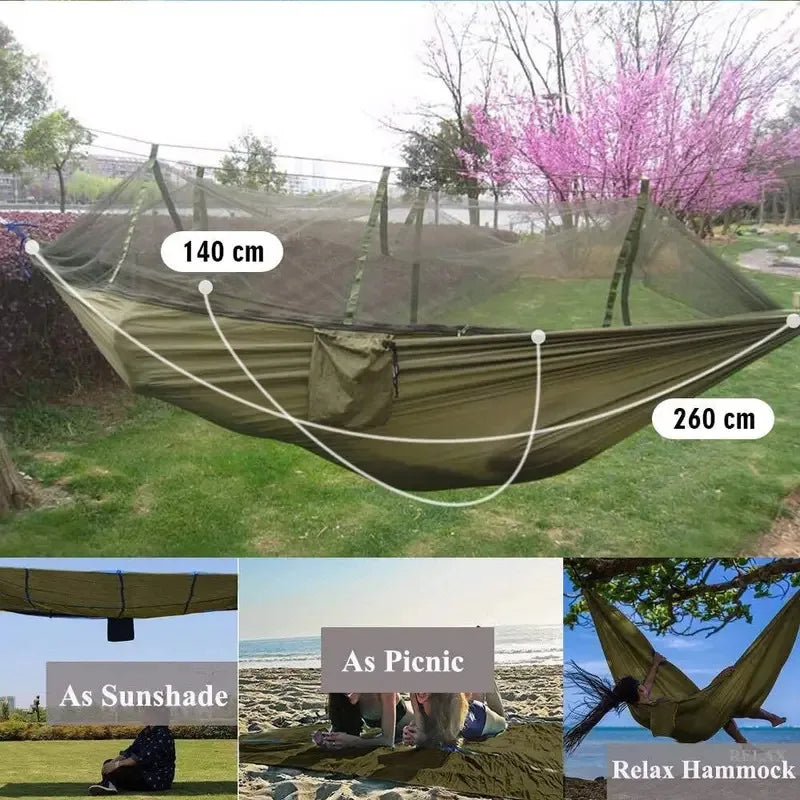
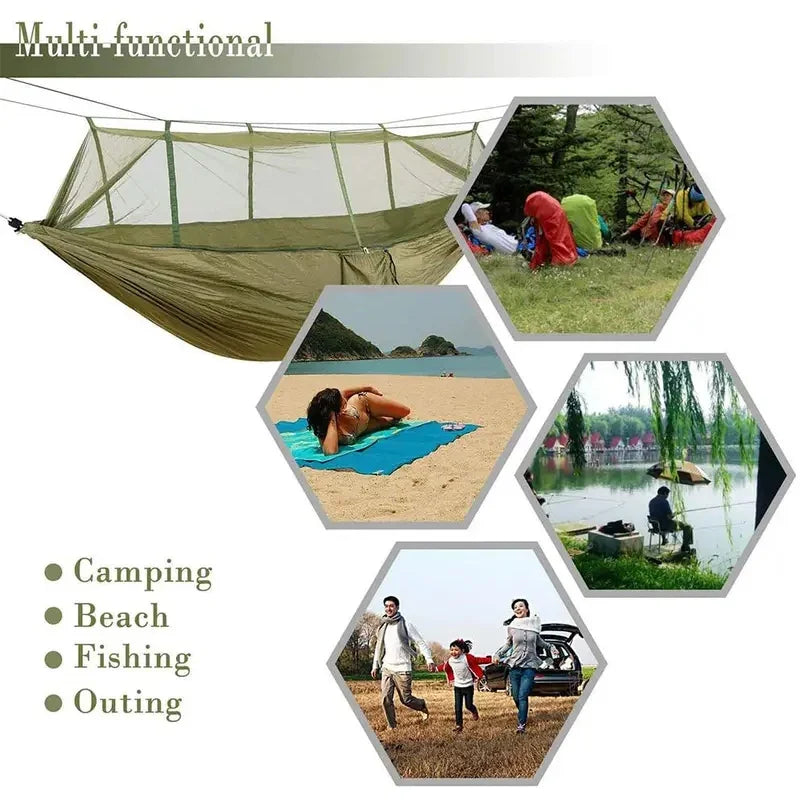
A camping hammock with bug net is a suspended sleeping system that integrates breathable mesh protection around the hammock body. It is designed to prevent mosquitoes, flies, and other insects from entering your sleeping space while maintaining airflow and comfort.
Unlike traditional hammocks, this system combines suspension straps, structural fabric, and a zippered mesh enclosure. Many modern versions are lightweight, compact, and ideal for backpackers or car campers seeking better sleep quality outdoors.
Key components include:
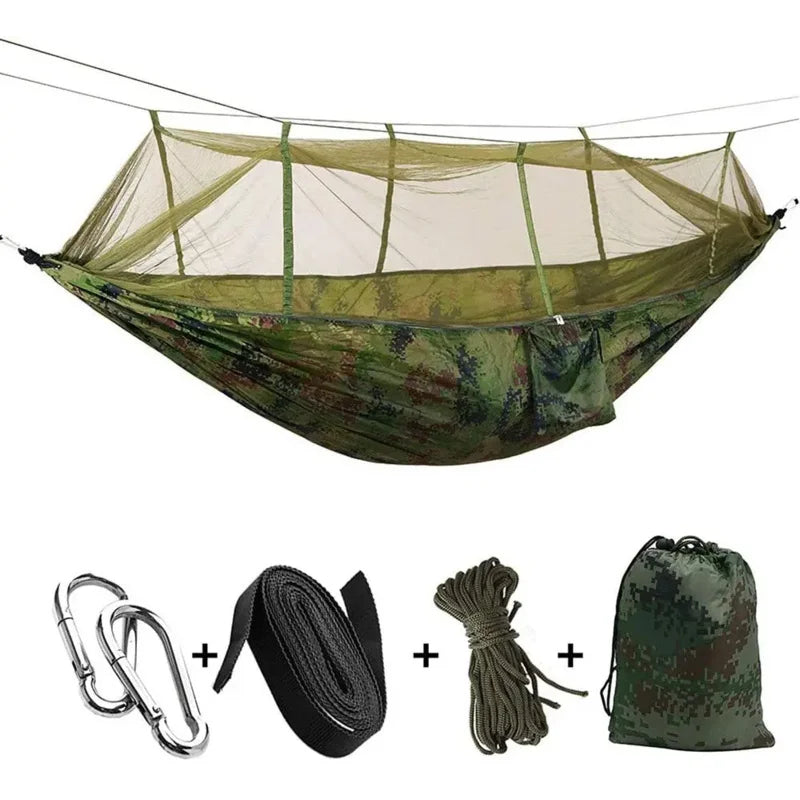
- Durable suspension straps for tree mounting
- Integrated mosquito net enclosure
- Breathable nylon or parachute fabric
- Zipper or entry closure system
- Support ridgeline for shape stability
For upgraded comfort systems, explore the Outdoor Comfort & Recovery collection for supportive camping essentials.
Step-by-step guide: best way set up camping hammock
Setting up your hammock correctly is the difference between a restful night and a frustrating one. Follow this structured process to ensure safety, comfort, and full bug protection.
- Choose two strong anchor points (healthy trees 12–15 feet apart)
- Wrap straps securely around the tree at shoulder height or higher
- Attach hammock carabiners and check tension evenly
- Ensure bug net is fully zipped before lying down
- Test stability by gently sitting before fully lying back
This method reduces sagging, prevents tipping, and ensures the bug net stays sealed throughout the night.
💡 See it in action
Upgrade your outdoor sleep system for safer, bug-free nights under the stars.
How to choose mosquito net hammock for reliable protection
Choosing the right mosquito net hammock depends on durability, mesh quality, and setup simplicity. A poor design can still let insects in or make setup frustrating after a long hiking day.
- Mesh density: Fine enough to block no-see-ums and mosquitoes
- Zipper quality: Full-length or dual-sided for easy entry
- Fabric strength: Tear-resistant parachute nylon preferred
- Weight: Lightweight for backpacking efficiency
- Ventilation: Breathable structure to reduce heat buildup
For related sleep comfort upgrades, explore Sleeping Bags & Sleeping Pads to enhance warmth and insulation during colder nights.
Best way set up camping hammock for maximum comfort
The best setup balances tension, height, and angle. A slight diagonal lie improves spine alignment and reduces pressure points, while proper strap spacing ensures stability.
Here’s a proven comfort-focused setup approach:
- Hang at a slight “smile shape” sag for natural posture
- Keep hammock 18–24 inches above ground for safe entry
- Maintain a 30-degree strap angle for ideal tension
- Ensure bug net fully encloses all sides without gaps
This setup improves airflow, reduces shoulder strain, and keeps insects fully outside your sleeping zone.
How to prevent bugs while camping beyond your hammock setup
A hammock with netting is powerful, but combining it with environmental awareness increases protection significantly. Bugs are attracted to scent, moisture, and still air zones.
Practical prevention strategies:
- Camp away from stagnant water sources
- Avoid strong scented lotions or food near sleeping area
- Use light-colored gear to reduce insect attraction
- Keep zippers closed at all times
- Shake out bedding before entering hammock
Pairing your setup with items from Camping Lights & Lanterns also helps reduce insect attraction compared to harsh white lights.
Securing hammock straps for outdoor safety
Strap safety is often overlooked but critical. Poor anchoring can lead to instability, tree damage, or even falls during the night.
Safe strap practices:
- Use tree-friendly straps (wide webbing)
- Avoid dead or weak branches
- Check knot or buckle tension twice
- Do not exceed weight rating
- Inspect straps for fraying before each use
For better organization and gear protection, consider browsing Gear Organizers & Pouches to keep straps and accessories neatly stored.
Camping hammock setup vs ground sleeping: comfort breakdown
| Feature | Hammock with Bug Net | Ground Sleeping |
|---|---|---|
| Bug protection | High (sealed mesh enclosure) | Low (exposed to insects) |
| Comfort | Elevated, pressure-free | Dependent on terrain |
| Setup time | Fast with practice | Requires clearing ground |
| Portability | Lightweight & compact | Varies by mat/tent size |
For travelers who prioritize lightweight systems, check Backpacking & Carry options for easier transport.
Packing checklist for bug-free hammock camping
Before heading out, a structured checklist ensures you don’t forget essential safety or comfort items.
- Camping hammock with bug net system
- Tree straps and carabiners
- Lightweight sleeping layer or blanket
- Bug spray or natural repellents
- Headlamp or lantern for setup
- Weather protection tarp if needed
For protection against unexpected rain or wind, explore Weather Protection & Environment essentials.
Real outdoor experiences: what campers are saying
Many campers report dramatically improved sleep quality after switching to a hammock system. One backpacker shared that mosquito bites dropped to zero on a humid forest trip, while another highlighted how quickly setup became part of their routine after just two uses.
Comfort, portability, and bug protection consistently rank as top benefits, especially in warm or tropical environments where insects are most aggressive.
Comfort upgrades that improve hammock camping even more
Adding a few supporting accessories can significantly improve your outdoor sleep quality. Small upgrades often make the biggest difference during multi-day trips.
- Inflatable pillows for neck support
- Lightweight tarps for weather protection
- Suspension organizers for gear access
- Insulated layers for cold nights
Explore Hammocks & Straps for compatible systems that improve stability and ease of setup.
💡 See it in action
FAQ: camping hammock with bug net
How effective is a camping hammock with bug net?
It is highly effective when fully zipped and properly set up. The fine mesh blocks mosquitoes and most flying insects while maintaining airflow for comfortable sleep outdoors.
Can rain affect a camping hammock with bug net?
Yes, but pairing it with a tarp or rain cover prevents moisture buildup and keeps your sleeping area dry and comfortable during unexpected weather changes.
Is it difficult to set up a mosquito net hammock?
No. Most systems are designed for quick setup using straps and carabiners, typically taking only a few minutes once you understand proper anchoring techniques.
What is the ideal location for hammock camping?
Choose two healthy trees spaced appropriately apart, away from standing water and strong winds, to ensure both comfort and insect reduction.
Do I still need bug spray with a hammock net?
It’s optional but recommended for added protection, especially in high-insect environments or tropical camping conditions.
Related Articles:
- Camping Hammocks With Bug Net: How To Set Up In 5 Steps
- Person Hammock With Bug Net: How To Install Without Hassle
- Lightweight Camping Hammock: How To Pack And Set Up Fast
- Mosquito Net Hammock Camping: How To Stay Bite-Free Outdoors
Pillar Articles:





