

Mosquito Net Hammock Camping: How To Stay Bite-Free Outdoors
Camping Hammock With Bug Net: How To Set Up For Bug-Free Sleep
⏱ 12 min read
Does a camping hammock with bug net really prevent bites while sleeping outdoors?
A camping hammock with bug net creates a protective barrier that blocks mosquitoes, gnats, and crawling insects while improving airflow and sleep comfort outdoors. When properly installed with tight suspension straps, full zipper closure, and rain coverage, it delivers a safer, more relaxing overnight camping experience in forests, lakeside camps, and humid environments.
Nothing ruins a peaceful camping night faster than buzzing mosquitoes, itchy bites, or bugs crawling into your sleeping area. If you have ever spent hours tossing around inside a tent or waking up covered in bites, a camping hammock with bug net can completely change your outdoor experience. This guide explains the best way set up camping hammock systems for bug-free sleep, safer suspension, and better comfort whether you are backpacking, car camping, or relaxing at a lakeside campsite.
What gear actually makes camping easier when bugs are everywhere? Most experienced campers agree that combining elevated sleeping, breathable fabric, and full insect protection creates one of the most comfortable sleep systems available for warm-weather adventures.
Campers who switch from ground tents to hammocks often notice fewer pressure points, less condensation, and dramatically fewer bug problems. Pairing your hammock setup with accessories from Hammocks & Straps and Ground Sheets & Tarps can make overnight camping simpler and more reliable in changing weather.
Upgrade your outdoor sleep setup with a reliable camping hammock with bug net designed for comfort, airflow, and mosquito protection during overnight adventures.
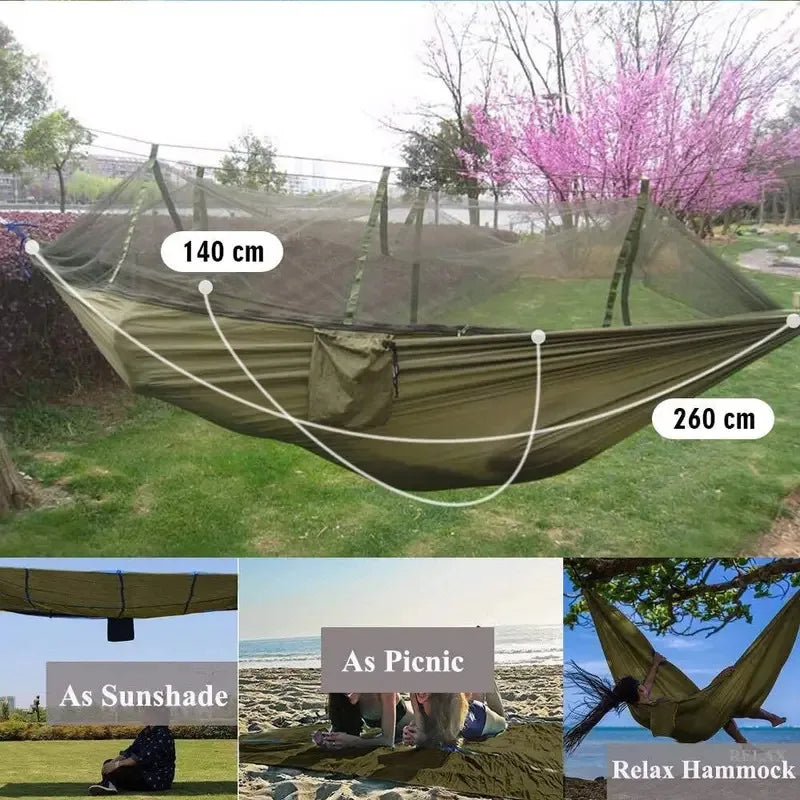
💡 See it in action
Why Bug Net Hammocks Work Better For Outdoor Sleep
A camping hammock with bug net protects campers by lifting them off damp ground while sealing out insects with fine mesh coverage. The elevated sleeping position improves airflow, reduces overheating, and helps minimize exposure to ants, spiders, and mosquitoes commonly found around campsites and wooded trails.
Traditional tents can trap humidity and heat overnight, especially during summer camping trips. Hammocks improve airflow naturally because air circulates underneath and around your body. Combined with a mosquito net hammock safety design, you can sleep cooler while staying protected.
Top Benefits Of Hammock Bug Nets
- Blocks mosquitoes, flies, gnats, and crawling insects
- Improves airflow during warm nights
- Keeps gear cleaner and off muddy ground
- Reduces pressure on hips and shoulders
- Sets up quickly in wooded environments
- Works well for backpacking and lightweight travel
| Traditional Tent | Camping Hammock With Bug Net |
|---|---|
| Ground moisture can seep inside | Elevated above wet ground |
| Less airflow in humid weather | Excellent ventilation |
| Requires flat campsite | Works between trees |
| More crawling insect exposure | Protected mesh enclosure |
| Can feel cramped | Open and breathable feel |
Many campers also pair hammock systems with accessories from Blankets & Sleeping Comfort and Inflatable Pillows to create a more supportive overnight setup.
How To Set Up A Camping Hammock With Bug Net
The best way set up camping hammock systems starts with selecting healthy trees spaced 12 to 15 feet apart, attaching secure straps at shoulder height, tightening suspension evenly, and fully sealing the bug net. Proper tarp placement and tension adjustments improve weather protection and overnight comfort.
Step 1: Choose The Right Campsite
Look for two sturdy trees with healthy trunks. Avoid dead branches overhead, unstable roots, or areas close to standing water where mosquitoes gather heavily.
A shaded location often stays cooler during summer evenings. If rain is possible, position your hammock away from low ground where water may collect overnight.
Step 2: Secure The Hammock Straps Properly
- Wrap suspension straps around trees at about head height.
- Use wide straps to reduce bark damage.
- Angle the hammock suspension around 30 degrees.
- Tighten evenly on both sides.
- Double-check knots, buckles, and carabiners.
For extra reliability, many campers carry backup clips from Hooks, Clips & Carabiners during longer trips.
Step 3: Adjust Sag For Comfortable Sleep
A hammock pulled too tightly can create shoulder pressure and unstable sleeping angles. A slight curve supports your body better and allows you to lie diagonally for flatter sleep positioning.
Step 4: Seal The Bug Net Completely
Even a small zipper opening can let insects inside overnight. Before settling in, inspect the netting for gaps, tears, or loose attachment points.
Campers near lakes or humid forests often spray permethrin on outer hammock surfaces for added mosquito defense while keeping skin exposure limited.
Step 5: Add Rain And Ground Protection
A tarp positioned above the hammock creates weather coverage during sudden rainstorms. Pairing rain gear from Weather Protection & Environment with reliable tarps helps create a dependable all-weather shelter.
One Appalachian Trail backpacker shared that switching to a bug net hammock reduced overnight condensation and helped them sleep through humid southern summers without constant mosquito interruptions.
How To Choose Mosquito Net Hammock Features
Choosing the right camping hammock with bug net depends on mesh density, fabric durability, suspension strength, weight capacity, and ventilation. Lightweight backpackers often prioritize compact gear, while car campers may focus more on comfort, space, and extra weather protection for longer overnight stays.
Explore durable sleep systems and outdoor comfort essentials that pair perfectly with a camping hammock with bug net for weekend trips and multi-day adventures.
Key Features Worth Comparing
| Feature | Why It Matters |
|---|---|
| Fine mesh netting | Blocks smaller biting insects |
| Double zipper access | Easier nighttime entry and exit |
| Durable nylon fabric | Improves longevity and support |
| Integrated ridgeline | Keeps netting off your face |
| Lightweight construction | Better for backpacking trips |
| Reflect |
Pillar Article: Camping Hammock With Bug Net: How To Set Up For Bug-Free Sleep
Other Related Articles:
- Camping Hammocks With Bug Net: How To Set Up In 5 Steps
- Person Hammock With Bug Net: How To Install Without Hassle
- Lightweight Camping Hammock: How To Pack And Set Up Fast
Explore More:





