

Person Hammock With Mosquito Net: Key Features Explained
Person Hammock With Mosquito Net: Key Features Explained
Does a person hammock with mosquito net really improve camping?
A person hammock with mosquito net creates a cleaner, safer, and more comfortable outdoor sleeping setup by combining elevated support with full bug protection. It improves airflow, reduces ground moisture exposure, and helps campers sleep better during humid nights, backpacking trips, beach camping, and forest adventures where insects can quickly ruin recovery and relaxation.
⏱ 9 min read
Person hammock with mosquito net systems have become one of the smartest upgrades for outdoor travelers who want lightweight comfort without sacrificing protection. Whether you’re planning a weekend campsite setup, backpacking through humid trails, or relaxing beside a lake at sunset, the right hammock can improve sleep quality, reduce setup stress, and keep bugs away all night. This guide explains the most important features to compare before buying and how to create a more stable, comfortable outdoor sleeping experience.
What gear actually makes camping easier when bugs, humidity, and uneven terrain become frustrating? A well-designed mosquito net hammock often solves all three problems at once while reducing pack weight and improving overnight comfort.
👉 Discover must-have camping gear for smoother outdoor trips.
Camping & Picnic and Hammocks & Straps collections include lightweight gear designed for faster setup and better rest outdoors.
💡 See it in action
Why Mosquito Net Hammocks Work Better Outdoors
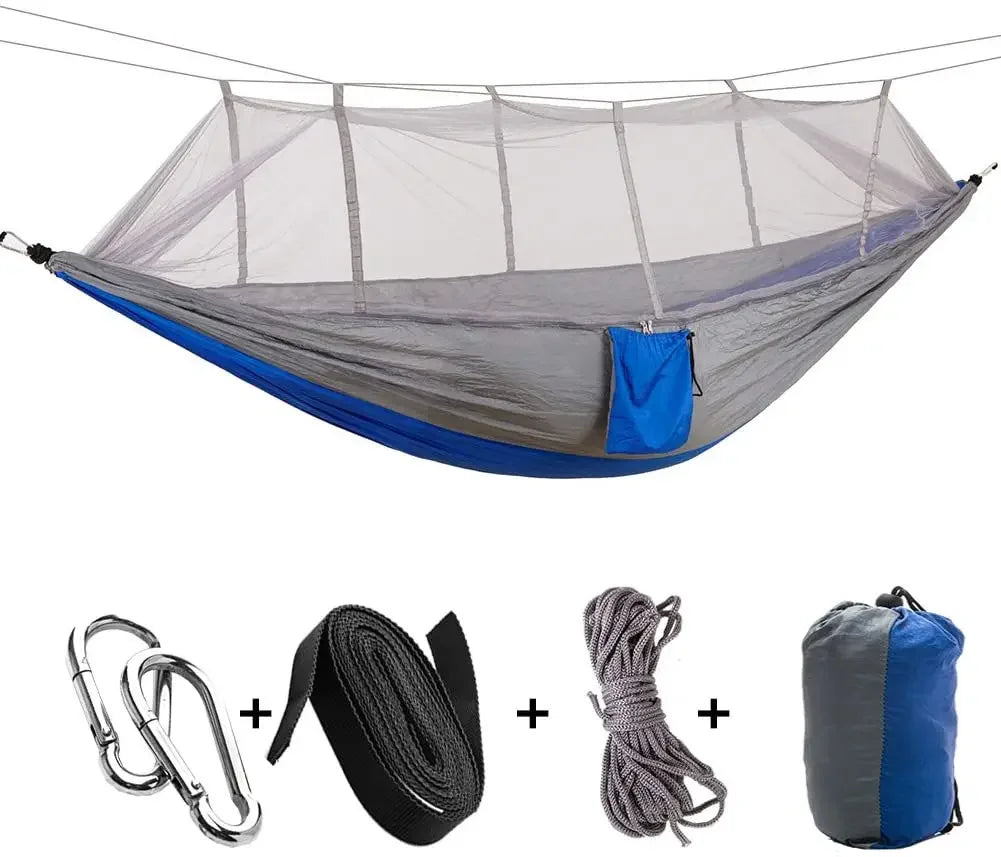
A person hammock with mosquito net gives campers elevated sleeping comfort while protecting against mosquitoes, flies, and crawling insects. Compared with sleeping directly on uneven ground, hammocks improve airflow, reduce pressure points, and create a cleaner sleeping area during hot or damp weather conditions.
Traditional tents still work well in many situations, but hammock systems offer several advantages for hikers, road trippers, and minimalist campers:
- Faster setup in rocky or wet terrain
- Less exposure to mud and standing water
- Better ventilation during summer nights
- Reduced bug exposure around lakes and forests
- Smaller packed size for backpacking
- Comfortable lounging during daytime breaks
Outdoor travelers often notice that elevated sleeping reduces stiffness the next morning. Many hikers also prefer hammocks because they eliminate the struggle of finding perfectly flat ground.
For longer trips, pairing your hammock with gear from Blankets & Sleeping Comfort or Inflatable Pillows can dramatically improve overnight recovery.
Important Features To Compare Before Buying
A person hammock with mosquito net stands out when it balances durability, ventilation, protection, and ease of setup. Strong materials, reinforced stitching, breathable fabric, and secure suspension systems all contribute to a safer and more comfortable outdoor experience.
1. Breathable Fabric Improves Sleep Comfort
One major advantage of modern hammock systems is airflow. Breathable nylon materials help reduce trapped heat and moisture buildup during humid nights.
Campers who sleep hot often struggle inside small tents with limited ventilation. Hammocks allow air circulation underneath and around the body, helping users stay cooler.
2. Fine Mesh Mosquito Netting Matters
Not all mosquito nets provide equal protection. Fine mesh helps block smaller insects like gnats while maintaining visibility and airflow.
Look for:
- 360-degree net coverage
- Smooth zipper access
- Tear-resistant mesh
- Enough headroom to avoid face contact
3. Weight Capacity Impacts Stability
Many comparison shoppers focus only on size, but load capacity matters just as much. A quality two person hammock should support enough weight without excessive sagging.
Reinforced stitching and heavy-duty suspension systems reduce shifting during sleep and improve long-term durability.
4. Compact Packed Size Helps Backpackers
Lightweight hammock systems save space compared with bulky tents and sleeping pads. Travelers who prioritize mobility often combine hammocks with products from Compression & Packing Bags and Lightweight Daypacks for easier hiking organization.
| Feature | Why It Matters | Outdoor Benefit |
|---|---|---|
| Breathable Fabric | Improves airflow | Cooler sleep during humid nights |
| Integrated Mosquito Net | Blocks insects | Better overnight comfort |
| Wide Sleeping Space | Reduces tightness | Improved body positioning |
| Strong Straps | Enhances suspension stability | Safer setup between trees |
| Compact Storage | Saves pack space | Easier backpack travel |
👉 Learn how to choose the right hiking and camping setup before your next trip.
Explore the Backpacking & Carry and Weather Protection & Environment collections for lightweight outdoor solutions.
How To Choose Mosquito Net Hammock Designs
The best way to choose mosquito net hammock systems is by comparing weather conditions, trip style, setup speed, and sleeping comfort. Backpackers often prioritize lightweight materials, while car campers may prefer larger hammocks with extra interior space and stronger suspension systems.
- Check trip conditions. Humid forests and lakeside campsites require stronger bug protection.
- Measure sleeping space. Taller campers benefit from longer hammock designs.
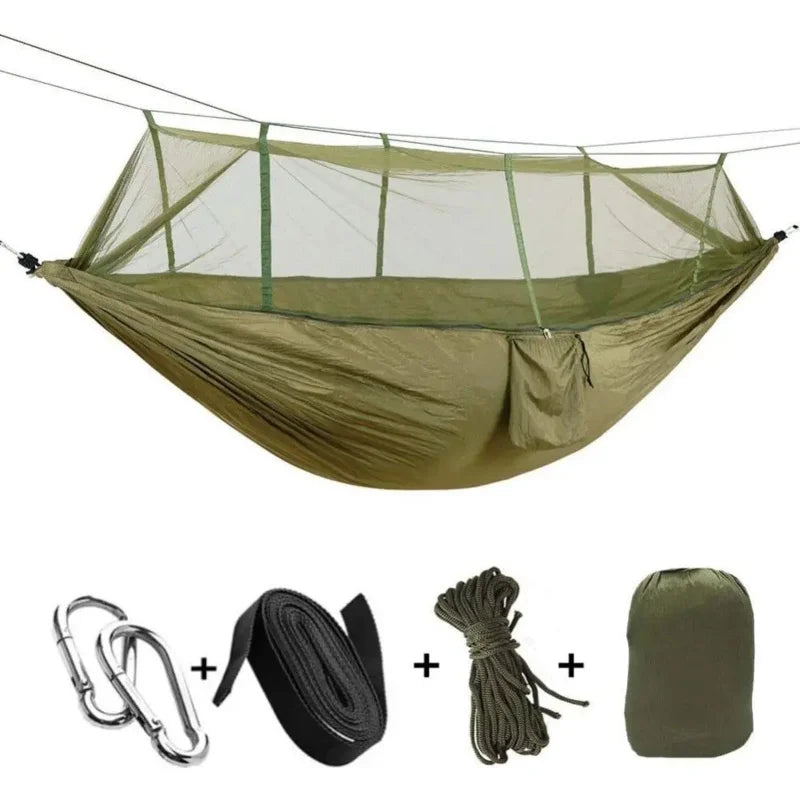
- Review included accessories. Some hammocks include straps, carabiners, and rain protection.
- Evaluate setup speed. Faster systems reduce frustration during late arrivals or bad weather.
- Compare packed weight. Backpackers should prioritize compact gear.
Many experienced campers recommend testing suspension height before dark. Proper positioning helps prevent uncomfortable pressure points overnight.
For unpredictable weather, pairing your hammock setup with Ground Sheets & Tarps adds rain protection while maintaining airflow.
Tips For Comfortable Two Person Hammock Setup
A person hammock with mosquito net feels more comfortable when users balance weight evenly, maintain proper sag angle, and avoid overly tight suspension. Wider hammocks usually create flatter sleeping positions, reducing shoulder pressure and improving overall relaxation during overnight camping trips.
Many outdoor users assume tighter straps create better support, but excessive tension can actually reduce comfort.
Best Practices For Better Sleep
- Hang the hammock at chair height for easier entry
- Maintain a gentle 30-degree suspension angle
- Sleep diagonally for flatter body positioning
- Keep gear balanced to avoid tilting
- Use inflatable pillows for neck support
Couples and friends sharing a hammock during breaks often prefer wider designs because they distribute body weight more evenly.
Campers who spend multiple nights outdoors also benefit from combining hammocks with accessories from Seat Cushions & Pads and Camping Lights & Lanterns for added nighttime comfort.
💡 See it in action
How Securing Hammock Straps Improves Outdoor Safety
Securing hammock straps for outdoor safety reduces slipping, protects trees, and improves overall suspension stability. Wide tree straps distribute weight more evenly and lower the risk of damaging bark while helping campers maintain a safer sleeping position throughout the night.
Strap quality often separates dependable hammocks from unreliable budget options.
Key Strap Features To Look For
- Heavy-duty stitching
- Wide tree-friendly straps
- Multiple adjustment loops
- Rust-resistant carabiners
- High weight ratings
Outdoor travelers frequently underestimate how much suspension systems impact comfort. Stable straps reduce swinging, sudden shifting, and overnight sagging.
Gear from Hooks, Clips & Carabiners and Safety, Survival & Emergency can also improve campsite security and organization.
“We switched from ground tents to a mosquito net hammock setup during summer road trips, and the difference was huge. Better airflow, fewer bug problems, and much faster setup after dark.” — Weekend camper from Colorado
Best Way Set Up Camping Hammock Fast
The best way set up camping hammock systems is by choosing strong anchor points, adjusting strap angles evenly, and testing tension before fully loading the hammock. Proper setup improves comfort, increases safety, and reduces overnight shifting during changing weather conditions.
- Choose healthy trees 10–15 feet apart
- Wrap straps above head height
- Attach carabiners evenly on both sides
- Adjust for moderate sag, not tight tension
- Check mosquito net zipper alignment
- Test stability before adding gear
Campers arriving late often appreciate how quickly hammock systems deploy compared with tents.
For overnight convenience, many users keep essentials organized inside products from Gear Organizers & Pouches and recharge devices using gear from Portable Power Banks.
Quick Feature Comparison Table
| Feature | Basic Hammock | Person Hammock With Mosquito Net |
|---|---|---|
| Bug Protection | None | Full mesh coverage |
| Airflow | Moderate | High ventilation |
| Comfort For Overnight Sleep | Average | Improved support and airflow |
| Camping Versatility | Limited | Better for humid environments |
| Setup Speed | Fast | Fast with integrated net system |
Common Hammock Setup Mistakes To Avoid
- Using weak or damaged trees
- Overtightening suspension straps
- Ignoring weight limits
- Skipping rain protection in humid climates
- Choosing narrow hammocks for overnight use
- Leaving mosquito net zippers partially open
Simple setup mistakes can turn a relaxing night outdoors into an uncomfortable experience. Small adjustments usually make a major difference.
Why This Hammock Style Stands Out
A person hammock with mosquito net combines portability,
Pillar Article: Hammock Mosquito Nets: How They Improve Outdoor Sleep Comfort
Other Related Articles:
Explore More:





