

Hammock Mosquito Net And Rainfly: Why It Matters In Rain
Does a Person Hammock With Mosquito Net Really Improve Camping Comfort?
A person hammock with mosquito net helps campers sleep more comfortably by reducing bug exposure, improving airflow, and creating a lightweight sleeping setup that packs smaller than many tents. The right hammock system also improves safety, supports better body positioning, and speeds up campsite setup for hiking, backpacking, and car camping trips.
Person Hammock With Mosquito Net: Key Features Explained
⏱ 8 min read
Nothing ruins a peaceful night outdoors faster than mosquitoes, sagging straps, or cramped sleeping space. Have you ever arrived at camp exhausted, only to spend an hour struggling with your setup while bugs swarm around you? A person hammock with mosquito net can solve multiple outdoor comfort problems at once by combining lightweight portability, elevated sleeping comfort, and reliable bug protection into one compact system.
Whether you're comparing hammock systems for backpacking, weekend camping, or road trips, understanding the key features behind a high-quality setup can help you avoid poor airflow, unstable hanging angles, and uncomfortable nights outside.
👉 Discover must-have camping gear for easier outdoor adventures.
Camping & Picnic | Hammocks & Straps | 2 Person Camping Hammock With Mosquito Net
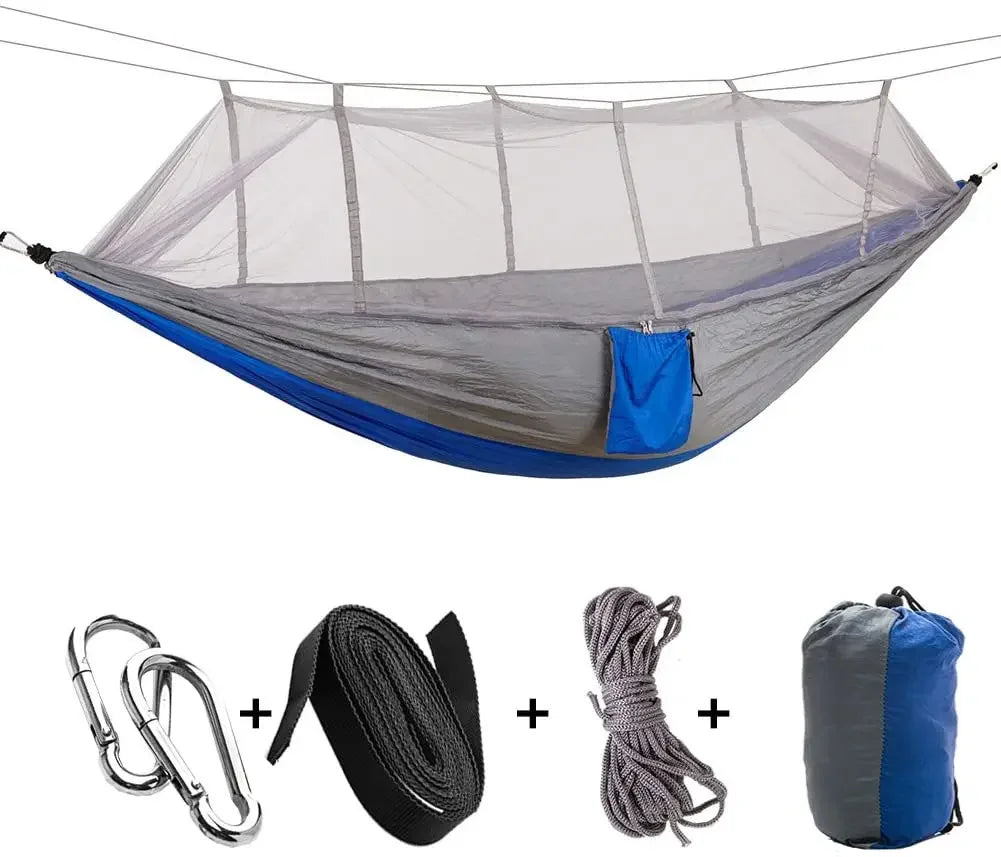
💡 See it in action
Why Bug Protection Makes Outdoor Sleep Easier
A person hammock with mosquito net creates a suspended sleeping space that blocks insects while improving ventilation and reducing ground moisture exposure. Compared with traditional tents, mosquito net hammocks often dry faster, weigh less, and allow more airflow during humid nights, making them especially useful for warm-weather camping and backpacking.
Many campers underestimate how much insects affect sleep quality outdoors. Even a few mosquito bites can lead to restless sleep, irritation, and fatigue during long hikes.
A properly designed mosquito net hammock helps by:
- Creating full-body bug coverage
- Improving airflow in humid conditions
- Reducing condensation buildup
- Keeping users elevated off wet ground
- Lowering packed weight compared with some tents
Campers hiking through forests, lakeside trails, and coastal regions often prefer integrated mosquito net systems because they reduce setup complexity. Instead of attaching separate netting later, everything stays connected and ready to deploy.
For longer trips, pairing your hammock with Compression & Packing Bags helps organize gear while reducing pack bulk.
How to Choose Mosquito Net Hammock Designs
A quality person hammock with mosquito net should balance durability, ventilation, weight capacity, and suspension reliability. Look for reinforced stitching, breathable fabric, full-length zipper access, and wide tree straps that distribute weight safely without damaging trees.
What gear actually makes camping easier? The answer usually comes down to systems that simplify setup while improving comfort under changing weather conditions.
Fabric Strength and Weight Capacity
One of the biggest differences between entry-level hammocks and premium designs is fabric quality. Strong parachute nylon offers better tear resistance while remaining lightweight.
For couples or larger campers, a two person hammock should provide:
- Wide sleeping dimensions
- Reinforced seams
- Stable weight distribution
- Anti-flip construction
- Breathable woven material
Many campers choose oversized hammock models because diagonal sleeping positions reduce shoulder pressure and back strain.
Mosquito Net Design
Not all mosquito nets perform equally outdoors.
The best mosquito net hammocks often include:
- Ultra-fine mesh for small insects
- Dual-sided zipper access
- 360-degree enclosure
- Integrated ridgeline support
- Quick tie-back storage options
Integrated systems also reduce the chance of leaving gaps where insects can enter overnight.
👉 Learn how to choose the right outdoor gear before your next camping trip.
Weather Adaptability
Outdoor conditions can change quickly. A hammock system that works in multiple environments saves both money and pack space.
Pairing a hammock setup with Ground Sheets & Tarps creates extra rain protection while preserving airflow.
For colder nights, many campers add insulation from Blankets & Sleeping Comfort collections to prevent heat loss beneath the hammock.
| Feature | Basic Hammock | Person Hammock With Mosquito Net |
|---|---|---|
| Bug Protection | Separate accessories needed | Integrated protection |
| Ventilation | Moderate | High airflow |
| Packed Weight | Light | Light to moderate |
| Setup Speed | Fast | Fast once adjusted |
| Comfort in Humid Areas | Lower | Higher |
Tips for Comfortable Two Person Hammock Setups
A properly positioned person hammock with mosquito net reduces pressure points, improves spinal alignment, and creates more stable sleeping support. Wider hammock dimensions and correct hanging angles allow campers to lie flatter, making overnight sleep significantly more comfortable than tightly stretched or narrow hammock setups.
Many first-time users assume tighter is better. In reality, excessive tension creates uncomfortable shoulder squeeze and uneven body positioning.
Proper Hanging Angle
The ideal hammock hang angle is roughly 30 degrees from the anchor point. This creates enough sag for diagonal sleeping while reducing fabric stress.
Benefits include:
- Better back support
- Reduced calf pressure
- More stable entry and exit
- Improved comfort for couples
Adding accessories from Inflatable Pillows can improve neck support during longer trips.
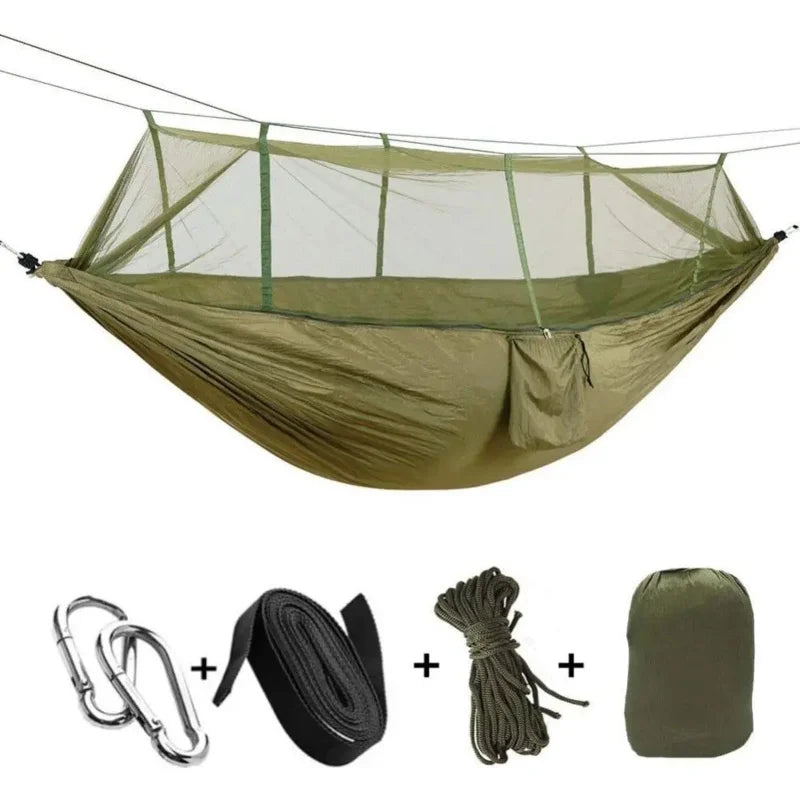
💡 See it in action
Spacing for Two Campers
Two person hammock setups work best when campers distribute weight evenly and avoid sudden movement shifts.
Experienced outdoor users recommend:
- Using wider hammock models
- Keeping gear suspended separately
- Maintaining balanced body positioning
- Testing setup tension before dark
Many couples also bring compact storage solutions from Gear Organizers & Pouches to keep essentials accessible overnight.
"We switched from a tent to a mosquito net hammock setup during summer camping trips in Florida. The airflow alone completely changed how well we slept." — Weekend camper from Georgia
Securing Hammock Straps for Outdoor Safety
A person hammock with mosquito net is only as reliable as its suspension system. Wide tree straps, reinforced buckles, and secure anchor placement improve stability while protecting both users and surrounding trees during outdoor use.
One of the most common outdoor mistakes is attaching hammocks to weak branches or using thin rope that damages bark.
Best Anchor Practices
- Select healthy trees at least 6 inches thick
- Position straps above head height
- Use wide tree-safe straps
- Inspect buckles before loading weight
- Avoid dead branches overhead
Using products from Hooks, Clips & Carabiners can improve setup flexibility and gear organization.
Common Safety Mistakes
| Mistake | Problem Created | Better Solution |
|---|---|---|
| Thin rope straps | Tree damage and slipping | Wide hammock straps |
| Overtight setup | Fabric stress | 30-degree hang angle |
| Weak anchors |
Pillar Article: Hammock Mosquito Nets: How They Improve Outdoor Sleep Comfort
Other Related Articles:
Explore More:





