

Emergency Shelter Using Rain Poncho: Step-By-Step Tarp Build Guide
Emergency Shelter Using Rain Poncho: Step-By-Step Tarp Build Guide
⏱ 9 min read
Does emergency shelter using rain poncho gear really work?
Emergency shelter using rain poncho methods can provide fast protection from rain, wind, and dropping temperatures when traditional shelter is unavailable. A waterproof poncho tarp emergency shelter gear setup helps reduce heat loss, keeps clothing dry, and creates a quick survival barrier during limited shelter during storm conditions.
Getting caught in cold rain with no tent can turn a simple hike into a miserable survival situation fast. Strong wind, soaked clothing, and falling temperatures make even experienced outdoor travelers uncomfortable and exhausted. The good news? A lightweight rain poncho can become a reliable emergency shelter in minutes when you know the right setup techniques.
What gear actually makes camping easier when the weather suddenly turns bad? Lightweight, multipurpose gear often matters more than bulky equipment. That’s why experienced hikers, hunters, and backpackers rely on poncho shelters for emergency weather protection.
👉 Discover must-have camping gear for sudden weather changes.
Weather Protection & Environment and Safety, Survival & Emergency collections help outdoor travelers stay prepared with compact gear.
💡 See it in action
Why Poncho Shelters Work in Bad Weather
Emergency shelter using rain poncho systems work because they combine portability, waterproof coverage, and quick deployment. Unlike heavier camping shelters, ponchos stay accessible while hiking, allowing faster reaction during sudden storms or temperature drops.
When storm conditions hit unexpectedly, speed matters. A wet backpacker loses body heat quickly, especially in windy environments. A poncho shelter creates a barrier between your body and cold rain while trapping warmer air underneath.
Key Benefits of Poncho Shelter Setups
- Lightweight and compact for day hikes or backpacking
- Fast setup in under 10 minutes
- Dual-purpose rainwear and shelter system
- Works well in forests, mountains, and roadside emergencies
- Helps protect gear from soaking rain
Many outdoor travelers combine poncho systems with Ground Sheets & Tarps and Wind & Cold Protection gear to improve comfort during overnight use.
Essential Gear for Fast Shelter Builds
Even the best waterproof poncho tarp emergency shelter gear works better with a few lightweight accessories. The goal is simple: maximize stability while minimizing carried weight.
| Gear Item | Purpose | Why It Helps |
|---|---|---|
| Rain Poncho | Main shelter tarp | Primary waterproof layer |
| Paracord | Ridgeline support | Fast tree attachment |
| Stakes or sticks | Anchor corners | Improves wind stability |
| Carabiners | Quick clipping points | Faster adjustments |
| Ground sheet | Moisture barrier | Keeps sleeping area dry |
Compact accessories from Hooks, Clips & Carabiners make setup easier when your hands are cold or wet.
Outdoor travelers also commonly pack lightweight backup items from Fire Starters & Ignition and Emergency Lighting collections for added safety after dark.
How to Use Poncho Shelter Tarp Setups Step-by-Step
Emergency shelter using rain poncho techniques work best when you prioritize location, wind direction, and proper tension. A low-profile setup blocks rain more effectively and conserves body heat during limited shelter during storm conditions.
- Find protected ground.
Look for natural windbreaks like trees, rocks, or hillsides. Avoid valleys where water collects. - Run a ridgeline.
Tie paracord between two trees roughly waist high. Keep the line tight to reduce sagging. - Drape the poncho over the line.
Center the poncho evenly so both sides create balanced coverage. - Secure the corners.
Use stakes, sticks, or rocks to anchor each corner tightly against wind gusts. - Lower one side during storms.
Angling one side lower blocks sideways rain and improves warmth retention. - Create ground insulation.
Place leaves, pine needles, or a sleeping pad beneath your body.
Adding compact insulation from Sleeping Bags & Sleeping Pads dramatically improves overnight comfort during cold weather.
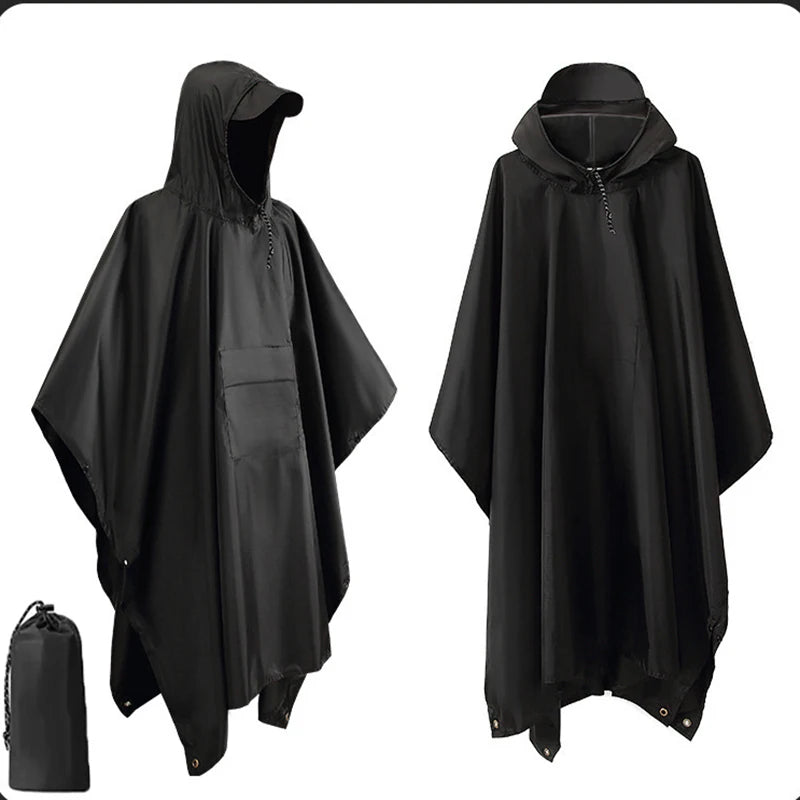
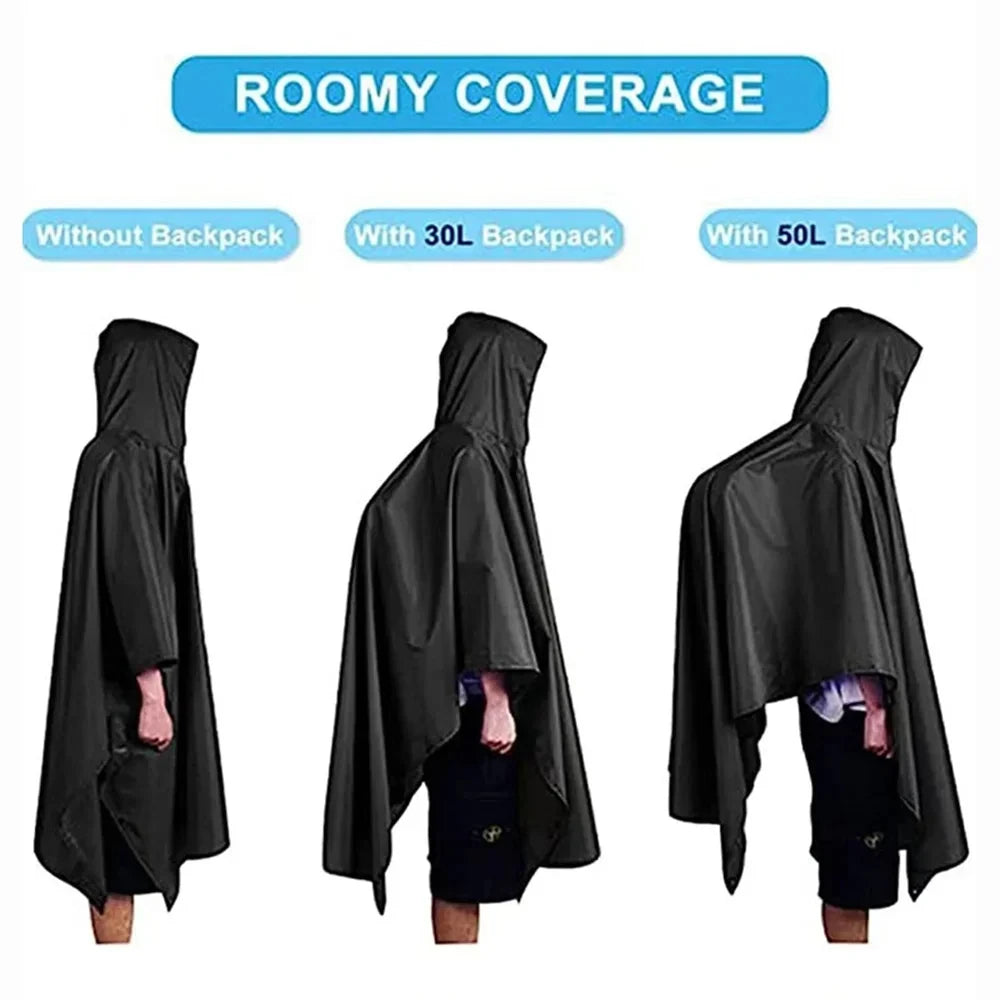
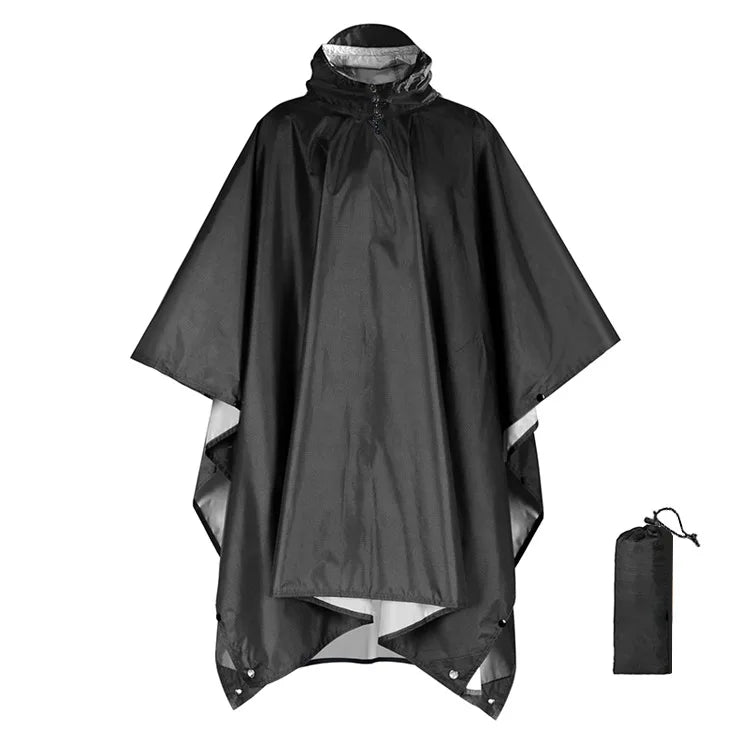
Many hikers pair poncho shelters with the 3-in-1 Military Rain Poncho because it transitions quickly between wearable rain gear and emergency tarp coverage.
“We got hit with freezing rain halfway through our trail loop. The poncho shelter setup kept our gear dry long enough to wait out the storm safely.” — Colorado backpacking traveler
Best Locations for Emergency Poncho Shelters
- Dense tree cover during heavy rain
- Leeward side of hills
- Forest edges with natural drainage
- Dry elevated ground
Avoid exposed ridgelines during lightning storms or flood-prone creek beds.
👉 Learn how to choose the right hiking gear before your next outdoor trip.
Explore Backpacking & Carry, Rain Ponchos & Capes, and Waterproof & Dry Bags for lightweight weather-ready setups.
💡 See it in action
Common Storm Shelter Mistakes to Avoid
Many failed poncho shelters happen because of poor positioning rather than bad equipment. Even strong waterproof poncho tarp emergency shelter gear performs poorly when exposed directly to wind or pooling water.
Mistakes That Reduce Shelter Performance
- Pitching the shelter too high
- Ignoring wind direction
- Leaving corners loose
- Choosing low ground where water collects
- Skipping insulation beneath the body
Wind-driven rain is usually the biggest problem. Lower shelter angles provide better weather resistance than tall open designs.
Best Poncho Shelter Configurations
Different environments require different shelter styles. Learning multiple setups improves survival flexibility when terrain changes unexpectedly.
Lean-To Shelter
Fastest setup for moderate rain and quick breaks. One side remains open for airflow and visibility.
A-Frame Shelter
Best all-around weather protection. Balanced rain runoff and better wind resistance.
Low Storm Pitch
Ideal during high winds or cold storms. Keeps shelter tight to the ground for heat retention.
| Setup Type | Weather Protection | Ventilation | Best Use |
|---|---|---|---|
| Lean-To | Moderate | High | Short rest stops |
| A-Frame | High | Moderate | Overnight storms |
| Storm Pitch | Very High | Low | Cold wind exposure |
Extra tie-down gear from Survival Accessories improves stability in rough weather.
How to Stay Warmer Inside a Poncho Shelter
Emergency shelter using rain poncho systems are more effective when combined with body heat conservation techniques. Staying dry matters just as much as blocking rain.
Simple Heat Conservation Tips
- Keep wet clothing separate from sleeping space
- Use leaves or pads beneath your body
- Block wind gaps near the ground
- Eat calorie-dense snacks before sleeping
- Use compact blankets or liners for insulation
Outdoor users often combine poncho shelters with Blankets & Sleeping Comfort and Inflatable Pillows for longer overnight trips.
“The biggest difference was insulating the ground. Once we added pine needles and a foam pad, the shelter felt dramatically warmer.” — Appalachian trail hiker
Fast Emergency Shelter Packing Checklist
One reason hikers avoid emergency preparation is bulky gear. But a compact shelter kit fits easily inside lightweight daypacks or glove compartments.
- Waterproof rain poncho
- 25–50 feet of paracord
- 4 lightweight stakes
- Compact emergency blanket
- Mini flashlight or headlamp
- Fire starter kit
- Dry socks
- Waterproof storage bag
Small emergency kits fit perfectly inside Gear Organizers & Pouches or Lightweight Daypacks.
Poncho Shelter vs Standard Tarp
| Feature | Poncho Shelter | Standard Tarp |
|---|---|---|
| Weight | Very lightweight | Heavier |
| Packability | Excellent | Moderate |
| Dual Purpose | Rainwear + shelter | Shelter only |
| Setup Speed | Fast | Moderate |
| Storm Coverage | Good | Excellent |
For many hikers, the flexibility advantage outweighs the smaller coverage size. A poncho shelter offers rapid deployment when speed matters most.
The 3-in-1 Military Rain Poncho is especially useful for backpackers who want one compact item that handles both active hiking and emergency shelter protection.
💡 See it in action
Why Learning Poncho Shelter Skills Matters
Bad weather rarely waits for perfect conditions. Knowing how to use poncho shelter tarp setups gives hikers, campers, road trippers, and outdoor workers a fast survival option when storms appear unexpectedly.
Even basic shelter skills can improve comfort, reduce exposure risk, and protect critical gear. Lightweight emergency systems work best when practiced ahead of time instead of during a stressful weather emergency.
👉 Get yours now before your next trip!
Upgrade your emergency setup with the 3-in-1 Military Rain Poncho alongside dependable gear from Ground Sheets & Tarps and Emergency Road Kits.
FAQ
Can a rain poncho really work as an emergency shelter?
Yes. A properly secured poncho can block rain, reduce wind exposure, and help conserve body heat during emergency situations.
What is the fastest poncho shelter setup?
An A-frame or lean-to setup is usually the fastest option because it only requires a ridgeline and corner anchors.
How long does it take to build a poncho tarp shelter?
Most emergency shelter using rain poncho setups take between 5 and 10 minutes with basic cordage and anchor points.
What extra gear improves poncho shelters?
Paracord, stakes, ground insulation, and compact blankets significantly improve comfort and weather protection.
Are poncho shelters good for overnight survival?
They can work for overnight emergencies, especially when paired with insulation, dry clothing, and proper wind protection.
Pillar Article: Rain Tarp Setup: How To Build A Quick Storm Shelter In Rain
Other Related Articles:
- Rain Gear For Backpacking: How To Layer And Stay Dry Fast
- Camping Rain Tips: How To Stay Warm And Dry All Night
- Hiking Gear For Rain: How To Stay Dry On Sudden Storms
Explore More:





