

How To Create A Backpacking First Aid Kit List That Works
What Is a Backpacking First Aid Kit List?
A backpacking first aid kit list is a structured checklist of medical and emergency supplies chosen for your trip length, group size, terrain, and expected risks. A good kit balances weight and preparedness, helping hikers manage common injuries, blisters, cuts, strains, and minor emergencies while staying organized and ready on the trail.
How To Create A Backpacking First Aid Kit List That Works
⏱ 8 min read
A well-planned backpacking first aid kit list can make the difference between a minor inconvenience and a trip-ending problem. Whether you're heading into the mountains for a weekend hike or spending several days deep in the backcountry, knowing what to pack, how to organize it, and how to use it effectively improves safety and confidence. This guide covers practical packing strategies, common first aid challenges on backpacking adventures, and simple ways to create a lightweight kit that works when you need it most.
Have you ever reached into your backpack during an emergency only to discover your supplies were buried beneath gear? What gear actually makes camping easier when every second matters?
Smart preparation starts before you leave the trailhead. By building a customized kit and keeping critical items accessible, you can respond faster and continue your adventure with fewer interruptions.
💡 See it in action
Why Every Hiker Needs a Reliable Kit
A backpacking first aid kit list should match the realities of outdoor travel. Weather changes quickly, trails become slippery, and minor injuries happen more often than many hikers expect.
Common situations include:
- Blisters from long-distance hiking
- Minor cuts and scrapes
- Insect bites and stings
- Muscle strains and joint discomfort
- Headaches and dehydration symptoms
- Unexpected weather-related issues
| Problem | Potential Impact | Helpful Supply |
|---|---|---|
| Blisters | Painful walking | Moleskin or blister pads |
| Cuts | Infection risk | Bandages and antiseptic wipes |
| Sprains | Reduced mobility | Elastic wrap |
| Insect bites | Discomfort | Anti-itch treatment |
Many experienced backpackers report that the most frequently used first aid item is blister treatment, not emergency trauma supplies. Planning for common issues often provides the greatest benefit.
How to Build Your Kit Step by Step
A backpacking first aid kit list works best when built around realistic risks rather than random supplies. Focus on what you're most likely to encounter.
- Evaluate trip length and location.
- Consider group size and experience level.
- Pack treatment items for common injuries.
- Add emergency communication and signaling tools.
- Organize items by category.
- Review and replace expired supplies before every trip.
If you're hiking in remote regions, combining your kit with equipment from Emergency Whistles & Signals and Emergency Lighting can improve visibility and communication during unexpected situations.
Essential Items to Include
The exact contents vary, but most hikers benefit from carrying the following categories.
Wound Care Supplies
- Adhesive bandages
- Sterile gauze pads
- Medical tape
- Antiseptic wipes
- Small scissors
Blister Prevention and Treatment
- Blister pads
- Moleskin
- Foot tape
Pain and Comfort Items
- Pain relievers
- Anti-inflammatory medication
- Cold pack if practical
Emergency Supplies
- Emergency blanket
- Whistle
- Waterproof matches
- Emergency contact information
Additional Outdoor Essentials
- Gloves
- Tweezers
- Safety pins
- Hand sanitizer
Many backpackers also carry water treatment tools from Personal Water Filters and hydration gear from Hydration & Food collections because dehydration can contribute to preventable medical problems.
Portable First Aid Kit Organization Tips That Save Time
One of the most useful portable first aid kit organization tips is separating supplies into clearly labeled categories. During a stressful situation, searching through a cluttered pouch wastes valuable time.
- Keep wound care items together.
- Store medications in a separate waterproof pouch.
- Place frequently used supplies near the top.
- Use transparent bags for visibility.
- Keep emergency items immediately accessible.
Many hikers use products from Gear Organizers & Pouches and Waterproof & Dry Bags to keep supplies protected from rain and river crossings.
💡 See it in action
How to Handle Common First Aid Challenges on Backpacking Adventures
Understanding first aid challenges on backpacking adventures helps you prepare for situations before they occur.
Challenge 1: Wet Conditions
Rain, river crossings, and humidity can damage medical supplies. Waterproof storage solutions help preserve bandages, medications, and documentation.
Consider adding gear from Rain Ponchos & Capes and Weather Protection & Environment collections to reduce exposure risks.
Challenge 2: Limited Space
Every ounce matters during backpacking trips. Focus on multipurpose items and eliminate duplicates whenever possible.
Challenge 3: Remote Locations
Medical assistance may be hours away. An emergency first aid guide for campers should include basic knowledge of wound care, hydration management, and injury stabilization.
Challenge 4: Nighttime Emergencies
Low visibility complicates treatment. Reliable lighting from Headlamps & Wearable Lights and Lighting & Power collections makes nighttime response safer and easier.
| Challenge | Preparation Strategy |
|---|---|
| Rain | Waterproof storage |
| Weight limits | Compact multipurpose items |
| Remote terrain | Expanded emergency supplies |
| Darkness | Reliable lighting equipment |
Adjusting Your Kit for Trip Length and Terrain
The best backpacking first aid kit list changes depending on where and how long you travel.
Day Hikes
- Basic wound care
- Blister treatment
- Pain relievers
- Emergency whistle
Weekend Trips
- Additional dressings
- Elastic wrap
- Extra medications
- Emergency blanket
Multi-Day Expeditions
- Expanded medical supplies
- Backup water purification
- Additional lighting
- Communication tools
For longer adventures, many hikers also carry gear from Compression & Packing Bags, Lightweight Daypacks, and Camping Storage & Boxes to maintain organization throughout the trip.
A Compact Solution for Faster Packing
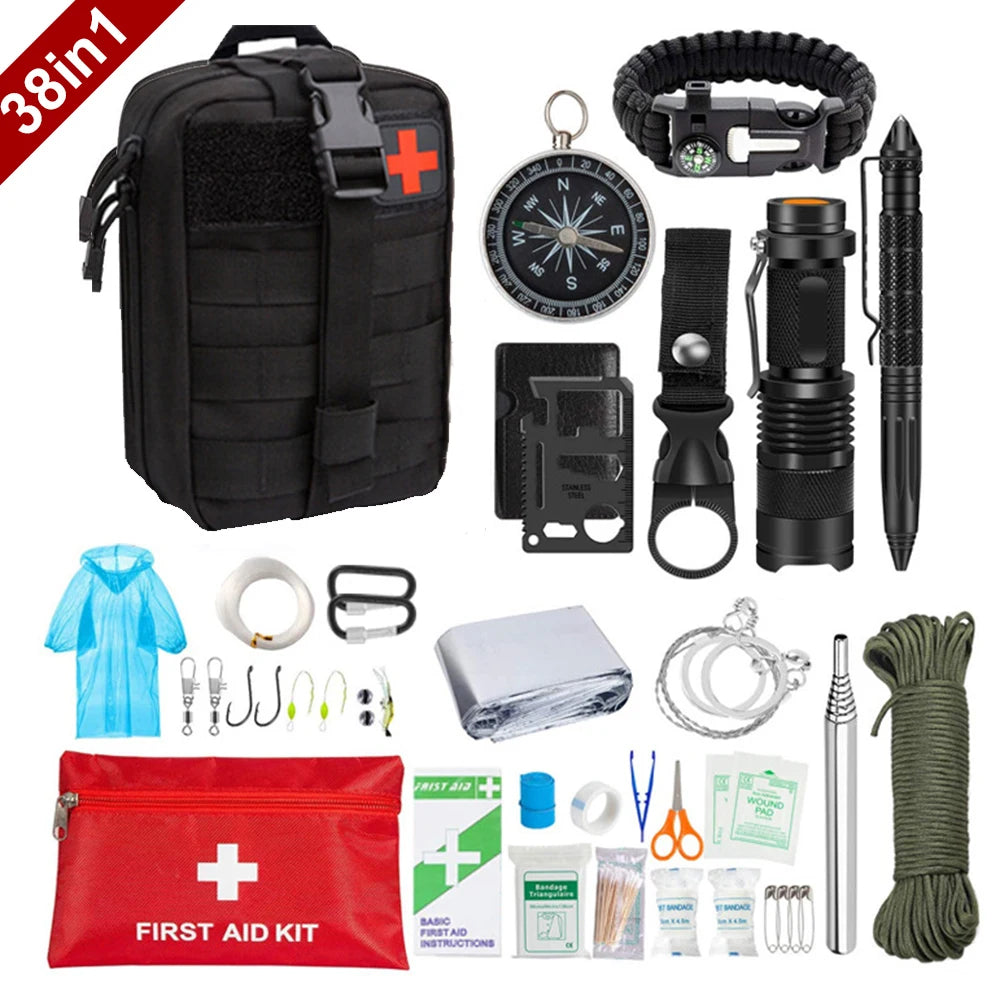
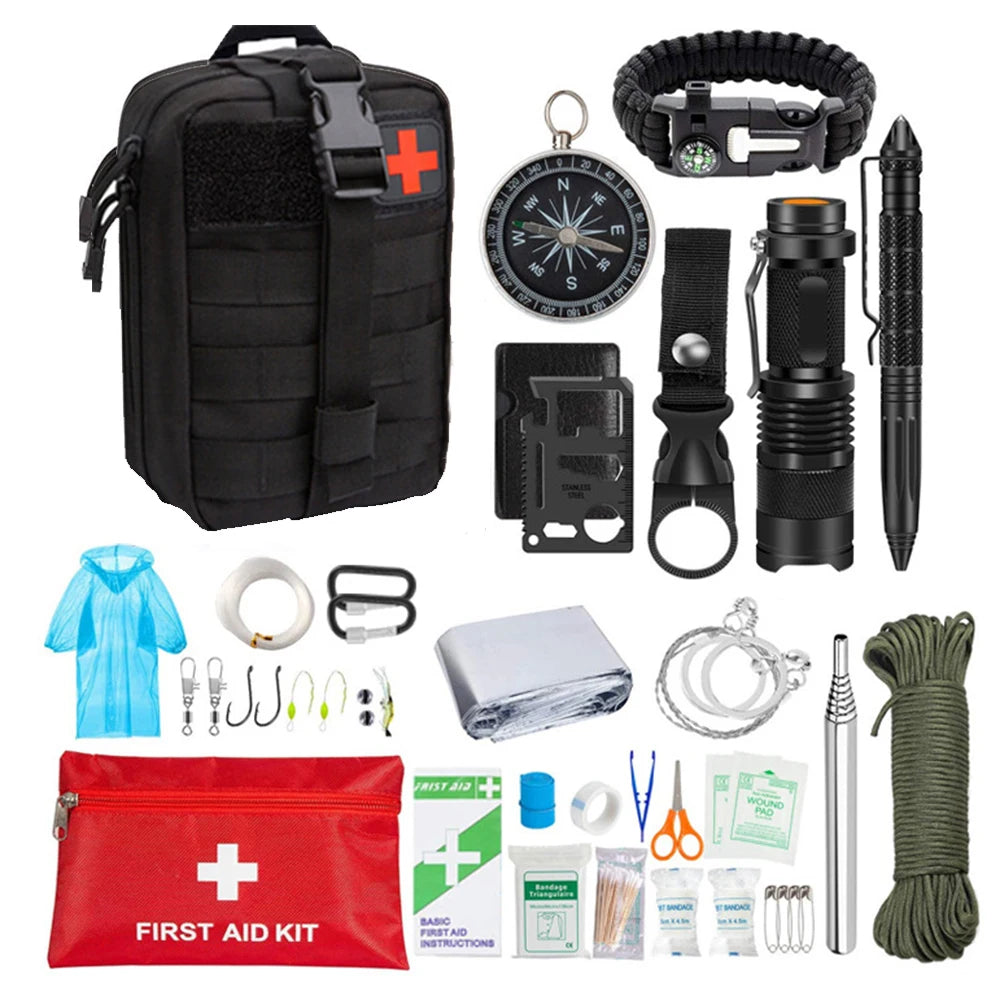
A backpacking first aid kit list becomes easier to manage when you start with a comprehensive, organized system. Instead of sourcing dozens of individual items separately, many hikers prefer a ready-to-use solution that combines emergency and survival essentials into one compact package.
The 38-in-1 Survival First Aid Kit offers a practical foundation for outdoor adventures, helping reduce packing complexity while keeping important supplies together in a portable format.
Why Hikers Appreciate Compact Kits
- Faster trip preparation
- Better organization
- Reduced chance of forgotten items
- Convenient storage inside backpacks
- Easy integration with other outdoor gear
Outdoor enthusiasts frequently mention that organized kits save time during unexpected situations. Rather than digging through multiple pockets, they can quickly access essential supplies when needed.
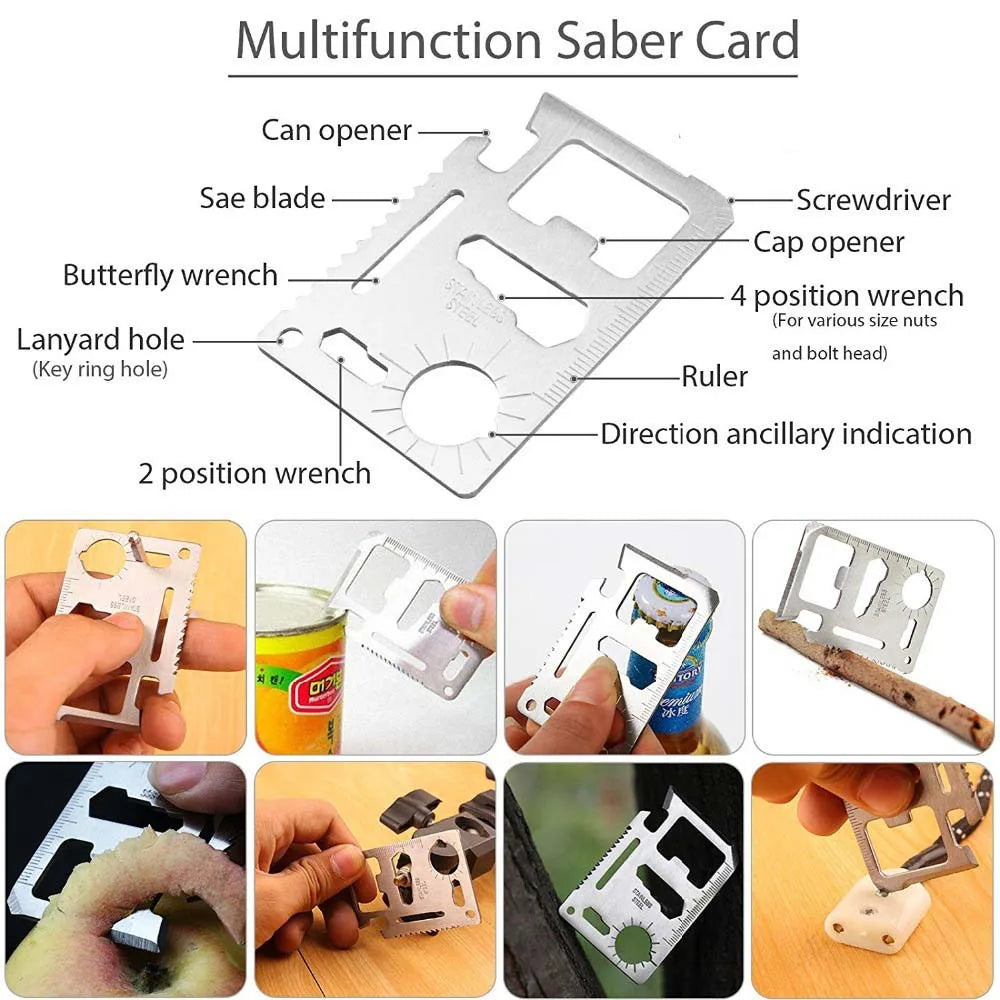
For a complete outdoor setup, many hikers pair their medical kit with Multi-tools & Knives, Fire Starters & Ignition, and Survival Accessories.
💡 See it in action
Build a Kit You Can Trust
A dependable backpacking first aid kit list isn't about carrying everything imaginable. It's about packing the right supplies for your environment, organizing them effectively, and knowing how to use them.
By following portable first aid kit organization tips, preparing for first aid challenges on backpacking adventures, and learning the basics from an emergency first aid guide for campers, you'll be better equipped to handle common trail problems with confidence.
Frequently Asked Questions
What should be included in a backpacking first aid kit list?
Most hikers should carry bandages, gauze, tape, antiseptic wipes, blister treatment, medications, tweezers, gloves, and emergency signaling tools. The exact contents depend on trip length, location, and group size.
How can I keep my first aid kit lightweight?
Focus on likely risks, choose multipurpose items, remove unnecessary packaging, and use compact storage solutions. Avoid carrying duplicate supplies unless required for extended trips.
What are the biggest first aid challenges on backpacking adventures?
Common challenges include wet weather, limited pack space, remote locations, nighttime emergencies, and maintaining organization when supplies are needed quickly.
Why is organization important in a first aid kit?
Good organization reduces response time during emergencies. Categorized supplies help you locate treatment items quickly and avoid unnecessary stress during unexpected situations.
Pillar Article: Backpacking First Aid Kit Contents: How To Pack Smart
Other Related Articles:
- First Aid Kit Hiking Checklist: Don't Miss These Essentials
- How To Organize A Portable First Aid Kit For Fast Access
- Build A First Aid Kit For Hiking List In 7 Easy Steps
Explore More:





