

Sleeping Bags Winter Camping: How To Choose For Extreme Cold Comfort
Does sleeping bags winter camping really keep you warm?
Sleeping bags winter camping can keep you warm even below 0°F when properly rated, insulated, and paired with a full sleep system. Choosing the right fill, temperature rating, and layering method prevents heat loss, eliminates cold spots, and ensures consistent comfort through long, freezing nights outdoors.
Sleeping Bags Winter Camping: How To Choose For Extreme Cold Comfort
Sleeping bags winter camping can make or break your trip when temperatures drop fast and your gear isn’t ready. If you’ve ever faced cold nights camping uncomfortable sleeping bag frustration—or wondered why your sleeping bag not warm enough winter—you’re not alone. The right setup transforms freezing misery into deep, restorative sleep. Let’s break down exactly how to stay warm camping sleeping bag style, from insulation secrets to real-world gear setups that actually work.
⏱ 8 min read
Ever crawled into your sleeping bag after a long hike… only to shiver all night? What gear actually makes winter camping comfortable?
👉 Discover must-have camping gear that turns freezing nights into cozy outdoor experiences.
💡 See it in action
Why the Right Sleeping Bag Changes Everything
Winter camping isn’t just “colder camping.” It’s a completely different experience.
When your sleeping bag not warm enough winter, your body burns energy all night trying to stay warm. That leads to:
- Interrupted sleep
- Fatigue the next day
- Increased risk of cold-related issues
- A miserable overall trip
But when you dial in the right sleeping bags winter camping setup, everything shifts. You wake up refreshed, energized, and ready to explore.
Many experienced campers say their biggest upgrade wasn’t a tent—it was their sleeping system.
How to Choose the Right Sleeping Bag for Extreme Cold
Sleeping bags winter camping must be selected based on temperature rating, insulation type, fit, and layering compatibility. A properly chosen bag traps body heat efficiently, reduces cold air gaps, and works with pads and liners to create a complete cold-weather sleep system that maintains warmth throughout freezing nights.
Choosing the right bag isn’t about picking the thickest option. It’s about matching your gear to your conditions.
Key factors to consider:
- Temperature rating: Always go lower than expected conditions
- Fit: Too roomy = heat loss
- Insulation: Down vs synthetic performance
- Weight vs warmth: Backpacking vs car camping needs
Explore options in Sleeping Bags & Sleeping Pads to match your adventure style.
Down vs Synthetic: Which Insulation Keeps You Warmer?
Insulation is the heart of warmth.
Down Insulation
- Excellent warmth-to-weight ratio
- Compresses easily for packing
- Long-lasting durability
- Less effective when wet
Synthetic Insulation
- Performs better in damp conditions
- More affordable
- Dries faster
- Slightly bulkier
Real camper insight: “I switched to down for subzero trips and never went back—but I always protect it with a waterproof layer.”
Pair your bag with Waterproof & Dry Bags to keep insulation protected in snow and moisture.
Understanding Temperature Ratings (Without Guessing)
One of the biggest reasons for a cold nights camping uncomfortable sleeping bag is misunderstanding ratings.
- Comfort rating: Where you sleep comfortably
- Limit rating: Lowest survivable temp
- Extreme rating: Emergency only
Rule of thumb: Choose a bag rated 10–20°F lower than expected temperatures.
This buffer accounts for wind, humidity, and personal cold sensitivity.
How to Stay Warm Camping Sleeping Bag Style
- Use an insulated sleeping pad to block ground cold
- Wear dry base layers inside your bag
- Add a liner or blanket for extra warmth
- Eat a warm meal before bed to generate body heat
- Seal drafts using hood and zipper baffles
Enhance warmth with gear from Blankets & Sleeping Comfort.
Many campers report that adding a simple liner increased warmth by up to 10°F—without changing their main bag.
💡 See it in action
👉 Learn how to choose the right hiking gear and build a sleep system that actually works in freezing weather.
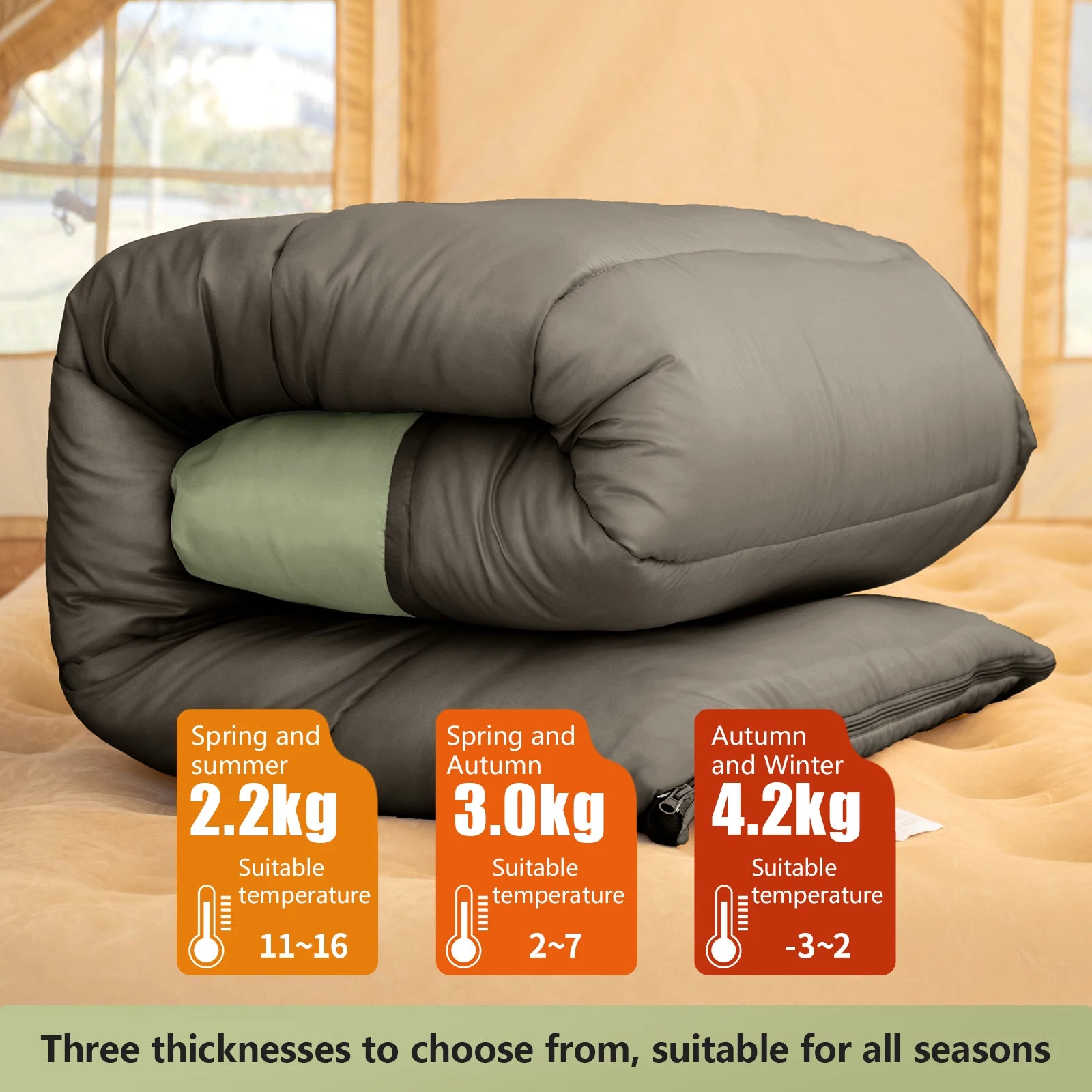
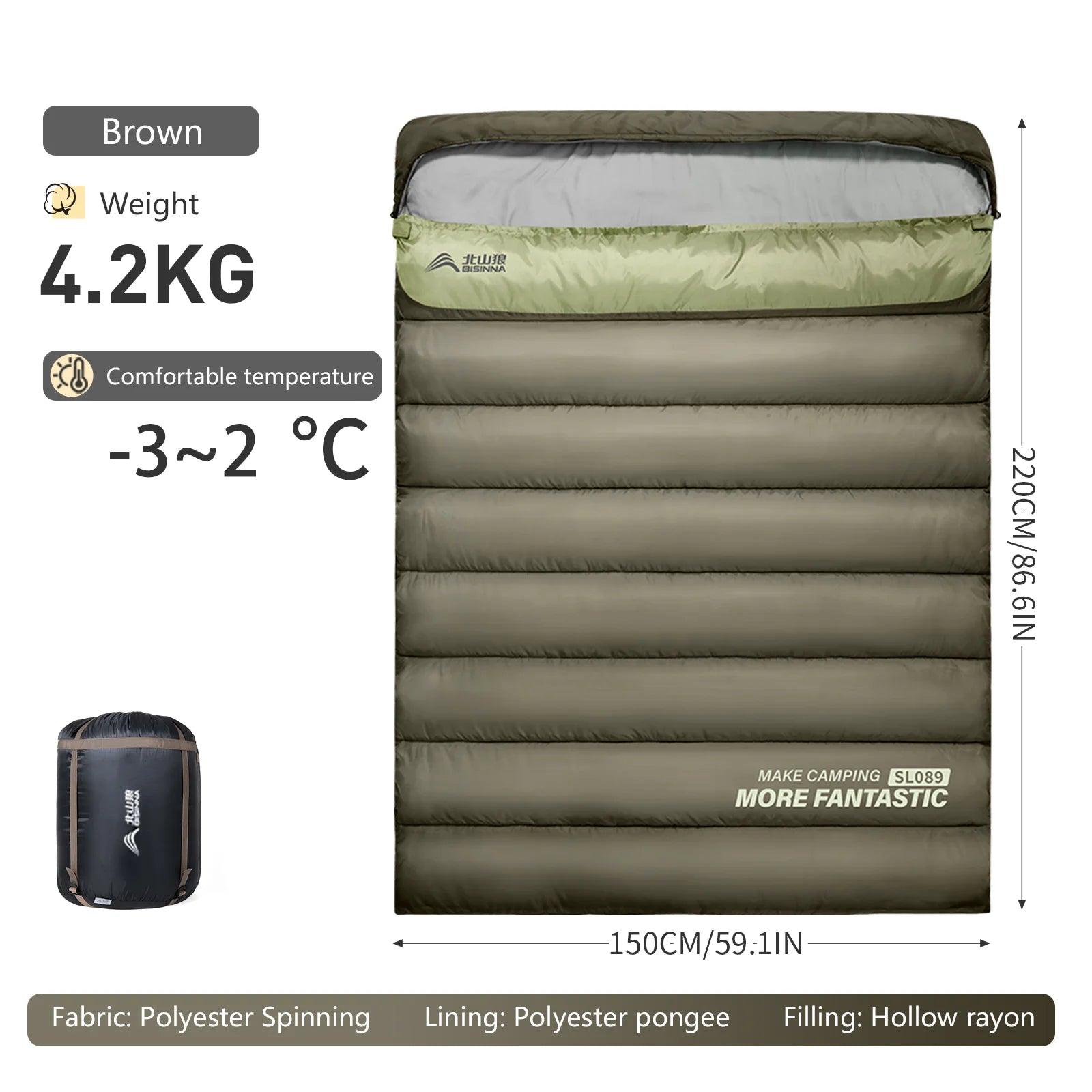
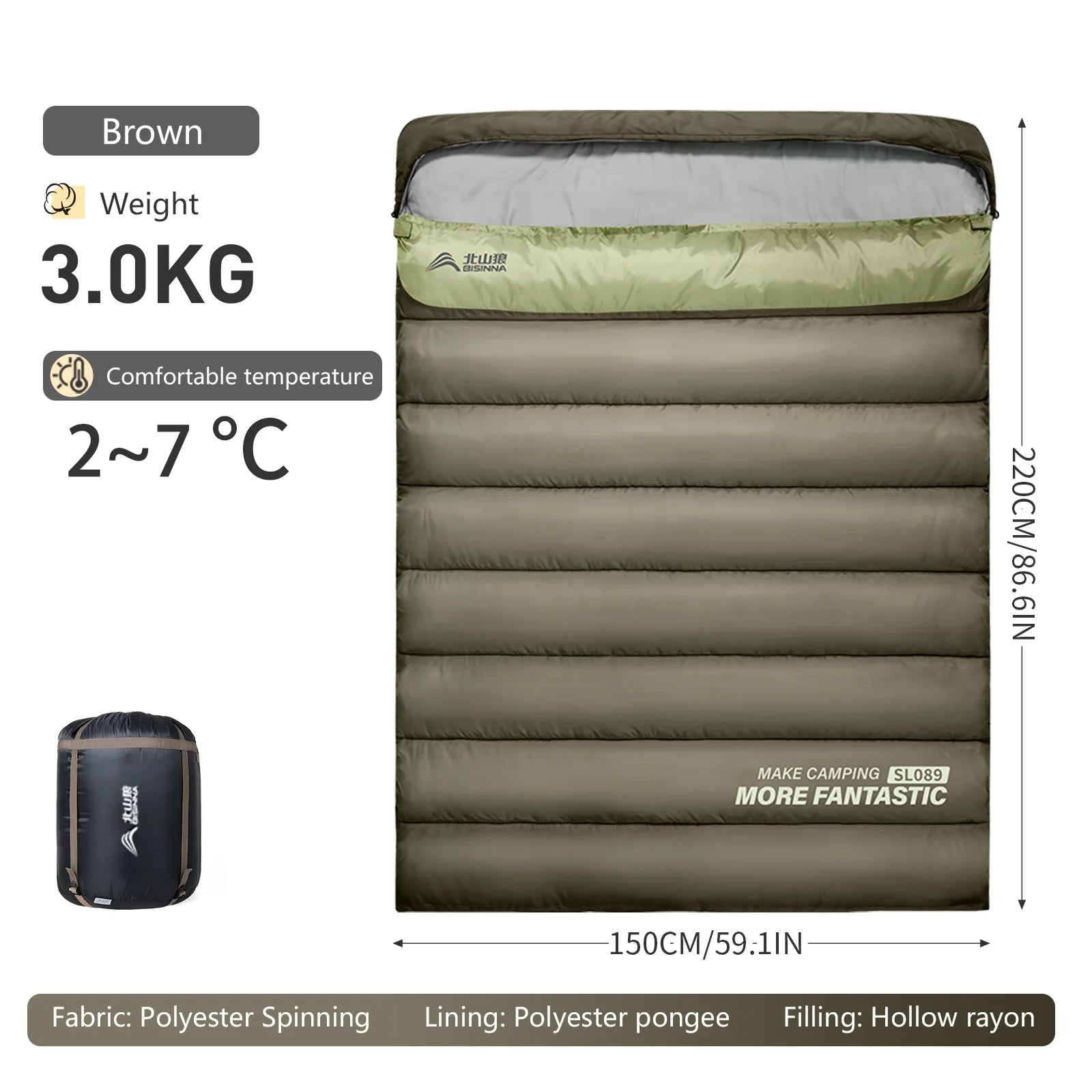
Best Winter Rated Double Sleeping Bag for Couples
Sharing body heat can significantly improve warmth.
A winter rated double sleeping bag for couples is ideal for:
- Car camping trips
- Shared body heat efficiency
- Comfort-focused camping setups
Check out this option: 2-person sleeping bag camping
Couple camper story: “We used to bring two bags and freeze. Switching to a double bag made a huge difference—it felt like sleeping at home.”
Build a Complete Cold Weather Sleep System
Your sleeping bag is only one piece.
Complete system includes:
- Insulated sleeping bag
- High R-value sleeping pad
- Ground insulation like Ground Sheets & Tarps
- Weather protection from Camping Tents & Shelter
- Extra layers from Wind & Cold Protection
Think of it as a layered defense against the cold.
Common Mistakes That Cause Cold Nights
- Using a summer sleeping bag in winter
- Skipping a sleeping pad
- Wearing damp clothing
- Leaving gaps in insulation
- Ignoring wind exposure
Avoid these, and you eliminate most winter discomfort.
Quick Comparison Table
| Feature | Down Sleeping Bag | Synthetic Sleeping Bag |
|---|---|---|
| Warmth-to-weight | Excellent | Moderate |
| Water resistance | Low | High |
| Packability | High | Lower |
| Cost | Higher | Affordable |
Real-World Setup Example
For a -10°F winter camping trip:
- 0°F rated down sleeping bag
- Insulated sleeping pad (R-value 5+)
- Thermal base layers
- Fleece liner
- Windproof tent
This setup consistently keeps campers warm—even in harsh conditions.
💡 See it in action
Comfort Upgrades That Make a Huge Difference
- Add Inflatable Pillows for better sleep posture
- Use Headlamps & Wearable Lights for nighttime adjustments
- Store warm drinks in Insulated Food Containers
These small additions create a surprisingly cozy experience.
👉 Get yours now before your next trip! Don’t let another freezing night ruin your adventure.
FAQ
What temperature rating should I choose for winter camping?
Choose a sleeping bag rated at least 10–20°F lower than expected temperatures to ensure comfort and safety.
Why is my sleeping bag not warm enough winter?
Common reasons include poor insulation, incorrect rating, lack of a sleeping pad, or moisture inside the bag.
Can I use two sleeping bags together?
Yes, layering bags or using a double sleeping bag can significantly increase warmth.
What’s the best way to stay warm at night?
Use a complete sleep system, stay dry, eat warm meals, and minimize air gaps in your sleeping setup.
Is down or synthetic better for extreme cold?
Down offers superior warmth in dry conditions, while synthetic performs better in wet environments.
Related Articles:
- Camping Sleeping Bag Double: Best Use For Couples & Sharing Warmth
- Degree Hiking Sleeping Bag: Best Fit For Cold-Weather Hikers
Pillar Articles:





