

Sleeping Bag En Rating Explained: How To Choose Right Warmth
Sleeping Bag En Rating Explained: How To Choose Right Warmth
What Is Sleeping Bag EN Rating?
Sleeping bag EN rating helps campers compare warmth levels using a standardized temperature test. Instead of guessing, the sleeping bag en rating shows comfort, limit, and extreme temperatures so beginners can choose safer gear for mild, cold, or freezing nights while avoiding overheating or dangerously cold sleep conditions.
⏱ 9 min read
Cold camping nights can turn an exciting outdoor trip into hours of shivering discomfort. Many campers buy sleeping bags based on thickness alone, only to discover they still wake up freezing at 2 a.m. Understanding sleeping bag temperature ratings is one of the easiest ways to choose the right warmth level for your environment, whether you camp solo, with kids, or share a winter double sleeping bag with a partner.
What gear actually makes camping easier when temperatures suddenly drop overnight? The answer usually starts with your sleep system. A properly rated sleeping bag, insulated sleeping pad, dry layers, and weather protection work together to keep body heat trapped where it belongs.
👉 Planning colder camping trips? Explore reliable sleep systems and outdoor essentials with Sleeping Bags & Sleeping Pads before your next overnight adventure.
💡 See it in action
How EN Temperature Ratings Actually Work
The sleeping bag en rating system was created to standardize how sleeping bags are tested for warmth. Instead of vague labels like “3-season” or “winter ready,” EN testing gives measurable temperature ranges based on laboratory conditions.
Manufacturers place a heated mannequin inside the sleeping bag and measure heat loss under controlled conditions. This creates a more realistic benchmark for comparing bags across brands.
| Rating Type | What It Means | Best Use |
|---|---|---|
| Comfort | Temperature where most cold sleepers stay comfortable | General camping decisions |
| Limit | Lowest temperature for average warm sleepers | Experienced campers |
| Extreme | Survival-only emergency temperature | Not recommended for planning |
For beginners, the comfort rating matters most. Many cold nights camping uncomfortable sleeping bag experiences happen because campers shop using the extreme rating instead of the comfort rating.
Comfort vs Limit vs Extreme Ratings
Sleeping bag temperature rating explained beginners guides often miss one critical detail: your body type changes how warm you sleep. Two campers using the same sleeping bag may have completely different experiences.
Comfort Rating: Best Choice For Most Campers
The comfort rating represents the temperature where an average cold sleeper can rest comfortably through the night. If nighttime temperatures are expected around 35°F, choosing a bag with a 35°F comfort rating is the safer option.
- Best for casual campers
- Ideal for couples and family camping
- Reduces overnight shivering
- Improves sleep quality during cold weather camping
Limit Rating: Better For Experienced Campers
The limit rating assumes the sleeper wears thermal layers and curls up to preserve heat. This works for backpackers familiar with cold weather camping, but beginners often underestimate how uncomfortable these temperatures feel overnight.
Extreme Rating: Emergency Only
The extreme rating is not a comfort recommendation. It indicates survival conditions only. Relying on this number can create dangerous cold exposure situations.
👉 Learn how to stay warmer overnight by combining your sleeping bag with insulated accessories from Blankets & Sleeping Comfort and weather-ready gear from Weather Protection & Environment.
Best Sleeping Bag Ratings For Different Trips
Choosing the right sleeping bag depends heavily on where and when you camp. A lightweight summer bag works perfectly for humid July campgrounds but becomes miserable during alpine autumn trips.
| Camping Situation | Recommended Comfort Rating | Recommended Bag Type |
|---|---|---|
| Summer camping | 40°F to 50°F | Light synthetic sleeping bag |
| Spring/fall camping | 20°F to 35°F | Insulated sleeping bag |
| Winter camping | 0°F to 20°F | Winter double sleeping bag |
| Family campground trips | 30°F to 40°F | Affordable double sleeping bag |
| Backpacking trips | 15°F to 30°F | Lightweight down bag |
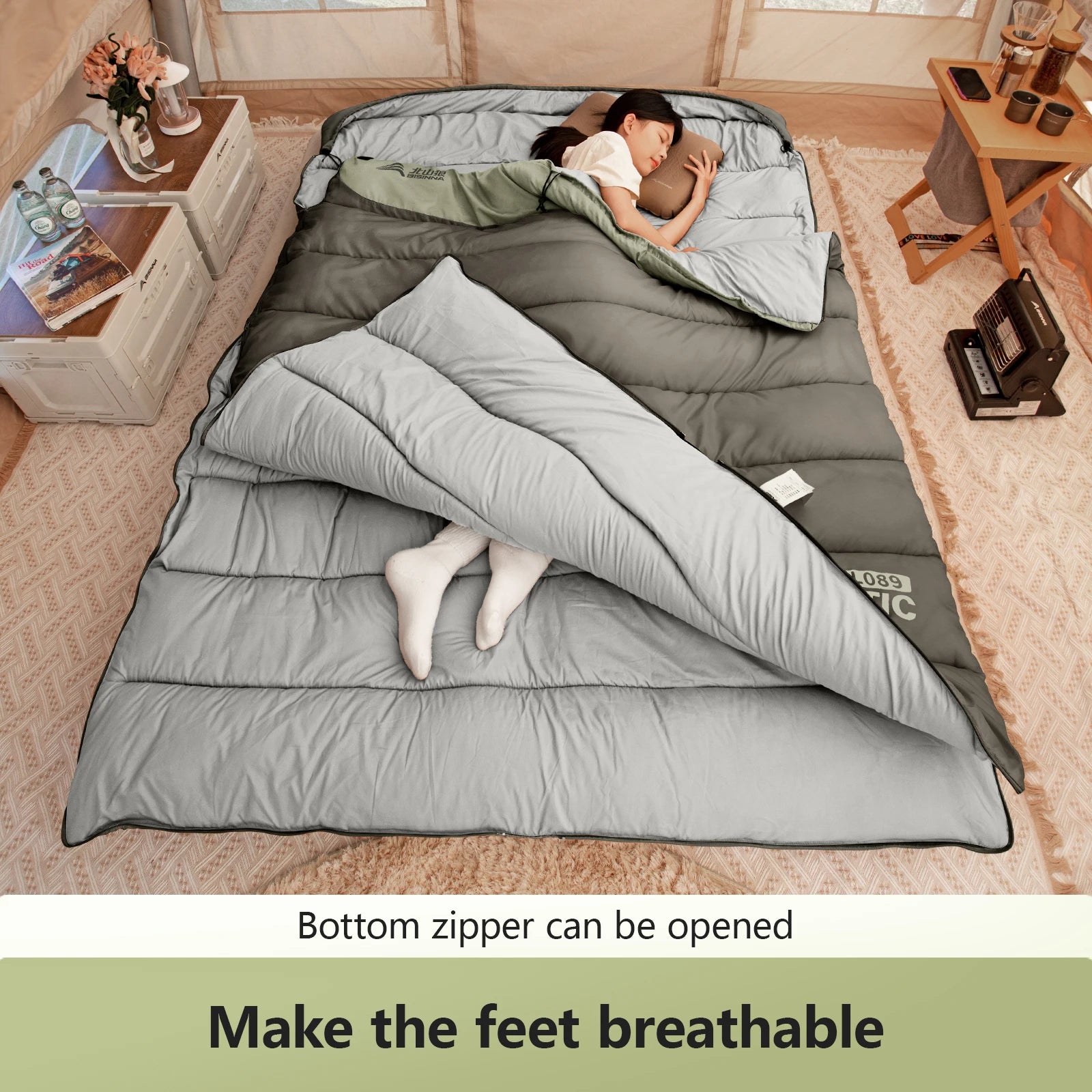
Couples often sleep warmer together inside a two person sleeping bag because shared body heat reduces cold spots. This makes double sleeping bags popular for car camping and shoulder-season trips.
Many campers pair sleeping systems with equipment from Camping Tents & Shelter and moisture protection from Waterproof & Dry Bags to improve warmth retention.
Double Sleeping Bag Down vs Synthetic Comparison
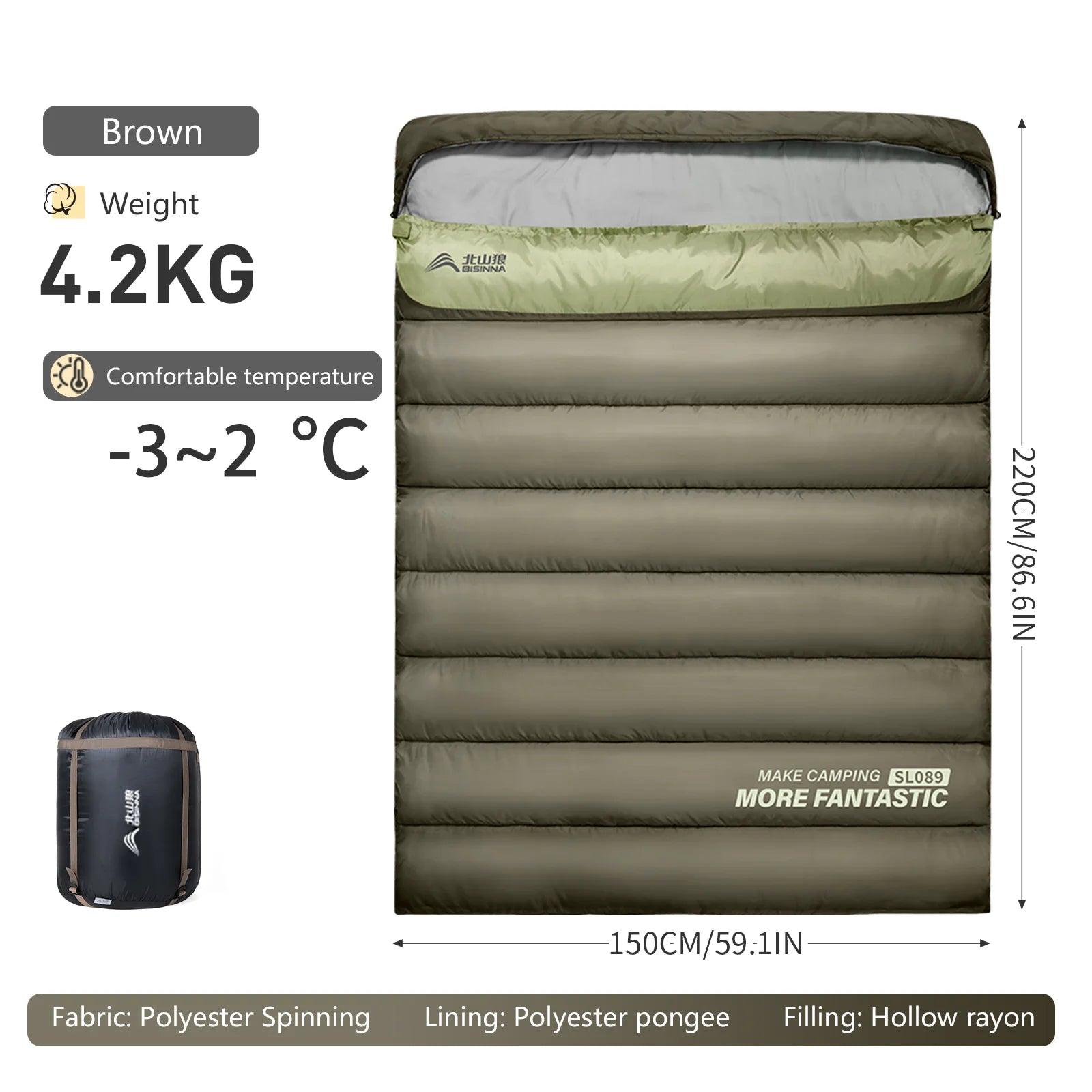
One of the biggest decisions for couples is choosing between down and synthetic insulation. Both have strengths, but the right choice depends on climate, moisture exposure, and packing priorities.
💡 See it in action
| Feature | Double Sleeping Bag Down | Synthetic Sleeping Bag |
|---|---|---|
| Warmth-to-weight ratio | Excellent | Good |
| Performance when wet | Poor unless treated | Better moisture resistance |
| Packability | Very compact | Bulkier |
| Cost | Higher | More affordable |
| Best use | Cold dry climates | Damp or humid environments |
Why Synthetic Bags Surprise Campers In Wet Conditions
Many people assume down is always warmer, but damp conditions change everything. Synthetic insulation continues trapping heat even after moisture exposure, while wet down loses loft quickly.
That is why rainy coastal camping and humid mountain trips often favor synthetic sleeping bags.
Why Down Still Dominates Cold Dry Camping
For dry winter conditions, down remains difficult to beat. High-quality down insulation provides exceptional warmth without adding heavy bulk.
Campers trying to save trunk space often combine compact down bags with organizers from Car Organizers & Storage and compression solutions from Compression & Packing Bags.
Common Beginner Mistakes That Cause Cold Nights
Even expensive sleeping bags fail when campers overlook important setup details.
Using The Wrong Sleeping Pad
The ground steals heat rapidly. A warm sleeping bag on a poor sleeping pad still feels cold underneath.
- Use insulated pads during shoulder seasons
- Add blankets for car camping comfort
- Avoid direct contact with cold ground
- Layer foam and inflatable pads during winter trips
Overdressing Inside The Bag
Heavy sweaty layers create moisture inside the bag, reducing insulation efficiency overnight.
Instead, wear:
- Dry thermal base layers
- Warm socks
- A beanie for heat retention
- Light fleece if needed
Ignoring Tent Ventilation
Condensation builds quickly inside sealed tents. Moisture reduces sleeping bag performance and creates clammy discomfort by morning.
Better airflow with gear from Camping Lights & Lanterns and weather accessories from Weather Accessories can improve nighttime comfort dramatically.
How To Build A Warmer Camping Sleep System
The warmest campers rarely rely on a sleeping bag alone. They build layered sleep systems designed for changing weather.
Essential Layers For Colder Trips
- Insulated sleeping bag
- High R-value sleeping pad
- Ground tarp or insulation layer
- Dry sleep clothing
- Warm hat and socks
- Tent with wind protection
Adding small accessories often makes the biggest difference. Many experienced campers use items from Inflatable Pillows and Ground Sheets & Tarps to increase warmth and comfort without major weight increases.
Warm Food And Hydration Matter Too
Cold bodies struggle to stay warm overnight. Eating warm meals and staying hydrated before bed helps maintain body heat naturally.
That is why campers frequently pack hot drinks and soups using Insulated Food Containers and prepare meals with Camping Stoves & Cooking.
“Switching to a properly rated double sleeping bag completely changed our winter camping trips. We stopped waking up freezing at dawn and finally started sleeping comfortably outdoors.” — Weekend camper review from Colorado
👉 Upgrade your camping sleep setup before temperatures drop. Explore the 2 Person Sleeping Bag Camping solution alongside gear from Car Camping Accessories for colder adventures.
When Two Person Sleeping Bags Work Best
Choosing insulated two person sleeping bag guide recommendations usually depends on camping style. Couples who prioritize comfort over ultralight backpacking often prefer double bags.
Best Situations For Double Sleeping Bags
- Car camping weekends
- Cold weather campground stays
- Family camping trips
- Couples sharing body warmth
- Glamping and road trips
When Single Bags Are Better
- Ultralight backpacking
- Different sleep temperature preferences
- Solo alpine climbing trips
- Minimalist hiking setups
An affordable double sleeping bag often delivers better comfort value than buying two separate premium winter bags for casual campers.
Campers preparing for unpredictable weather also frequently add backup safety gear from Safety, Survival & Emergency and lighting from Headlamps & Wearable Lights.
💡 See it in action
Why Understanding EN Ratings Makes Camping More Comfortable
The sleeping bag en rating system removes much of the guesswork from buying camping gear. Instead of choosing bags based on thickness or marketing claims, campers can compare real temperature performance more confidently.
For beginners, focusing on the comfort rating prevents many miserable overnight experiences. For couples, choosing the right insulated two person sleeping bag can improve warmth, comfort, and sleep quality during colder trips.
Whether you prefer compact down insulation or moisture-resistant synthetic fill, understanding sleeping bag ratings helps you build a safer, warmer, and more enjoyable camping sleep system.
FAQ
What does sleeping bag EN rating mean?
Sleeping bag EN rating is a standardized temperature testing system that measures how warm a sleeping bag performs under controlled conditions. It helps campers compare bags more accurately across different brands.
Should beginners use comfort or limit ratings?
Beginners should focus on the comfort rating because it reflects temperatures where most people sleep comfortably without excessive cold stress during overnight camping.
Are double sleeping bags warmer than single bags?
Two person sleeping bags often feel warmer because shared body heat reduces cold air pockets inside the bag, especially during cool weather camping trips.
Is synthetic or down insulation better for wet camping?
Synthetic sleeping bags generally perform better in wet conditions because they retain insulation even when exposed to moisture, while untreated down loses loft faster.
Why do campers still feel cold inside warm sleeping bags?
Poor sleeping pads, wet clothing, tent condensation, and incorrect temperature ratings are common reasons campers experience cold nights even with insulated sleeping bags.
Pillar Article: Sleeping Bag Recommendations: Best 0 Degree & Winter Picks Compared
Other Related Articles:
- Backpacking 0 Degree Sleeping Bag: Best Warm Options Reviewed
- Sleeping Bag Heavy Duty: Top Durable Models Compared
- Double Sleeping Bag Down Vs Synthetic: Which Is Warmer?
- Sleeping Bags Extra Long: Best Picks Compared For Tall Campers
Explore More:





