

Backpacking 0 Degree Sleeping Bag: Best Warm Options Reviewed
What does sleeping bag EN rating mean and why does it matter?
A sleeping bag en rating is a standardized European system that shows how warm a sleeping bag will keep you in different temperature conditions. It helps campers compare warmth performance across brands so you can choose the right insulation level for safety and comfort. Understanding this rating prevents cold, sleepless nights outdoors and improves gear selection for all seasons.
Sleeping Bag EN Rating Explained: How To Choose Right Warmth
⏱ 7 min read
Choosing the right sleeping bag can feel confusing when temperatures drop and every degree matters. Have you ever woken up freezing in your tent even though you packed “warm” gear? Understanding how EN ratings work removes the guesswork and helps you match your sleeping bag to real outdoor conditions—whether you're camping in damp spring weather or freezing winter nights.
💡 See it in action
How Does Sleeping Bag EN Rating Work?
The sleeping bag en rating system measures warmth using controlled lab tests, giving three key temperature points: comfort, limit, and extreme. This helps campers understand how a sleeping bag performs in real-world conditions instead of guessing based on fill or thickness alone.
- Comfort rating: Temperature where an average sleeper feels warm
- Limit rating: Lowest temperature a warm sleeper can handle
- Extreme rating: Survival-only threshold (not for comfort)
- Standardized testing: Makes brands comparable worldwide
For cold-weather camping, always prioritize the comfort rating—not the extreme value.
Sleeping Bag Temperature Rating Explained Beginners
The sleeping bag temperature rating explained beginners concept is simple once broken down. Ratings are not absolute guarantees—they assume you are using an insulated pad, wearing base layers, and sleeping in a sheltered environment.
| Rating Type | Meaning | Best Use |
|---|---|---|
| Comfort | Warm sleep temperature | Everyday camping |
| Limit | Cold survival range | Experienced campers |
| Extreme | Emergency survival only | Not recommended for planning |
Many beginners make the mistake of choosing based on extreme ratings, leading to uncomfortable nights in real conditions.
What happens if you choose the wrong rating?
If your sleeping bag is not suited for the environment, you may experience:
- Interrupted sleep from cold exposure
- Reduced energy for hiking or travel
- Increased risk of hypothermia in severe conditions
- Uncomfortable condensation inside the bag
That’s why selecting the correct sleeping bag en rating matters more than brand or price alone.
Down vs Synthetic Insulation: Which Performs Better?
One of the biggest decisions in camping gear is insulation type. Down and synthetic fill behave very differently depending on moisture, temperature, and compression.
💡 See it in action
| Feature | Down | Synthetic |
|---|---|---|
| Warmth-to-weight | Excellent | Moderate |
| Moisture resistance | Poor when wet | Good in damp conditions |
| Packability | Very compact | Bulkier |
| Cost | Higher | More affordable |
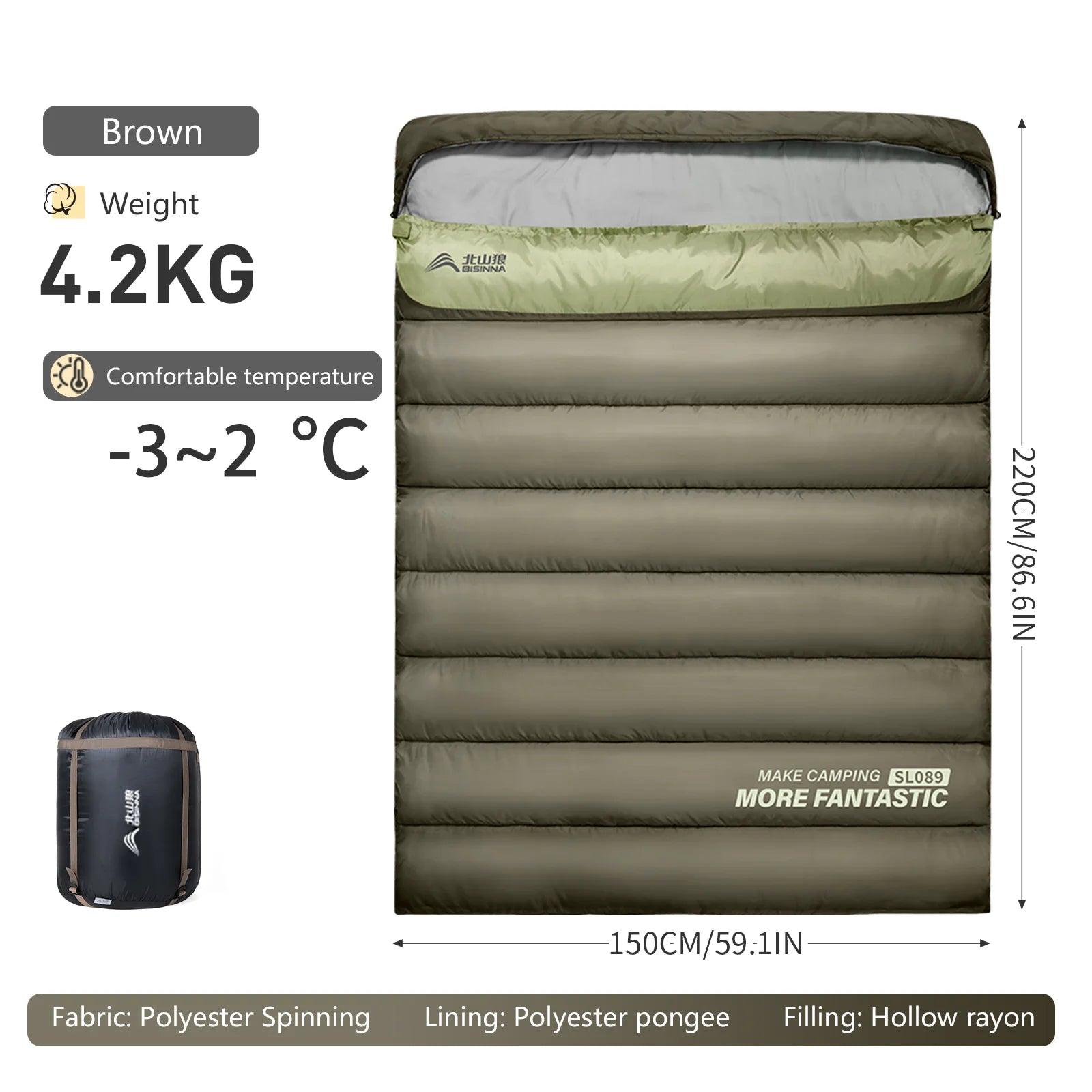
For dry winter conditions, a double sleeping bag down design is extremely efficient. However, for damp environments, synthetic insulation is often more reliable.
Choosing an Insulated Two Person Sleeping Bag Guide
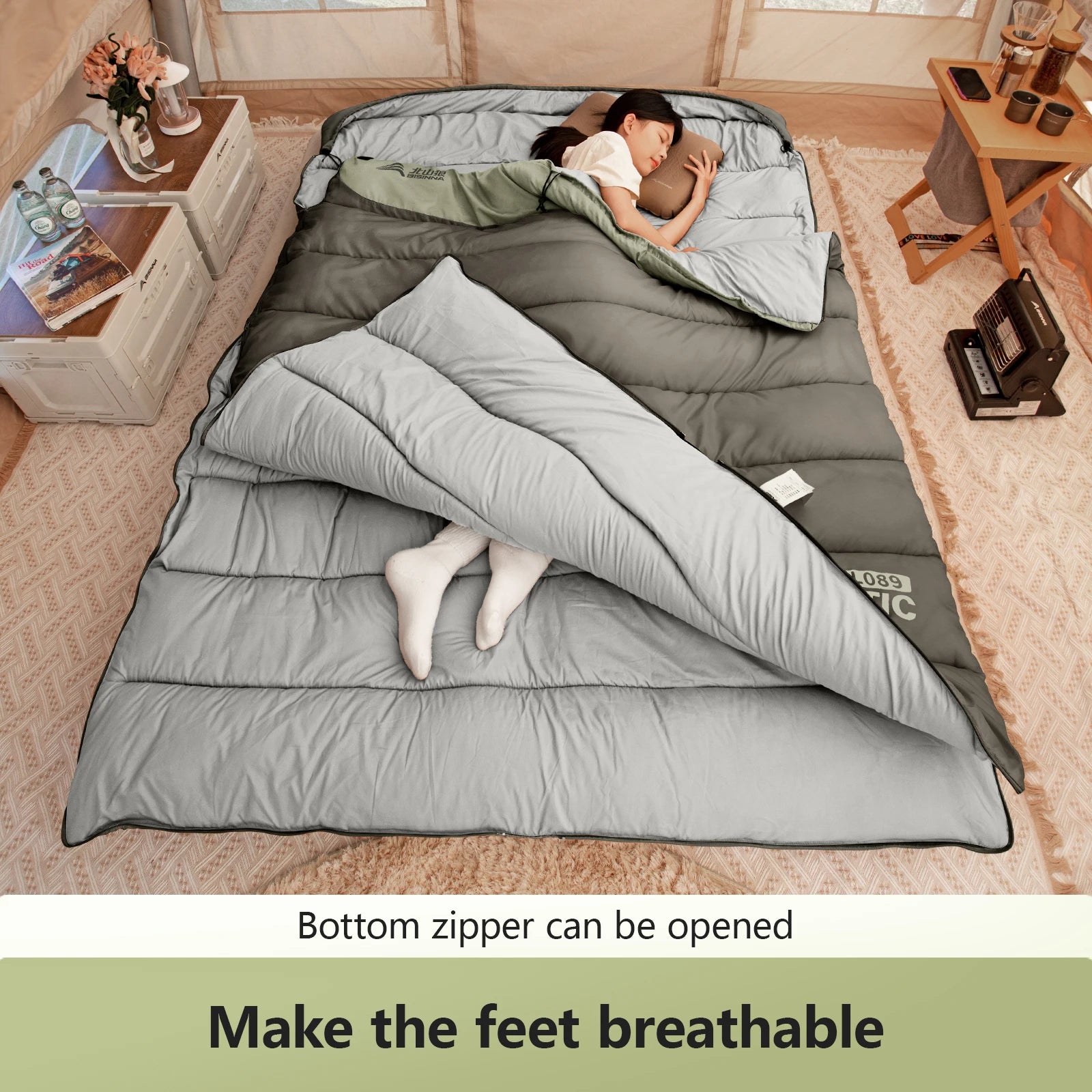
If you’re camping as a couple, a two person sleeping bag can simplify warmth management and reduce gear bulk. The choosing insulated two person sleeping bag guide approach focuses on shared body heat, insulation type, and space efficiency.
For many campers, shared sleeping systems feel warmer than two separate bags—especially in mild to cold conditions.
- Shared warmth: Body heat stays concentrated
- Less gear weight: One system instead of two
- Better comfort: No gaps between bags
- Efficient packing: Ideal for car camping setups
You can explore a practical setup here: 2 Person Sleeping Bag Camping or browse the Sleeping Bags & Sleeping Pads collection for more options.
Why Cold Nights Camping Makes Sleeping Bags Feel Uncomfortable
Many campers blame the bag, but discomfort often comes from setup mistakes. Cold ground, moisture, and poor layering can all reduce insulation effectiveness even in high-rated bags.
- Thin or missing sleeping pad
- Humidity inside the tent
- Wrong temperature rating selection
- Loose or unsealed sleeping bag fit
These issues often lead to the experience of cold nights camping uncomfortable sleeping bag situations—even when using premium gear.
To improve comfort, pair your sleeping bag with insulation layers from Blankets & Sleeping Comfort or add protection using Wind & Cold Protection.
Quick comfort checklist before sleeping outdoors
- Use insulated sleeping pad
- Keep dry clothing for sleeping
- Seal tent vents in cold wind
- Match EN rating to lowest expected temperature
Down vs Synthetic in Real Camping Scenarios
Imagine camping near a lake in early spring. Night temperatures drop suddenly, and moisture rises from the ground. In this case, synthetic insulation often performs more reliably than down.
But in dry mountain winter conditions, down insulation offers superior warmth with less weight—making it ideal for hikers who prioritize packability.
Where to Find Reliable Sleeping Bag Systems
If you're building a complete sleep setup, explore modular gear combinations designed for different weather conditions. A full system improves insulation consistency and comfort across seasons.
Check out the Camping & Picnic Essentials for complementary outdoor gear, or upgrade your shelter setup with Camping Tents & Shelter for better heat retention.
💡 See it in action
Final Thoughts on Sleeping Bag EN Ratings
Understanding the sleeping bag en rating system helps you avoid one of the most common camping mistakes—choosing the wrong warmth level. When you match insulation type, rating, and conditions properly, you get consistent comfort and safer outdoor nights in any season.
FAQ: Sleeping Bag EN Rating
What is a good EN rating for winter camping?
For winter camping, choose a sleeping bag with a comfort rating at least 5–10°C lower than expected nighttime temperatures. This ensures warmth even in unexpected weather drops.
Is EN rating accurate for all brands?
Most reputable brands follow EN/ISO testing standards, making ratings fairly consistent. However, personal comfort, clothing, and sleeping pad use can affect real-world performance.
Should I trust comfort or extreme rating?
Always trust the comfort rating. The extreme rating is only for survival conditions and should never be used for planning camping trips.
Are double sleeping bags warmer than single ones?
Yes, a winter double sleeping bag can be warmer because shared body heat reduces heat loss, especially when properly insulated and sealed.
Pillar Article: Sleeping Bag Recommendations: Best 0 Degree & Winter Picks Compared
Other Related Articles:
- Sleeping Bag En Rating Explained: How To Choose Right Warmth
- Sleeping Bag Heavy Duty: Top Durable Models Compared
- Double Sleeping Bag Down Vs Synthetic: Which Is Warmer?
- Sleeping Bags Extra Long: Best Picks Compared For Tall Campers
Explore More:





