

Aluminum Carabiners For Camping Vs Climbing: Deep Feature Analysis
Do rock climbing carabinders really keep you safe?
Rock climbing carabinders are designed to handle extreme loads, often rated 20–30kN, but safety depends on features like gate strength, locking systems, and shape. Choosing strong, certified carabiners and using them correctly reduces failure risk and ensures reliable protection during falls, belays, and anchor setups.
Rock Climbing Carabiners: Features That Make Them Safer
Rock climbing carabinders may look simple, but the right features can mean the difference between total confidence and hidden risk. In this guide, you’ll learn how to choose strong climbing carabiners, understand D-shaped vs oval carabiner durability, and explore a detailed guide to outdoor carabiner types that most climbers overlook. From gate strength to locking mechanisms, these insights reveal what truly keeps you safe on the wall—but are you using the right one for your climb?
⏱ 8 min read
You’re halfway up a route. Your forearms are pumped, your last quickdraw is below your waist, and suddenly—you wonder: can your gear truly hold?
What gear actually makes climbing safer, not just lighter or cheaper?
The answer often comes down to one small but critical tool: your carabiner.
Explore essentials like Hooks, Clips & Carabiners to upgrade your safety system before your next climb.
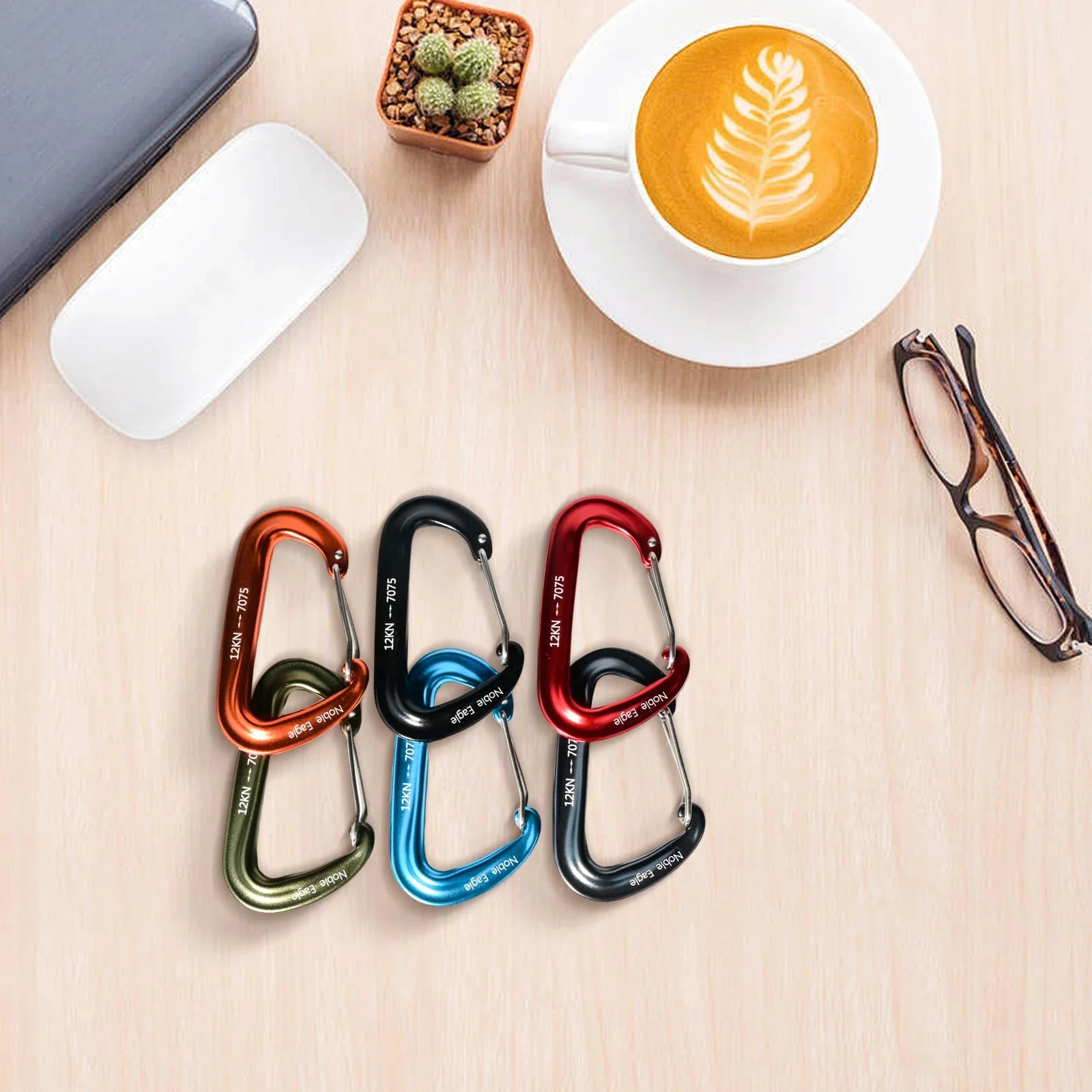
💡 See it in action
Why Carabiner Features Directly Impact Your Safety
Not all carabiners are created equal. While they may look similar, subtle differences in design can significantly affect performance.
- Weak gate = higher risk of failure under load
- Poor shape = uneven stress distribution
- No locking system = accidental opening risk
- Low durability = faster wear and tear
Every feature is engineered to solve a real climbing problem. Ignoring them means relying on luck instead of design.
How Strength Ratings Translate to Real Climbing Protection
Carabiners are rated in kilonewtons (kN), but what does that actually mean?
- Major axis strength (20–30kN): Load applied along the spine
- Minor axis strength (7–10kN): Sideways force
- Open gate strength (6–9kN): Most vulnerable state
Here’s the key insight: carabiners rarely fail when used correctly. Failures happen when force is applied in unintended ways—like cross-loading or open gates.
This is why understanding how to choose strong climbing carabiners goes beyond just reading numbers.
Browse reliable options inside Backpacking & Carry for better load distribution and safety.
How Gate Mechanisms Prevent Accidental Failure
Solid Gate vs Wire Gate
- Solid gate: Stronger feel, slightly heavier, more prone to freezing
- Wire gate: Lighter, resists freezing, reduces gate flutter
Wire gates are popular for alpine climbing because they reduce vibration-induced opening, known as “gate flutter.”
Keylock vs Notch Nose
- Keylock: Smooth clipping, no snagging
- Notch nose: Simpler but can catch on gear
A snagged carabiner wastes energy—and in tough situations, energy is everything.
How Locking Systems Add Critical Redundancy
Locking carabiners are essential for anchors, belays, and rappels.
- Screwgate: Manual, reliable, lightweight
- Auto-locking: Faster, safer in high-risk scenarios
- Triple-lock: Maximum security for critical points
Climbers often say: “If failure isn’t an option, use a locking carabiner.”
For added safety gear, check Safety, Survival & Emergency essentials.
D-Shaped vs Oval Carabiner Durability Explained
D-shaped vs oval carabiner durability is one of the most misunderstood comparisons.
D-Shaped Carabiners
- Directs load toward the spine (strongest part)
- Higher strength-to-weight ratio
- Most common for sport and trad climbing
Oval Carabiners
- Symmetrical shape for even load distribution
- Better for aid climbing and pulley systems
- Slightly lower strength efficiency
Bottom line: D-shaped designs are stronger for general use, while oval shapes provide balance for specific technical setups.
Why Material and Construction Matter More Than You Think
Most modern rock climbing carabinders are made from aluminum alloys.
- Hot-forged aluminum: Stronger, lighter, optimized shape
- Cold-forged: Less efficient, heavier
- Anodized coating: Corrosion resistance and durability
High-quality construction reduces microfractures and extends lifespan—critical for long-term safety.
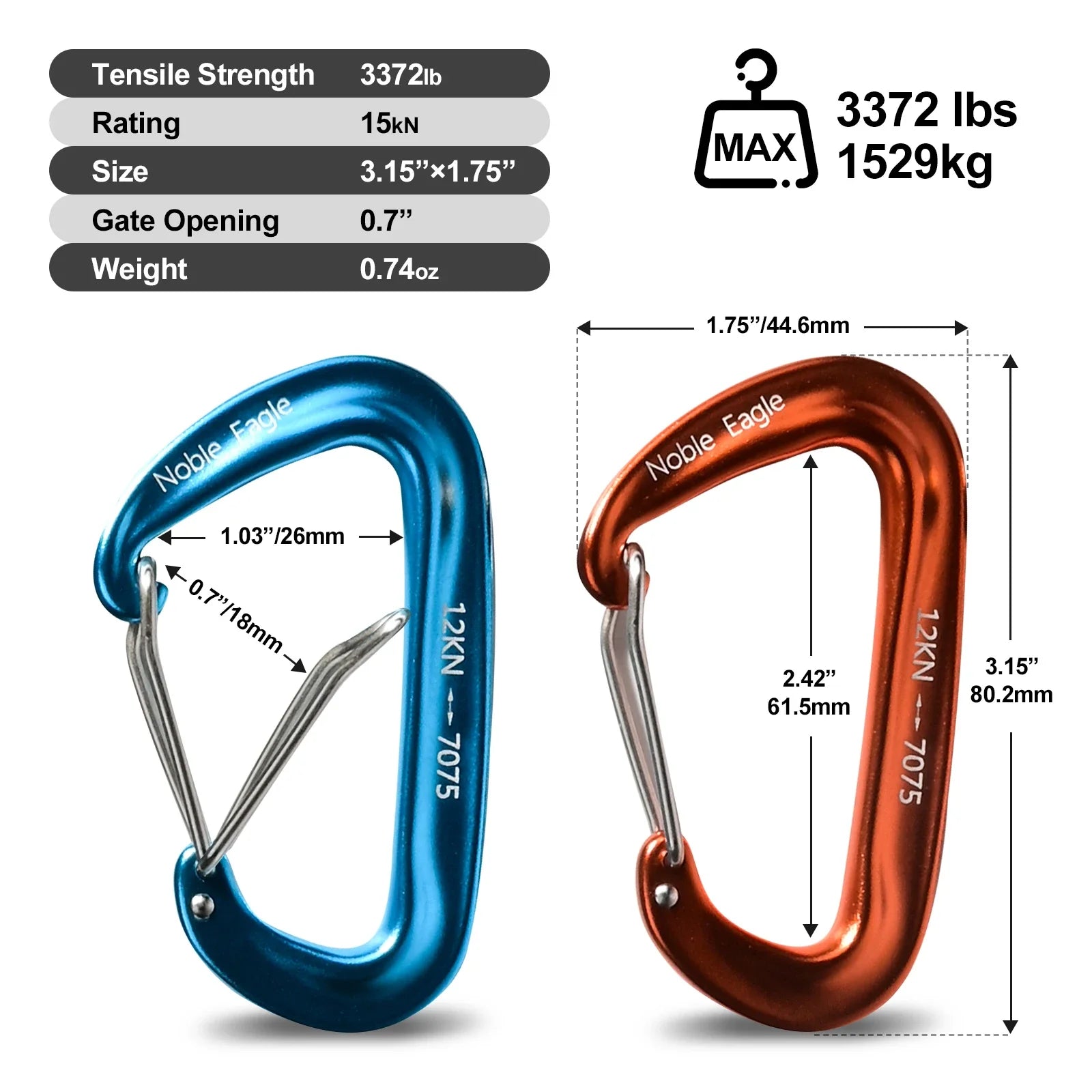
💡 See it in action
Detailed Guide to Outdoor Carabiner Types
Understanding different types helps you choose the right tool for each scenario.
- Non-locking: Quickdraws, low-risk connections
- Locking: Anchors, belays, rappels
- HMS (pear-shaped): Belaying and knot management
- Wiregate: Lightweight alpine setups
Explore versatile options in Hooks, Clips & Carabiners for different outdoor needs.
Quick Checklist: How to Choose Strong Climbing Carabiners
- Check major axis strength (20kN or higher)
- Choose locking mechanisms for critical connections
- Prefer D-shaped designs for strength efficiency
- Look for keylock noses to prevent snagging
- Select lightweight materials without sacrificing durability
This checklist simplifies how to choose strong climbing carabiners without overthinking specs.
Real Climbing Scenarios: Where Safety Features Make the Difference
Scenario 1: Lead Climbing Fall
A strong spine-loaded D-shaped carabiner absorbs force efficiently, reducing failure risk.
Scenario 2: Multi-Pitch Anchor Setup
Locking carabiners prevent accidental gate opening under shifting loads.
Scenario 3: Alpine Climbing
Wiregate designs reduce freezing and weight, improving performance in cold conditions.
These aren’t theoretical advantages—they directly impact outcomes on the wall.
Carabiner Feature Comparison Table
| Feature | Standard Carabiner | Advanced Safety Carabiner |
|---|---|---|
| Gate Type | Basic solid gate | Wiregate or keylock |
| Locking | None | Screwgate / auto-lock |
| Shape | Oval | D-shaped |
| Strength | 18–20kN | 22–30kN |
| Durability | Moderate | High (hot-forged) |
Why This Carabiner Stands Out for Safety and Performance
Rock climbing carabinders with advanced features like hot-forged aluminum, keylock noses, and high-strength ratings provide superior reliability under stress. They reduce failure risks, improve handling efficiency, and enhance overall climbing safety—making them a dependable choice for both beginners and experienced climbers.
- Pros: High strength, smooth clipping, durable construction
- Cons: Slightly higher cost, requires proper use knowledge
Try a reliable option here: 12KN Aluminum Carabiner Clip Set
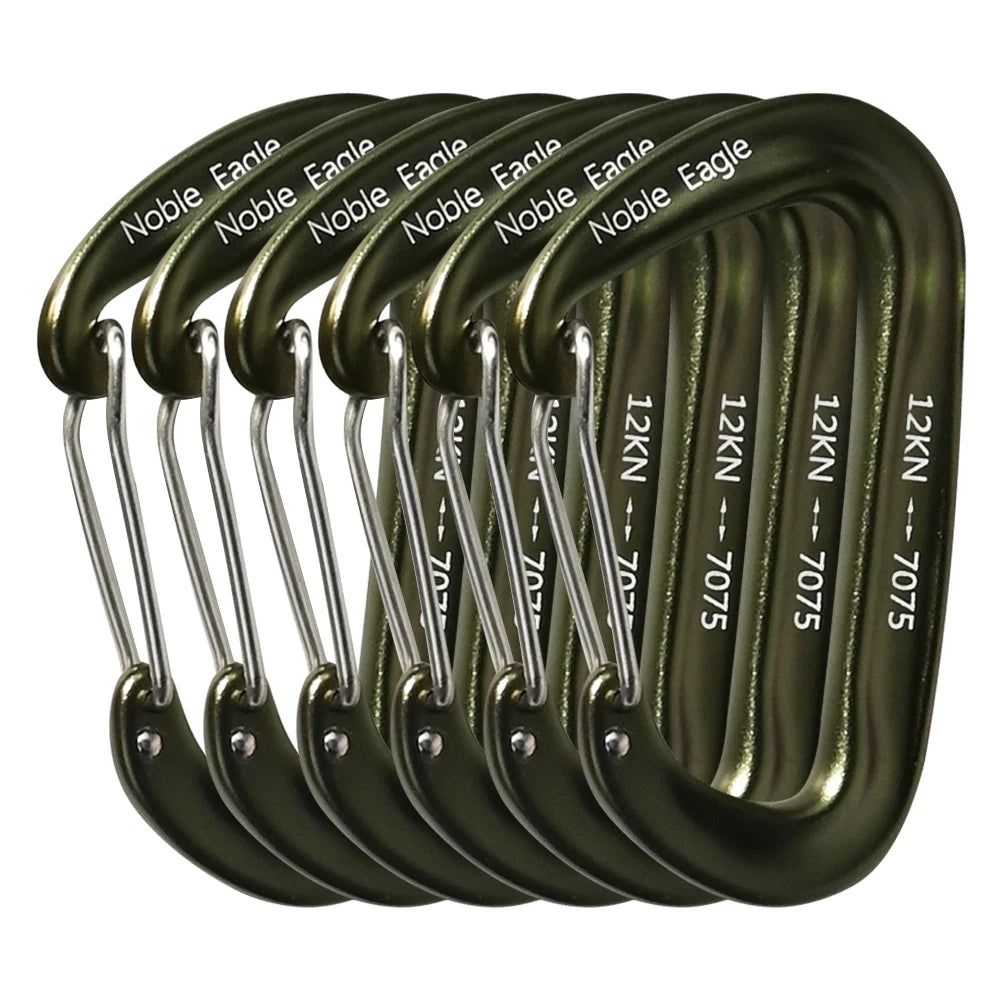
💡 See it in action
How Better Gear Improves Your Entire Outdoor Experience
Choosing the right carabiner doesn’t just improve safety—it enhances confidence.
- Climb with less hesitation
- Trust your anchors fully
- Reduce mental fatigue
- Focus on technique and movement
Pair your setup with essentials from Gloves & Protective Gear for added control and safety.
Upgrade your gear with the 12KN Aluminum Carabiner Clip Set and climb with confidence.
FAQ
What is the safest type of carabiner for climbing?
Locking D-shaped carabiners are considered the safest because they combine high strength with secure gate mechanisms, reducing accidental opening risks.
How often should you replace climbing carabiners?
Replace them if you notice cracks, sharp edges, or gate issues. Even without visible damage, frequent use may require replacement every few years.
Are oval carabiners weaker than D-shaped ones?
Oval carabiners distribute load evenly but are generally less efficient in strength compared to D-shaped designs, which focus force along the spine.
Can cheap carabiners be used for climbing?
No. Only certified climbing carabiners with proper strength ratings should be used for safety-critical applications.
What size carabiner is best for beginners?
Medium-sized D-shaped carabiners offer a balance of strength, ease of use, and versatility, making them ideal for beginners.
Pillar Article: Rock Climbing Carabiners: Features That Make Them Safer
Other Related Articles:
Explore More:





