

Climbing Rope Keeps Getting Tangled? Who Needs A Swivel Most
Climbing Rope Keeps Getting Tangled? Who Needs A Swivel Most
Climbing rope keeps getting tangled on belays, descents, and multi-pitch routes, turning smooth movement into constant frustration and wasted energy. This guide explains why rope twisting during rock climbing happens, who actually benefits from a swivel, and how safe rope rotation for climbing can improve control, reduce wear, and make every pitch feel more efficient and predictable.
⏱ 5 min read
Why does a climbing rope keep getting tangled and would a swivel help?
Climbing rope keeps getting tangled mainly due to repeated rotations during rappels, belaying, and uneven rope stacking. These twists build tension that locks into kinks and knots. A climbing swivel helps reduce rope twisting during rock climbing by allowing smooth rotation at the connection point, improving flow, reducing wear, and keeping rope handling more controlled.
👉 Discover must-have climbing gear that improves rope control and reduces frustration on every climb.
Ever pulled your rope down after a climb only to find it looping, twisting, and fighting back like it has a mind of its own? You’re not alone. Many climbers dealing with rope twisting during rock climbing assume it’s just “normal,” but often it’s a sign of rotation buildup and inefficient handling.
What actually causes this spiral effect, and more importantly, when does it become worth fixing with equipment like a swivel?
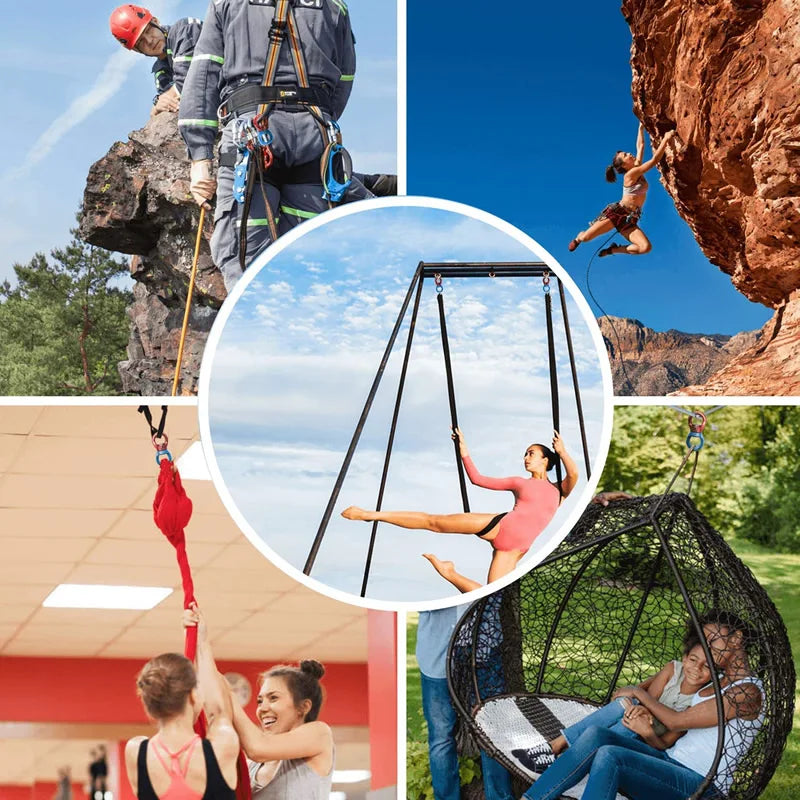
💡 See it in action outdoors
For climbers pushing longer routes or repetitive rappels, safe rope rotation for climbing can be the difference between smooth transitions and constant stoppages. Let’s break it down so you can decide what actually helps your setup.
Why Climbing Rope Keeps Getting Tangled
Climbing rope keeps getting tangled due to accumulated twist forces that build during repeated movements. Each rappel, belay adjustment, or weighted spin adds rotation. Over time, these rotations lock into the rope’s sheath, forming stubborn coils that are difficult to shake out even on flat ground.
- Repeated rappelling adds directional spin to the rope
- Uneven rope stacking creates hidden loops
- Wind exposure increases rope movement mid-air
- Carabiner friction introduces rotational drag
In real climbing scenarios, especially on windy crags or long multi-pitch routes, these small factors stack quickly. Climbers often notice tangles worsening near anchors or during rope retrieval.
👉 Learn how to choose the right climbing setup to reduce rope twisting and improve safety on your next ascent.
Who Actually Needs a Climbing Swivel?
A climbing swivel is most useful for climbers who frequently deal with rope rotation under load. This includes big wall climbers, rescue professionals, and multi-pitch trad climbers. If your rope regularly coils during rappels or hauling, a swivel can significantly stabilize movement and reduce repeated twisting issues.
Not every climber needs one. If you mostly climb single pitches with minimal rope rotation, technique improvements may be enough. But for extended vertical systems, the difference becomes noticeable quickly.
| Climbing Style | Rope Twist Risk | Swivel Benefit |
|---|---|---|
| Sport climbing (single pitch) | Low | Minimal |
| Multi-pitch trad climbing | Medium | Helpful |
| Big wall climbing | High | Very high |
| Rescue/hauling systems | Very high | Essential |
Many climbers underestimate how quickly rope twisting during rock climbing escalates when gear systems become more complex. Swivels help isolate rotation so it doesn’t travel through the entire rope length.
Safe Rope Rotation for Climbing Explained
Safe rope rotation for climbing is about controlling how motion transfers through your system. Instead of allowing the rope to twist freely through anchors and devices, a controlled rotation point—like a swivel—absorbs that spin and prevents it from traveling down the line.
- Attach swivel between rope and device connection point
- Allow rotation to occur at a single controlled point
- Monitor rope feed during descent or hauling
- Reset rope alignment before repeated climbs
This approach reduces chaotic spinning and improves predictability during rope handling. Climbers report smoother rappels and fewer mid-route interruptions when rotation is controlled properly.
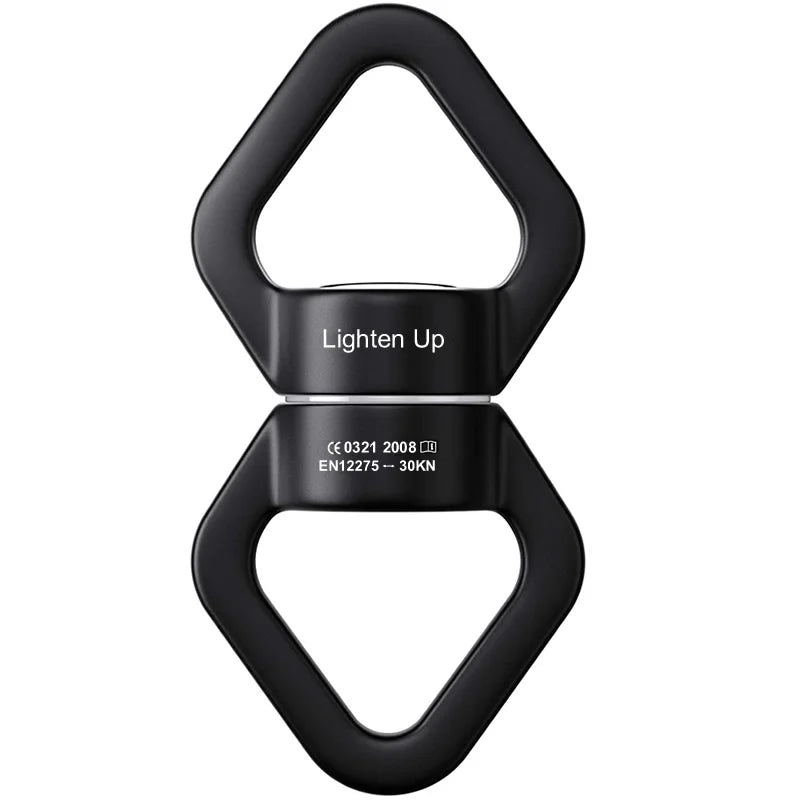
💡 See it in action outdoors
For added efficiency, many climbers pair swivels with organized gear systems like Hooks, Clips & Carabiners to reduce unnecessary friction points that can amplify rope twisting.
Guide to Climbing Rope Swivels
Climbing rope swivels are mechanical connectors designed to rotate freely under load. They reduce torque buildup by allowing the rope or system to spin independently without transferring twist into the full length of the line.
When choosing a swivel, strength rating, bearing smoothness, and load direction matter most. A poorly rated swivel can create more risk than benefit, especially in dynamic climbing environments.
- Look for high-load rated construction for safety
- Choose sealed bearings for smoother rotation
- Ensure compatibility with your climbing system
- Prioritize corrosion resistance for outdoor durability
Recommended tool for reducing rope twisting:
30KN Climbing Carabiner Swivel Rotating Hook — designed to support controlled rotation under load while helping minimize rope twisting during extended climbs and rappels.
👉 Get yours now before your next trip and upgrade your rope handling system for smoother climbs.
Preventing Rope Wear with Swivels
Preventing rope wear with swivels is one of the most overlooked benefits of rotation control. When ropes twist repeatedly, internal fibers experience uneven stress, which can shorten lifespan and reduce performance over time.
By isolating rotation, swivels help distribute tension more evenly and reduce friction points that commonly form during repetitive descents or hauling.
- Reduces internal fiber stress from twisting
- Minimizes sheath abrasion at contact points
- Improves rope lifespan in high-use environments
- Decreases maintenance frequency after climbs
Climbers using organized systems like Backpacking & Carry Solutions often report better rope storage habits, which further reduces tangling before and after climbs.
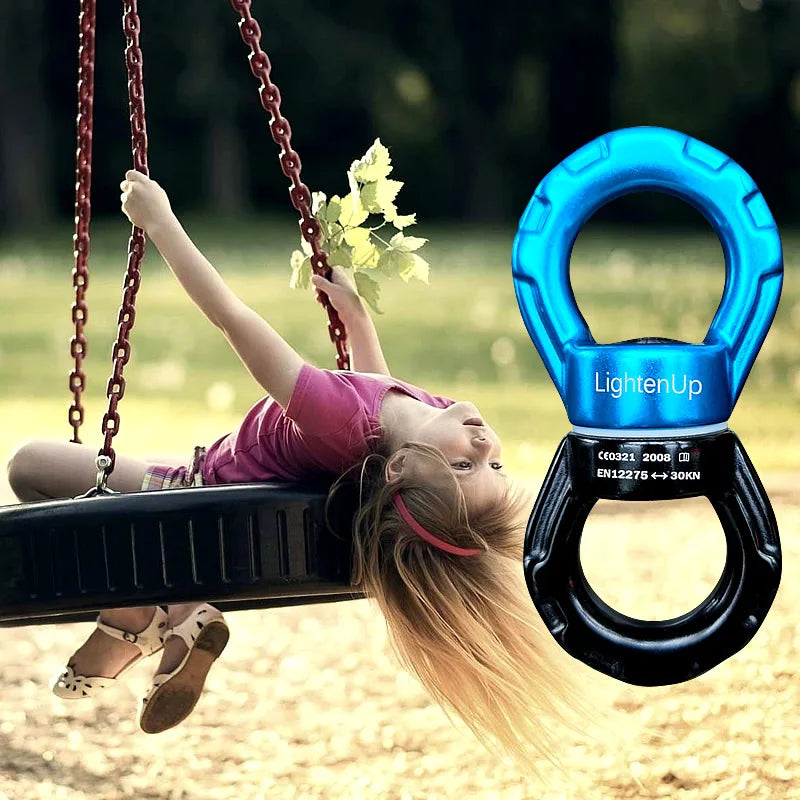
💡 See it in action outdoors
Final Thoughts: Is a Swivel Worth It?
For casual climbers, rope twisting may feel like a minor annoyance. But for those tackling longer routes, hauling systems, or repeated rappels, it becomes a real efficiency and safety concern. A swivel won’t replace good rope management, but it can significantly reduce mechanical twisting stress.
When rope twisting during rock climbing starts slowing you down or causing repeated tangles, it may be time to upgrade your system rather than fight the rope itself.
👉 Explore climbing gear designed to improve control, reduce tangles, and make every ascent smoother and safer.
FAQ: Climbing Rope Twisting & Swivels
Why does my climbing rope twist so much?
Twisting happens from repeated rotations during rappels, belaying, and uneven rope stacking. Wind and carabiner friction can also add to the effect over time.
Will a swivel completely stop rope tangles?
No. A swivel reduces rotational buildup but does not eliminate poor rope handling or storage habits. Proper technique is still essential.
Are swivels safe for all climbing styles?
They are safe when properly rated and used within system limits, but they are most beneficial in high-rotation environments like big wall or rescue systems.
How do I reduce rope twisting without extra gear?
Stack rope evenly, avoid unnecessary spinning during descent, and keep systems aligned. Good handling can reduce a large portion of twisting issues.
Does rope twisting damage climbing ropes?
Yes, over time repeated twisting increases internal stress and sheath wear, which can shorten rope lifespan and affect performance.
Pillar Article: Aerial Yoga Equipment For Every Skill Level And Goal
Other Related Articles:
Explore More:





