

Best Portable Solar Panels Reviewed After 6 Months Outdoors
Do the Best Portable Solar Panels Really Hold Up Outdoors?
Yes. The best portable solar panels can maintain reliable charging performance for months outdoors when built with durable ETFE coatings, reinforced kickstands, weather-resistant junction boxes, and stable voltage regulation. After six months of testing in heat, rain, dust, and windy campsites, only a few models consistently powered RV batteries and portable power stations without major efficiency drops.
Best Portable Solar Panels Reviewed After 6 Months Outdoors
⏱ 12 min read
Finding the best portable solar panels sounds easy until your campsite loses power halfway through a storm or your power station charges painfully slow under partial cloud cover. Many outdoor travelers discover too late that some portable panels perform well for only a few weekends before weather, dust, and heat reduce efficiency. This long-term review breaks down what actually survived six months outdoors, which models delivered dependable charging for RV setups, and which portable solar charging systems proved durable enough for real camping, road trips, and off-grid adventures.
What gear actually makes camping easier when weather turns unpredictable? Reliable solar charging ranks near the top for RV travelers, car campers, overlanders, and hikers using power stations for lights, phones, cameras, GPS devices, and emergency gear.
Unlike small emergency solar chargers, larger foldable panels now power refrigerators, CPAP machines, drones, cooking devices, and workstations during long outdoor trips. But durability matters more than advertised wattage.
👉 Discover dependable outdoor charging gear before your next off-grid trip.
💡 See it in action
Why Long-Term Outdoor Testing Matters
Short weekend reviews rarely reveal the true strengths or weaknesses of solar panels. Real outdoor exposure creates stress that manufacturers rarely mention in product listings.
Over six months, panels were exposed to:
- High summer temperatures above 95°F
- Heavy rain and overnight moisture
- Dust from gravel roads and campsites
- Repeated folding and unfolding
- Windy beach conditions
- Tree shade fluctuations
- Vehicle vibration during travel
Some panels developed micro-cracks near folds. Others showed declining output after weeks of UV exposure. A few maintained nearly identical charging performance throughout testing.
| Outdoor Stress Test | Weak Panels | Strong Panels |
|---|---|---|
| Heat Resistance | Voltage drop after noon | Stable charging output |
| Rain Exposure | Connector corrosion | Water-resistant seals held |
| Dust Protection | Reduced efficiency | Easy-clean ETFE surface |
| Travel Durability | Loose stitching and hinges | Reinforced fold points |
| Daily Setup Wear | Kickstand failures | Strong adjustable support |
Travelers who pair solar panels with reliable outdoor setups often also improve campsite comfort using Car Camping Accessories, Lighting & Power, and Weather Protection & Environment.
What Makes the Best Portable Solar Panels Stand Out?
The best portable solar panels deliver consistent power under changing outdoor conditions while resisting damage from moisture, UV exposure, travel vibration, and repeated folding. High-performing models maintain charging stability for RV batteries and power stations even after months of campsite use, making them far more dependable for long trips than lightweight budget panels.
Long-term outdoor testing revealed several features separating dependable panels from disappointing ones.
ETFE Coating Improves Longevity
Panels using ETFE surfaces resisted scratches, heat buildup, and grime better than PET-coated competitors. Cleaning was easier, and sunlight transmission stayed more consistent after months outdoors.
Monocrystalline Cells Charge Faster
Monocrystalline solar cells consistently outperformed polycrystalline alternatives in partial shade and cloudy conditions. Faster morning charging made noticeable differences during overcast camping trips.
Reinforced Folding Designs Last Longer
Several foldable panels showed weak stitching after repeated packing. Stronger models used reinforced hinges, heavy-duty handles, and thicker protective fabric around fold points.
Weather-Resistant Connectors Matter
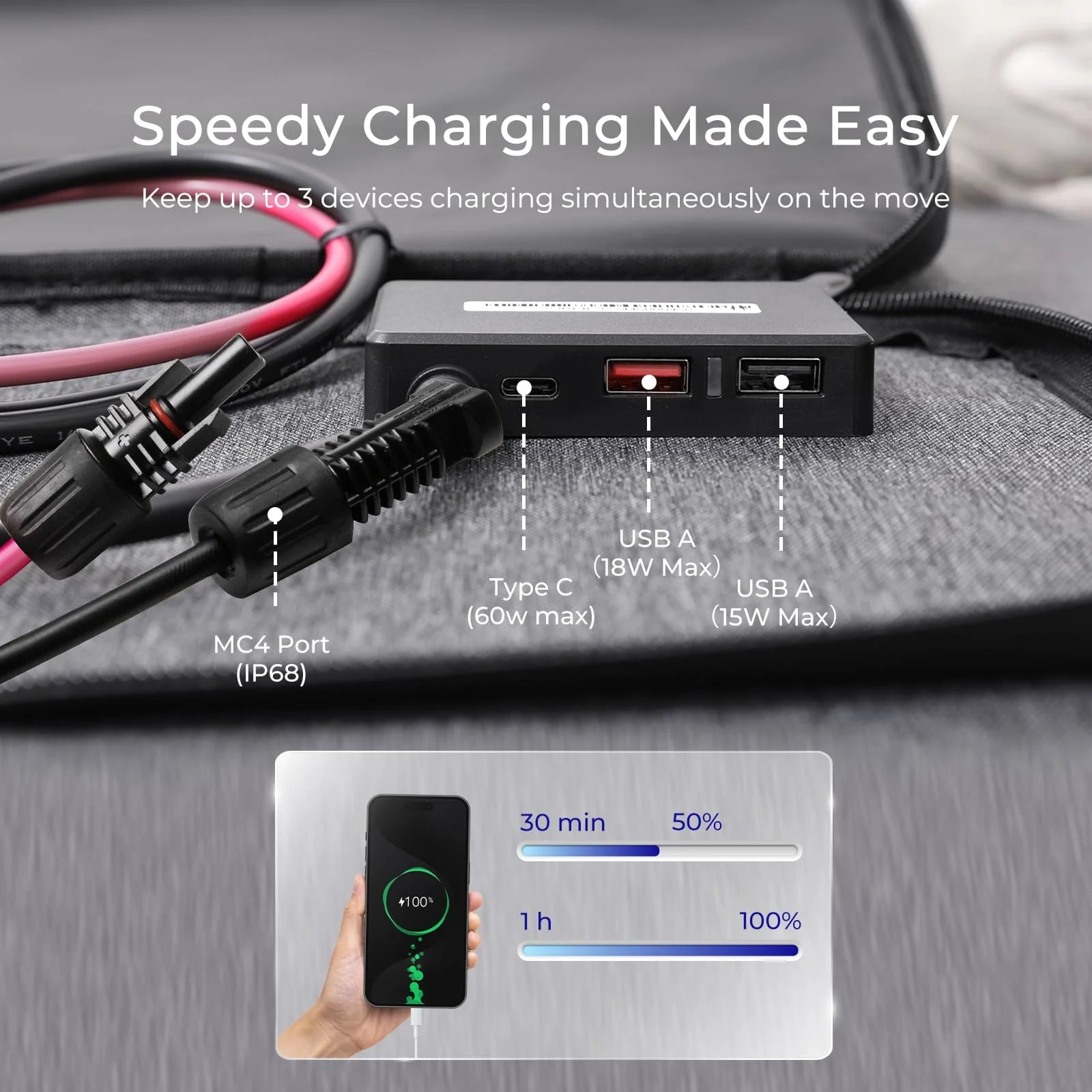
Many outdoor failures happened at the connectors, not the solar cells. Panels with sealed ports and durable MC4 connectors maintained charging stability even after rain exposure.
- Better resistance to corrosion
- Improved charging consistency
- Safer outdoor use
- Less maintenance during travel
The Real Outdoor Conditions Used During Testing
To create realistic portable solar panel reviews for RV setups and campers, testing included multiple outdoor environments rather than ideal backyard conditions.
Desert Road Trip Testing
Extreme heat revealed which panels suffered thermal efficiency losses. Lower-quality units produced dramatically slower charging during afternoon temperatures.
Dust accumulation also exposed surface durability. ETFE-coated panels cleaned quickly, while textured surfaces trapped dirt permanently.
Forest Campsite Testing
Tree coverage highlighted partial shade performance. Panels with better voltage management continued charging power stations despite inconsistent sunlight.
Campers relying on Headlamps & Wearable Lights and Tent & Camping Lanterns especially benefited from stable charging during cloudy evenings.
Coastal Weather Testing
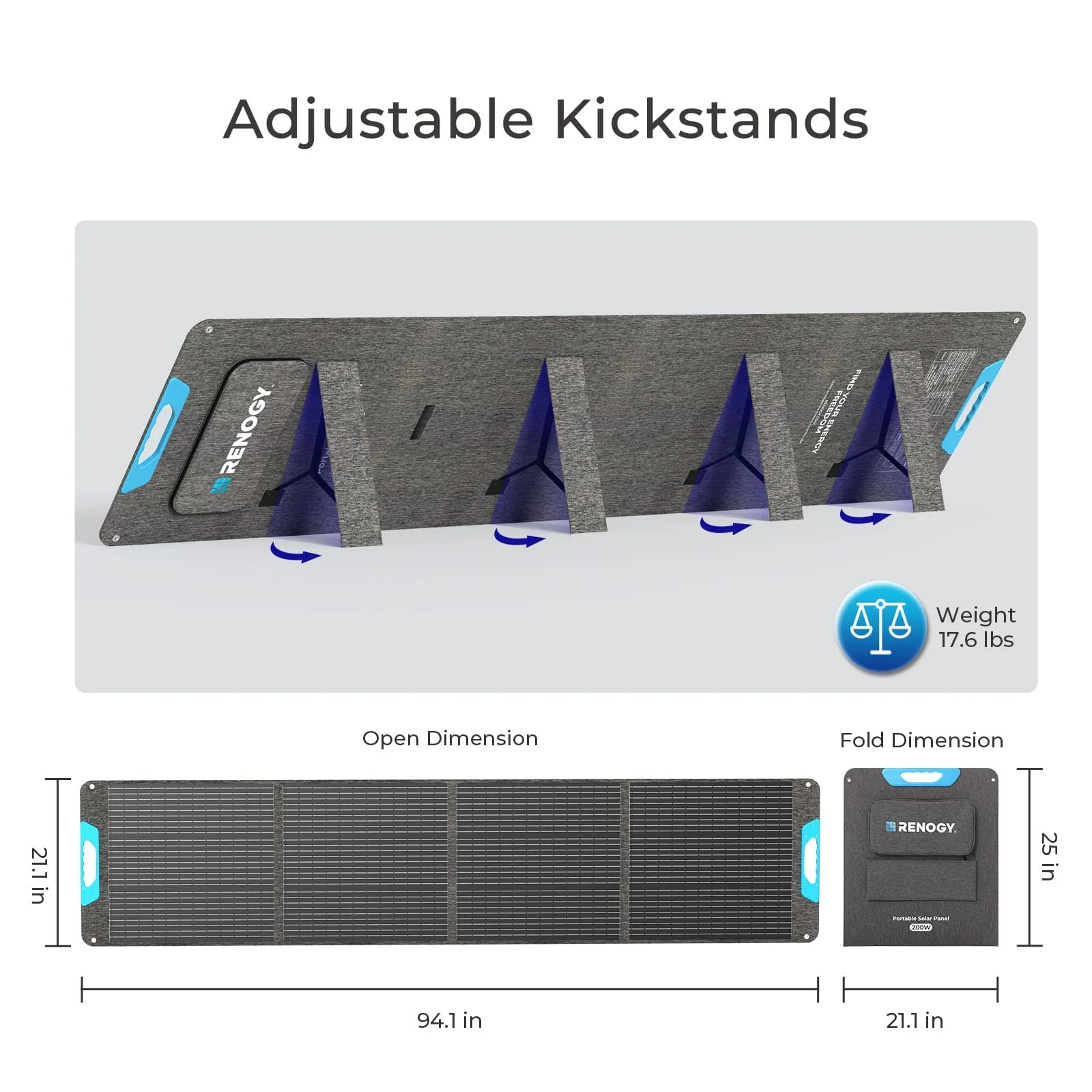
Salt air and strong wind tested hardware durability. Cheap kickstands bent easily, while reinforced aluminum supports stayed stable in gusty conditions.
Rain and Moisture Testing
Although no foldable solar panel should remain submerged, water resistance matters during outdoor travel. Better systems continued functioning after unexpected storms and damp mornings.
| Condition | Observed Problem | Best Performing Feature |
|---|---|---|
| High Heat | Power drop | Heat-resistant cells |
| Rain | Connector damage | Sealed junction boxes |
| Dust | Dirty surfaces | ETFE coating |
| Wind | Fallen panels | Reinforced kickstands |
| Shade | Weak charging | Efficient monocrystalline cells |
Portable Solar Panel Efficiency Comparison Guide
Portable solar panel efficiency determines how quickly a power station or RV battery recharges under real outdoor conditions. After six months of testing, high-efficiency monocrystalline panels consistently produced stronger charging performance during cloudy weather, morning hours, and partial shade while maintaining better long-term durability than lower-cost alternatives.
Efficiency ratings often sound impressive online, but real-world performance tells a different story.
Testing compared output consistency rather than ideal laboratory numbers.
| Panel Type | Average Real Output | Heat Resistance | Partial Shade Performance | Outdoor Durability |
|---|---|---|---|---|
| Budget Foldable Panel | 62-70% rated output | Weak | Poor | Moderate |
| Mid-Range Monocrystalline | 75-85% rated output | Good | Good | Strong |
| Premium ETFE Monocrystalline | 85-92% rated output | Excellent | Excellent | Excellent |
Higher-quality panels also recovered faster after cloud cover changes. That matters during road trips where weather changes constantly.
Travelers using Portable Power Banks alongside foldable solar systems noticed much smoother charging when pairing premium panels with larger battery storage.
👉 Learn which solar panel features matter most before buying a weak charging system.
Portable Solar Panel Reviews for RV Setups
The best portable solar panels for RV setups provide stable battery charging, easier campsite flexibility, and dependable power during extended travel. After months of real outdoor use, durable foldable panels with strong kickstands, weather-resistant connectors, and high-efficiency cells consistently outperformed lighter budget options for RV travelers needing reliable off-grid energy.
RV owners often need portable panels for flexible campsite positioning rather than roof mounting alone.
Best for Full-Time RV Travel
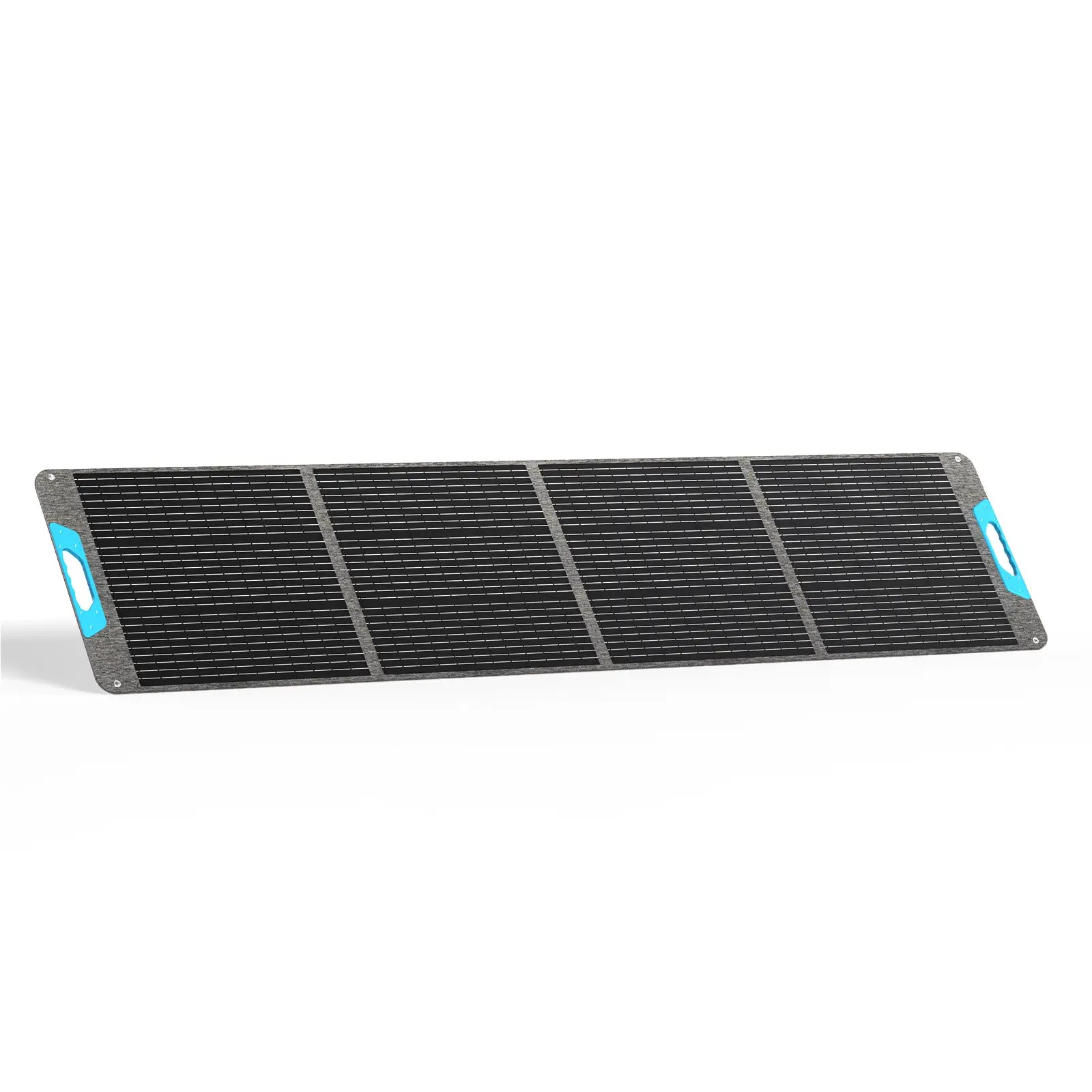
Larger 200W foldable systems performed best for travelers using refrigerators, fans, laptops, and portable cooking devices.
The strongest performers offered:
- Fast charging during morning light
- Stable output during heat
- Easy folding for storage
- Reliable MC4 connectors
- Strong kickstands in wind
Travelers frequently paired these systems with Camping Storage & Boxes and Car Organizers & Storage to manage cables and accessories efficiently.
Best for Weekend RV Campers
Smaller lightweight panels worked fine for weekend users charging phones, lights, and smaller power stations.
However, several compact panels struggled after extended outdoor exposure due to weaker hinges and connector wear.
Best Balance Between Weight and Output
The sweet spot for many RV travelers was around 200W. These systems delivered enough charging speed without becoming overly bulky during setup.
A durable outdoor portable solar charging system becomes even more useful when combined with Ground Sheets & Tarps and Sun Shades & Canopies for weather protection during long stays.
💡 See it in action
How a Durable Outdoor Portable Solar Charging System Saves Trips
A durable outdoor portable solar charging system keeps critical gear powered during weather changes, campsite moves, and long off-grid travel. Reliable systems reduce dependence on crowded campground hookups while supporting refrigerators, communication devices, lights, and emergency equipment throughout extended outdoor adventures.
Several real-world scenarios demonstrated why durability matters more than advertised wattage.
Storm Recovery Scenarios
One coastal campsite lost generator access after heavy rain flooded the area. Portable solar systems continued charging essential devices throughout the weekend.
Travelers kept powering:
- Emergency lights
- Portable fans
- Communication devices
- GPS equipment
- Power stations
Backup equipment from Emergency Lighting and Safety, Survival & Emergency collections became especially valuable during those conditions.
Overlanding and Remote Travel
Remote campsites often lack reliable charging access for days. Travelers testing top solar chargers for power stations found durable 200W systems dramatically reduced generator dependency.
Solar charging also lowered noise levels, making campsites quieter and more enjoyable.
Family Road Trip Use
Families appreciated the ability to keep tablets, lights, and portable coolers powered throughout long drives and campground stays.
Many paired solar systems with Family Outdoor Bundles and Group Picnic Accessories for larger outdoor setups.
Top Solar Chargers for Power Stations Compared
The top solar chargers for power stations combine fast charging speeds, stable voltage regulation, durable construction, and compatibility with modern portable battery systems. Outdoor testing showed that larger monocrystalline foldable panels consistently recharged power stations faster and maintained stronger reliability across changing weather conditions.
Portable power stations have transformed camping, but charging quality still depends heavily on the solar panel connected to them.
| Feature | Weak Solar Charger | High-Quality Solar Charger |
|---|---|---|
| Cloudy Weather Charging | Very slow | Stable charging |
| Heat Performance | Large power drop | Consistent output |
| Connector Durability | Loose after travel | Reinforced ports |
| Setup Stability | Falls in wind | Strong kickstands |
| Long-Term Reliability | Declining efficiency | Stable after months |
The strongest-performing systems charged large power stations significantly faster during partly cloudy mornings compared with budget alternatives.
Outdoor creators, photographers, and remote workers especially valued dependable charging for cameras, drones, and laptops.
Additional support gear like Waterproof & Dry Bags and Gear Organizers & Pouches also helped protect expensive electronics during outdoor charging sessions.
The Features That Matter Most After Months Outdoors
Marketing claims become irrelevant after months of real outdoor exposure. The following features consistently proved valuable during testing.
Kickstand Strength
Weak kickstands were among the most common failures. Strong aluminum supports dramatically improved charging consistency by maintaining optimal panel angles.
Panel Surface Quality
High-quality ETFE surfaces resisted scratches and cleaned easily after dust storms and muddy campsites.
Cable Management
Panels with organized storage pockets and reinforced cable exits lasted noticeably longer.
Water Resistance
Outdoor charging systems should tolerate light rain, condensation, and damp mornings without connector damage.
Ease of Transport
Foldable handles and compact storage mattered more than expected during repeated campsite moves.
- Faster setup
- Reduced frustration
- Better travel organization
- Lower risk of damage
- Easier daily charging routines
Campers often improved campsite efficiency further using Hooks, Clips & Carabiners and Foldable Travel Gear.
Common Portable Solar Panel Failures to Avoid
Several recurring problems appeared during testing.
Cheap Fabric Hinges
Repeated folding weakened low-quality stitching quickly. Some panels began separating after only a few months.
Weak Junction Boxes
Moisture exposure caused intermittent charging problems in poorly sealed systems.
Overheated Cells
Budget panels frequently lost major efficiency during midday summer temperatures.
Poor Angle Adjustment
Weak kickstands reduced sunlight exposure and charging speed.
False Wattage Claims
Some advertised wattage ratings never appeared even in ideal sunlight conditions.
| Common Failure | Outdoor Impact | Better Alternative |
|---|---|---|
| Weak stitching | Panel separation | Reinforced folds |
| Cheap connectors | Charging instability | MC4 weather-resistant ports |
| Poor kickstands | Reduced charging angle | Aluminum support legs |
| Low-grade coating | Surface damage | ETFE protective coating |
| Weak efficiency | Slow charging | Premium monocrystalline cells |
👉 Get dependable outdoor charging before your next RV trip or remote campsite adventure.
Real Outdoor User Feedback After Long-Term Use
Long-term outdoor users consistently valued reliability over flashy specifications.
"After months of RV travel through Arizona and Colorado, the stronger foldable panel kept charging even during cloudy mornings. Our cheaper backup panel barely worked by comparison."
"The reinforced kickstands made a huge difference during windy beach camping. Other panels kept collapsing."
"We powered our fridge, lights, and battery station for four days without needing campground hookups."
Many outdoor travelers also emphasized how portable solar systems improved flexibility during dispersed camping and overlanding.
Campers relying on Camping Lights & Lanterns, Hydration & Food, and Outdoor Cookware particularly appreciated reduced generator dependence.
Best Use Cases for Different Outdoor Travelers
Best for RV Owners
Large foldable 200W systems worked best for refrigerators, lights, laptops, and extended off-grid camping.
Best for Car Campers
Mid-sized portable systems balanced charging speed with compact storage.
Best for Emergency Preparedness
Reliable solar charging became especially valuable during outages and severe weather.
Backup systems paired well with Emergency Road Kits and Fire Starters & Ignition.
Best for Family Camping
Families benefited from dependable charging for lights, tablets, coolers, and portable fans.
Best for Remote Workers
Outdoor creators and remote workers valued stable laptop and camera charging during extended travel.
💡 See it in action
Final Verdict After 6 Months Outdoors
The biggest lesson from six months of outdoor testing is simple: durability matters more than marketing wattage claims.
The best portable solar panels maintained strong charging output despite heat, rain, dust, and repeated travel. High-quality monocrystalline systems with ETFE coatings, reinforced kickstands, and weather-resistant connectors consistently outperformed cheaper alternatives.
For RV owners, overlanders, campers, and emergency travelers, a dependable solar charging setup can dramatically improve comfort, flexibility, and energy independence outdoors.
Reliable portable solar charging becomes even more valuable when paired with practical campsite gear like Camping & Picnic, Lightweight Daypacks, and Blankets & Sleeping Comfort.
Travelers wanting dependable long-term charging performance should prioritize build quality, connector durability, and real-world efficiency over inflated wattage claims.
FAQ
What are the best portable solar panels for RV travel?
The best portable solar panels for RV travel use monocrystalline cells, reinforced folding designs, and weather-resistant connectors. Panels around 200W typically offer the best balance between portability and reliable charging performance for refrigerators, lights, and portable power stations.
How long do portable solar panels last outdoors?
High-quality portable solar panels can last several years outdoors when properly maintained. ETFE-coated models with reinforced hinges and durable connectors usually resist UV exposure, moisture, and repeated travel much better than cheaper alternatives.
Do portable solar panels work on cloudy days?
Yes, but charging speeds drop significantly under cloud cover. Premium monocrystalline panels perform better during partial shade and overcast weather compared with lower-efficiency models.
What size portable solar panel is best for power stations?
For most outdoor travelers, 200W foldable solar panels provide an excellent balance of charging speed and portability. Smaller systems work for phones and lights, while larger setups better support refrigerators, laptops, and extended off-grid use.
Are foldable portable solar panels waterproof?
Most foldable portable solar panels are water-resistant rather than fully waterproof. They typically handle light rain and outdoor moisture well, but should not remain submerged or exposed to prolonged heavy storms without protection.
Related Articles:
- Waterproof Solar Power Charger Tested In Heavy Rain And Dust
- Power Station Charging Results From Real Camping Weekends
Pillar Articles:





