

Sleeping Bag Comfortable: How To Get Better Sleep Outdoors
Sleeping Bag Comfortable: How To Get Better Sleep Outdoors
⏱ 9 min read
Does a sleeping bag comfortable setup really improve outdoor sleep?
A sleeping bag comfortable setup can dramatically improve sleep quality outdoors by reducing cold spots, trapped moisture, and body pressure during the night. Campers who improve warmth in camping sleeping bag systems with proper insulation, dry layering, and smart positioning often sleep warmer, deeper, and wake up with more energy on cold or wet trips.
Have you ever spent a beautiful day hiking only to end the night freezing, restless, and counting the hours until sunrise? Many campers blame the weather, but the real issue is usually an uncomfortable sleeping bag for camping combined with poor insulation strategy. The good news is that small adjustments can completely transform your outdoor sleep experience. Whether you struggle with wet cold nights camping comfort problems or want to improve warmth in camping sleeping bag systems, this guide breaks down the practical fixes experienced campers use for warmer, deeper sleep outdoors.
👉 Planning your next camping trip? Explore practical outdoor gear inside Camping & Picnic and upgrade your comfort before temperatures drop unexpectedly.
💡 See it in action
Why Sleeping Bags Fail on Cold Nights
A sleeping bag comfortable enough for backyard testing can suddenly feel terrible in real camping conditions. Wind, ground moisture, body heat loss, and damp clothing all work together to steal warmth overnight.
One of the biggest mistakes campers make is assuming expensive gear automatically guarantees warmth. In reality, even premium sleeping bags lose efficiency if used incorrectly.
Common reasons campers sleep poorly outdoors
- Sleeping directly on cold ground without insulation
- Wearing damp clothes inside the sleeping bag
- Poor airflow causing condensation buildup
- Using oversized sleeping bags that trap cold air
- Ignoring weather protection around the tent
What gear actually makes camping easier? Surprisingly, small support items often matter more than expensive upgrades. Combining a reliable sleeping setup with Ground Sheets & Tarps and gear from Wind & Cold Protection can dramatically reduce overnight discomfort.
How Simple Adjustments Make Your Sleeping Bag Comfortable Faster
A sleeping bag comfortable enough for freezing nights usually depends more on heat retention strategy than bag thickness alone. Campers can improve warmth in camping sleeping bag systems by blocking ground cold, sealing air gaps, and keeping insulation dry throughout the night.
- Use an insulated sleeping pad beneath your bag
- Keep dry socks reserved only for sleeping
- Add a thermal liner for extra heat retention
- Vent moisture before condensation builds
- Eat a warm meal before bedtime for body heat
Many campers underestimate how much body compression destroys insulation underneath the bag. Adding products from Sleeping Bags & Sleeping Pads creates a major difference in overnight comfort.
Quick warmth hacks experienced campers use
| Problem | Simple Fix | Benefit |
|---|---|---|
| Cold feet | Hot water bottle inside bag | Maintains warmth for hours |
| Damp sleeping bag | Use dry bags for storage | Prevents moisture buildup |
| Back pain | Add inflatable pillow support | Improves sleep posture |
| Wind entering tent | Ground tarp and wind shield | Reduces temperature loss |
For campers struggling with organization during cold weather trips, products from Waterproof & Dry Bags and Compression & Packing Bags help keep insulation dry and easy to access.
Camping Sleep Setup Comparison
Not all sleep systems perform equally during cold-weather camping. The difference between miserable sleep and recovery-level rest often comes down to layering and environmental protection.
| Setup Type | Comfort Level | Best Use |
|---|---|---|
| Basic sleeping bag only | Low | Mild summer nights |
| Sleeping bag + sleeping pad | Moderate | Cool spring camping |
| Layered sleep system | High | Wet cold nights camping comfort |
| Double sleeping system | Maximum | Family or car camping trips |
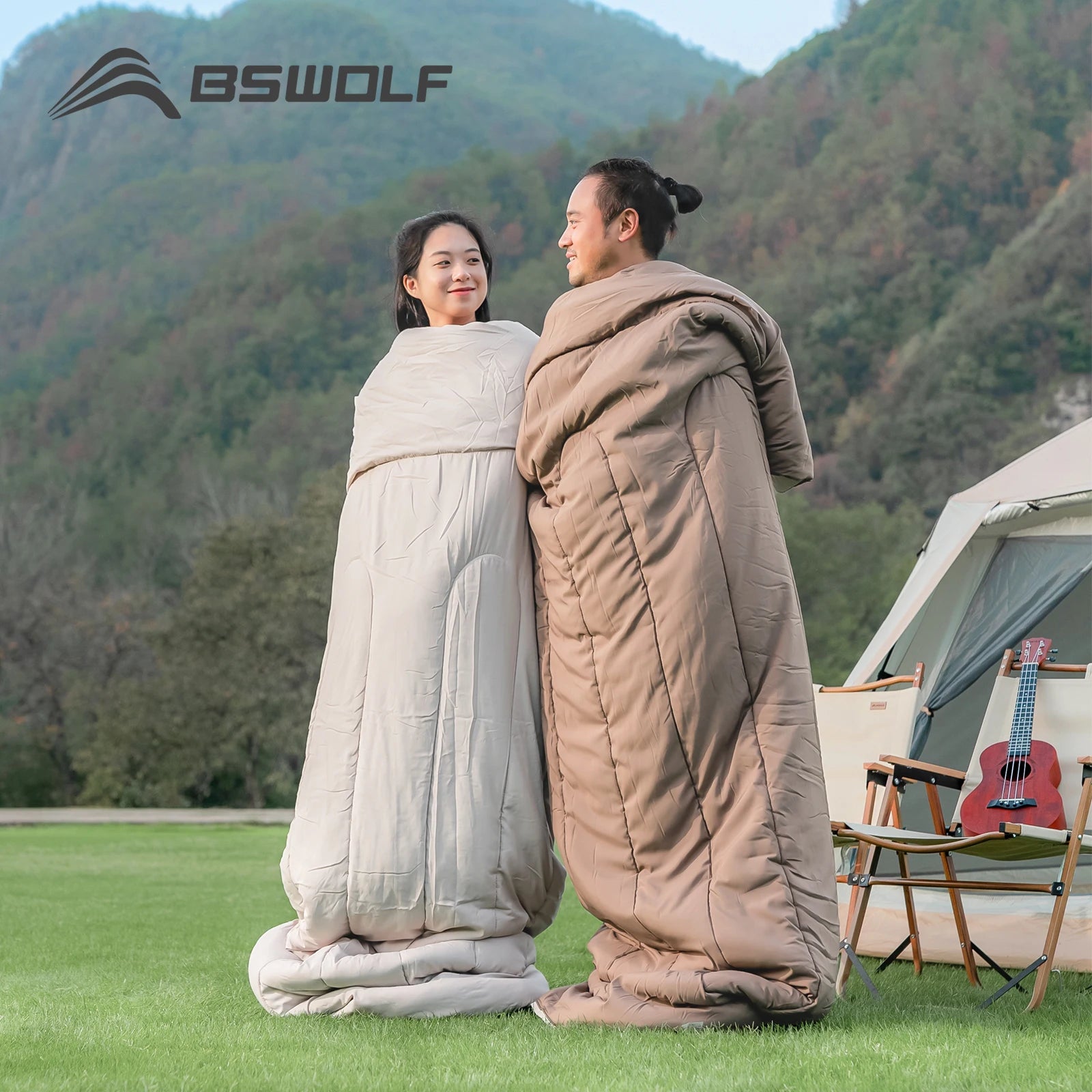
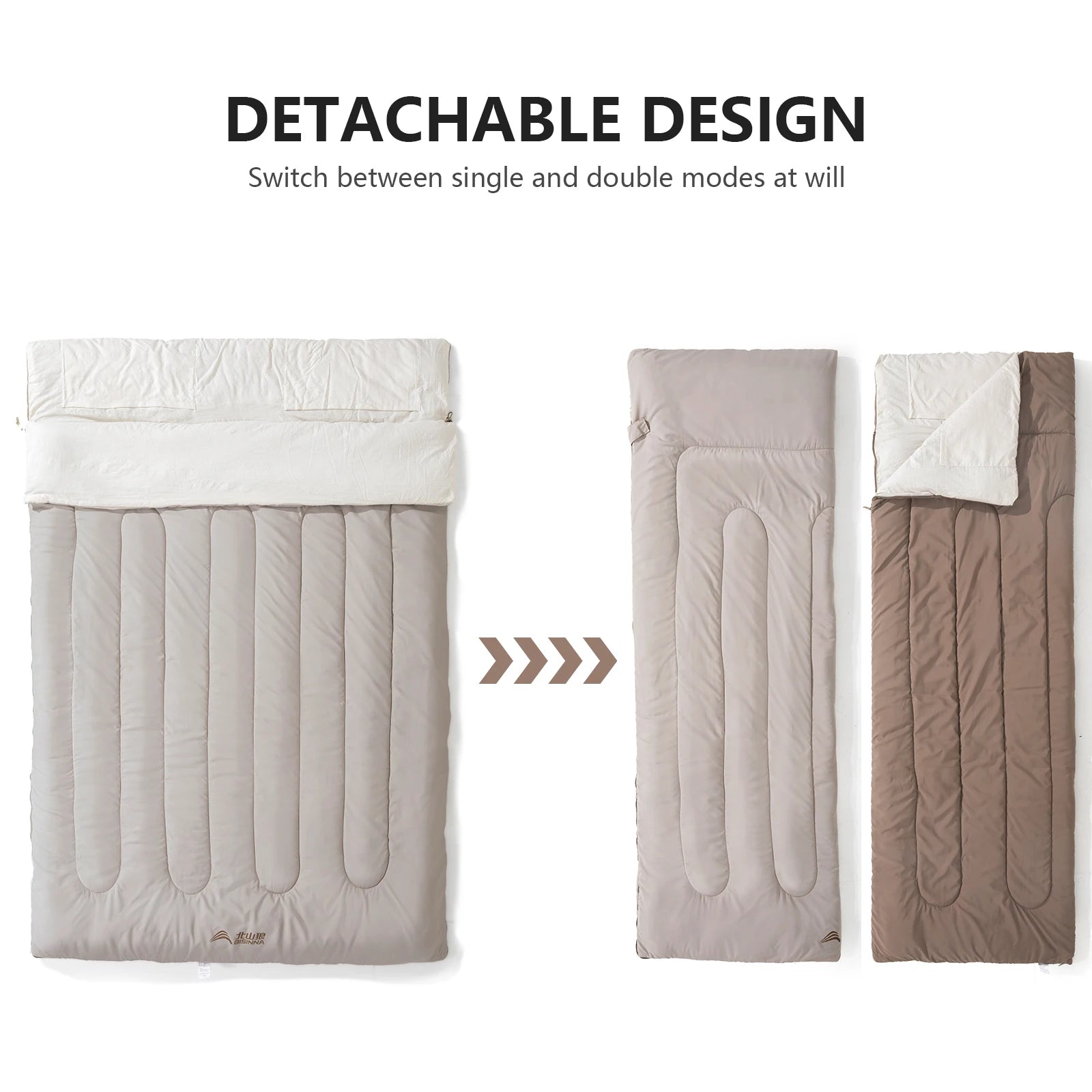
Couples and family campers often report significantly warmer sleep using shared systems like the 2-person camping sleeping bag detachable. Shared body heat and adjustable layers help reduce cold spots overnight.
👉 Upgrade your cold-weather camping setup now. Explore comfort-focused gear in Blankets & Sleeping Comfort and build a warmer sleep system before your next adventure.
How Smart Layering Improves Warmth in Camping Sleeping Bag Systems
The secret to better outdoor sleep is controlling heat loss from every direction. Experienced campers treat their sleep system like winter clothing layers.
Base insulation matters most
The ground pulls heat from your body faster than cold air. Even the warmest sleeping bag becomes ineffective without insulation beneath you.
Combining sleeping pads with products from Picnic Mats & Blankets creates extra thermal protection while improving comfort on rocky terrain.
Keep moisture away from insulation
Wet insulation collapses quickly and traps less warm air. During wet cold nights camping comfort becomes almost impossible without moisture management.
- Store clothing in dry bags
- Avoid breathing inside the sleeping bag
- Vent tents slightly during humid nights
- Use rain barriers when storms approach
Gear from Rain Ponchos & Capes and Weather Protection & Environment helps campers stay dry before even entering the tent.
💡 See it in action
How To Stay Comfortable During Wet Cold Nights
A sleeping bag comfortable during dry weather can quickly become miserable once moisture enters the equation. Condensation, wet clothes, and damp ground surfaces all accelerate body heat loss.
Best practices for wet-weather camping
- Pitch tents on elevated ground
- Use ground sheets beneath tents
- Change into dry layers before sleeping
- Keep electronics and spare clothing sealed
- Use ventilation even during rain
Campers frequently overlook how valuable dry storage becomes during long trips. Products from Camping Storage & Boxes and Gear Organizers & Pouches help separate wet gear from sleeping essentials.
Why warm food and hydration matter
Your body generates heat through calories and hydration. Campers who skip meals before bed often wake up colder during the night.
Warm drinks stored in products from Insulated Food Containers or cooking gear from Camping Stoves & Cooking help maintain body temperature much longer.
Cold Night Camping Checklist
Before every trip, experienced campers double-check their sleep setup. This simple checklist prevents most overnight comfort problems.
- Insulated sleeping pad packed
- Dry sleeping clothes separated
- Tent ventilation planned
- Backup blanket available
- Hot drink supplies ready
- Weather forecast checked
- Ground tarp included
- Emergency lighting accessible
Reliable lighting from Tent & Camping Lanterns and backup gear inside Emergency Lighting also reduce stress during sudden overnight weather changes.
Why Your Sleeping System Matters More Than Expensive Gear
A sleeping bag comfortable enough for serious outdoor trips usually comes from combining multiple comfort layers rather than relying on one premium product.
Campers who improve warmth in camping sleeping bag systems often focus on:
- Ground insulation
- Weather protection
- Dry storage organization
- Layered warmth
- Proper sleeping posture
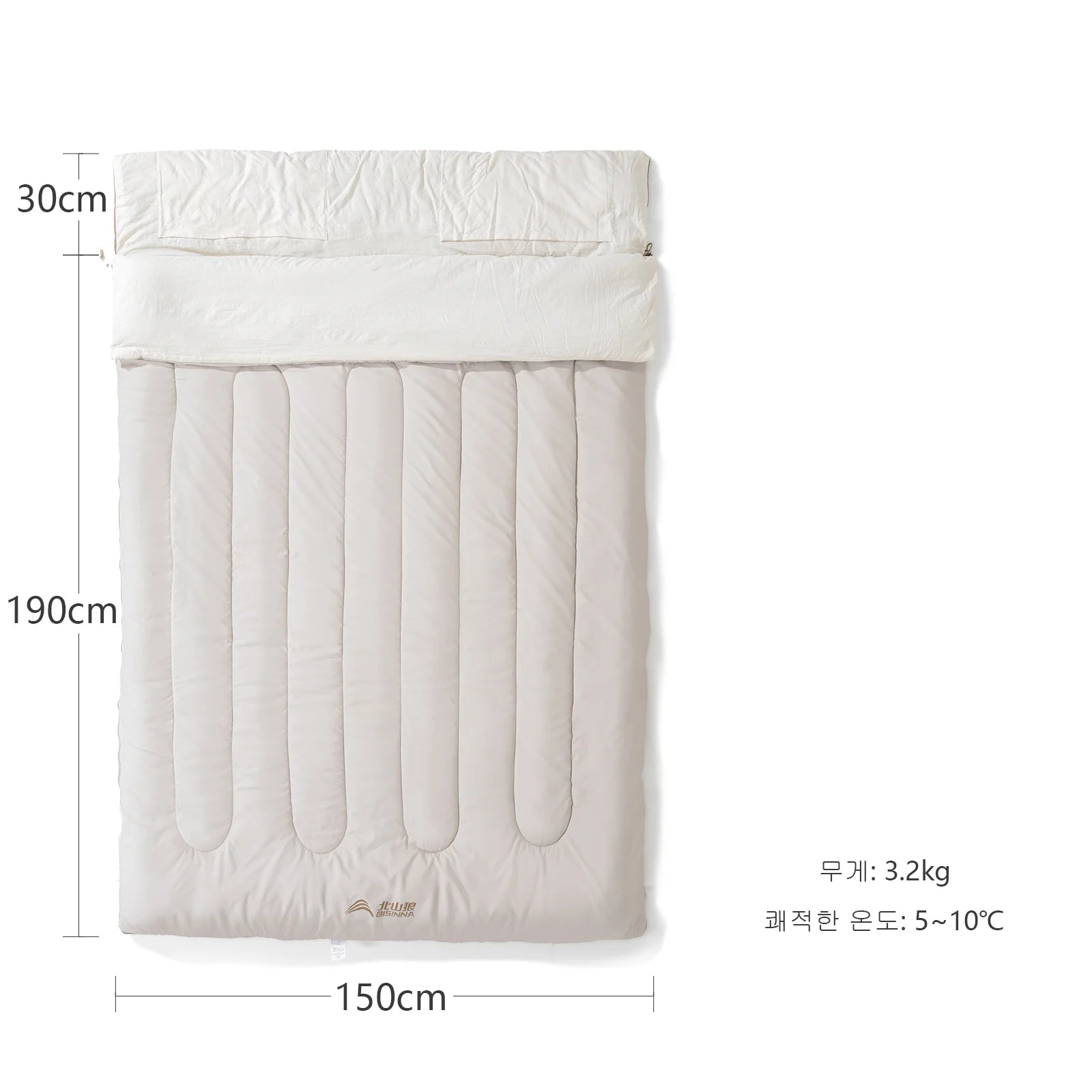
One camper from Colorado shared that switching from a basic solo bag to the 2-person camping sleeping bag detachable completely changed winter car camping trips. Instead of waking repeatedly from cold drafts, they stayed warm through overnight mountain temperatures below freezing.
Another family camper explained that combining a sleep system with products from Car Camping Accessories and Family Outdoor Bundles reduced packing stress and improved comfort for children during weekend trips.
👉 Don’t wait until another freezing night ruins your trip. Explore the 2-person camping sleeping bag detachable and create a warmer, more relaxing camping experience before your next outdoor adventure.
💡 See it in action
Real Camper Experiences That Changed Everything
Outdoor comfort often comes from learning through experience. Many campers assume cold nights are simply part of the adventure until they discover how small upgrades improve sleep dramatically.
A backpacker traveling through the Pacific Northwest described constant discomfort from damp gear and freezing feet. After switching to better storage systems, layering techniques, and insulated sleep support, their overnight recovery improved enough to extend hiking days without exhaustion.
Another couple camping in Utah explained that combining thermal layers with shared sleeping systems helped them finally enjoy sunrise hikes instead of waking tired and stiff.
These stories highlight a simple truth: comfort outdoors is rarely accidental. It comes from preparation, layering, and understanding how heat and moisture affect your body overnight.
Frequently Asked Questions
How can I make an uncomfortable sleeping bag for camping feel warmer?
Add insulation underneath the bag, use dry sleeping clothes, reduce trapped air space, and layer blankets or liners inside the system. Ground insulation usually provides the fastest improvement.
What causes cold spots inside sleeping bags?
Cold spots usually happen because insulation becomes compressed, damp, or exposed to wind drafts. Poor tent setup and ground contact also increase heat loss overnight.
How do I improve warmth in camping sleeping bag systems during winter?
Use insulated sleeping pads, thermal liners, layered clothing, proper ventilation, and weather protection barriers. Combining multiple warmth strategies works better than relying on thicker bags alone.
Why does my sleeping bag feel damp in the morning?
Condensation from breathing, humidity, or trapped moisture inside the tent often causes dampness. Ventilation and waterproof storage solutions help reduce this problem.
What is the best solution for wet cold nights camping comfort?
Focus on staying dry first. Waterproof storage, ground insulation, layered warmth, and weather-resistant shelter systems all help maintain warmth during wet camping conditions.
Pillar Article: Sleeping Bag Couples: Best Fit For Shared Comfort And Warmth
Other Related Articles:
Explore More:





