

Down Lightweight Sleeping Bag: Why Down Insulation Changes Everything
Down Lightweight Sleeping Bag: Why Down Insulation Changes Everything
⏱ 8 min read
Does a down lightweight sleeping bag really improve camping comfort?
A down lightweight sleeping bag delivers better warmth-to-weight performance by trapping body heat efficiently without adding bulk. Campers and backpackers benefit from faster packing, lighter loads, and improved overnight comfort, especially during cold weather camping where synthetic insulation often feels heavier and less compressible.
Down lightweight sleeping bag technology is transforming how campers stay warm without carrying extra weight. A lightweight insulated camping sleeping bag with premium down fill traps heat efficiently, helping improve warmth in camping sleeping bag setups while reducing fatigue on long trips. If you are tired of bulky sleeping bag hard packing into your backpack, down insulation offers a compact, breathable solution that serious hikers swear by.
Ever wake up freezing at 3 a.m. because your sleeping bag feels thin, damp, or impossible to pack correctly? Many campers struggle with heavy gear that takes up half the backpack while still failing to deliver real warmth outdoors.
The solution is not necessarily carrying more gear. It is choosing smarter insulation. Modern down insulation dramatically reduces weight while improving warmth retention, making long hikes and overnight trips far more comfortable.
Explore lightweight outdoor essentials designed for easier travel and better sleep: Sleeping Bags & Sleeping Pads
💡 See it in action
Why Down Insulation Feels Warmer Without Extra Weight
A down lightweight sleeping bag uses clusters of natural down to create tiny air pockets that trap heat efficiently. This design helps improve warmth in camping sleeping bag systems while keeping overall pack weight low, making it ideal for hiking, backpacking, and cold-weather overnight trips.
Down insulation works differently from standard synthetic fill. Instead of relying on dense padding, down expands into lofted pockets that hold warm air close to your body.
That means campers stay warmer using less material. The result is a lighter sleeping bag that still performs well during cold nights in the mountains, forests, or lakeside campsites.
Key Benefits of Down Insulation
- Exceptional warmth without heavy bulk
- Smaller packed size for backpacking
- Breathable comfort through changing temperatures
- Reduced shoulder and back strain on long hikes
- Better long-term durability when properly maintained
| Feature | Down Insulation | Synthetic Insulation |
|---|---|---|
| Warmth-to-weight ratio | Excellent | Moderate |
| Packability | Highly compressible | Bulky |
| Breathability | Very breathable | Less breathable |
| Long-distance hiking comfort | Ideal | Heavier carry |
Many backpackers say switching to a down lightweight sleeping bag immediately changed how they packed for overnight trips. Instead of wrestling with oversized gear, they gained valuable storage space for food, water, and safety supplies.
Down vs Synthetic Sleeping Bags Comparison
A down lightweight sleeping bag typically outperforms synthetic options in warmth, compressibility, and hiking comfort. Synthetic insulation may resist moisture better, but down insulation provides superior heat retention and lighter carry weight for campers prioritizing pack efficiency and cold-weather performance.
Comparison shoppers often ask whether premium down insulation is actually worth the extra investment. For many outdoor enthusiasts, the answer becomes obvious after the first multi-day hike.
When Synthetic Sleeping Bags Fall Short
- Bulky sleeping bag hard packing becomes frustrating
- Heavier loads increase hiking fatigue
- Storage space inside backpacks disappears quickly
- Warmth often requires thicker insulation layers
Imagine hiking uphill for four hours carrying a pack overloaded with bulky gear. Every unnecessary pound drains energy. Lightweight camping systems reduce fatigue while improving mobility on difficult terrain.
Pairing your sleeping system with compact storage also helps. Many hikers use Compression & Packing Bags to shrink gear volume even further.
Compare lightweight outdoor systems built for mobility and comfort: Backpacking & Carry
How Down Sleeping Bags Make Packing Easier
A lightweight insulated camping sleeping bag filled with down compresses dramatically smaller than traditional synthetic bags. This solves bulky sleeping bag hard packing problems by freeing backpack space and reducing stress during setup, travel, and long-distance hiking adventures.
One of the biggest frustrations in camping is trying to force oversized sleeping gear back into a stuff sack before sunrise.
Down insulation changes that experience completely. Because down compresses naturally, it packs smaller while expanding quickly once unpacked.
- Roll the sleeping bag loosely instead of tightly folding it
- Use compression sacks to minimize pack volume
- Store gear in waterproof compartments during wet conditions
- Allow down insulation to fully loft before sleeping
Campers who frequently travel by motorcycle, kayak, or compact vehicles especially appreciate how much room down insulation saves.
💡 See it in action
Packing Checklist for Lightweight Camping
- Lightweight Daypacks
- Waterproof & Dry Bags
- Ground Sheets & Tarps
- Headlamps & Wearable Lights
- Collapsible Water Bottles
Organized gear setups also reduce campsite stress. Instead of digging through clutter, campers can focus on cooking, relaxing, and recovering after long hikes.
How Down Improves Cold Weather Camping
A down lightweight sleeping bag improves warmth in camping sleeping bag setups by maximizing heat retention through high-loft insulation. Campers stay warmer during freezing temperatures without carrying extra weight, making down insulation highly effective for cold weather backpacking and overnight mountain trips.
Cold weather camping demands efficient insulation. Once temperatures drop, poor-quality sleeping bags quickly become uncomfortable.
Down insulation creates a protective thermal barrier that keeps body heat trapped close to the sleeper while maintaining breathability.
How Campers Improve Warmth Even Further
- Use insulated sleeping pads underneath
- Layer with thermal blankets
- Protect tents from wind exposure
- Keep sleeping bags dry overnight
Outdoor travelers often combine sleeping systems with Wind & Cold Protection accessories to improve thermal efficiency during unpredictable weather.
| Camping Condition | Benefit of Down Insulation |
|---|---|
| Mountain camping | Better warmth during freezing nights |
| Backpacking trips | Reduced carry weight |
| Car camping | More comfortable overnight recovery |
| Multi-day hiking | Smaller packed size |
Features That Make a Lightweight Insulated Camping Sleeping Bag Worth Buying
A high-quality down lightweight sleeping bag stands out through premium fill power, durable shell materials, moisture resistance, and ergonomic construction. These features improve warmth in camping sleeping bag systems while reducing pack size and enhancing long-term outdoor performance.
Not all down insulation performs equally. Serious campers often compare technical features before purchasing.
Important Features to Look For
- High fill power for greater loft and warmth
- Water-resistant shell fabrics
- Draft collars for cold-air protection
- Two-way zippers for ventilation control
- Compact compression storage
Campers seeking extra comfort often pair sleeping systems with Inflatable Pillows and Blankets & Sleeping Comfort collections for better overnight recovery.
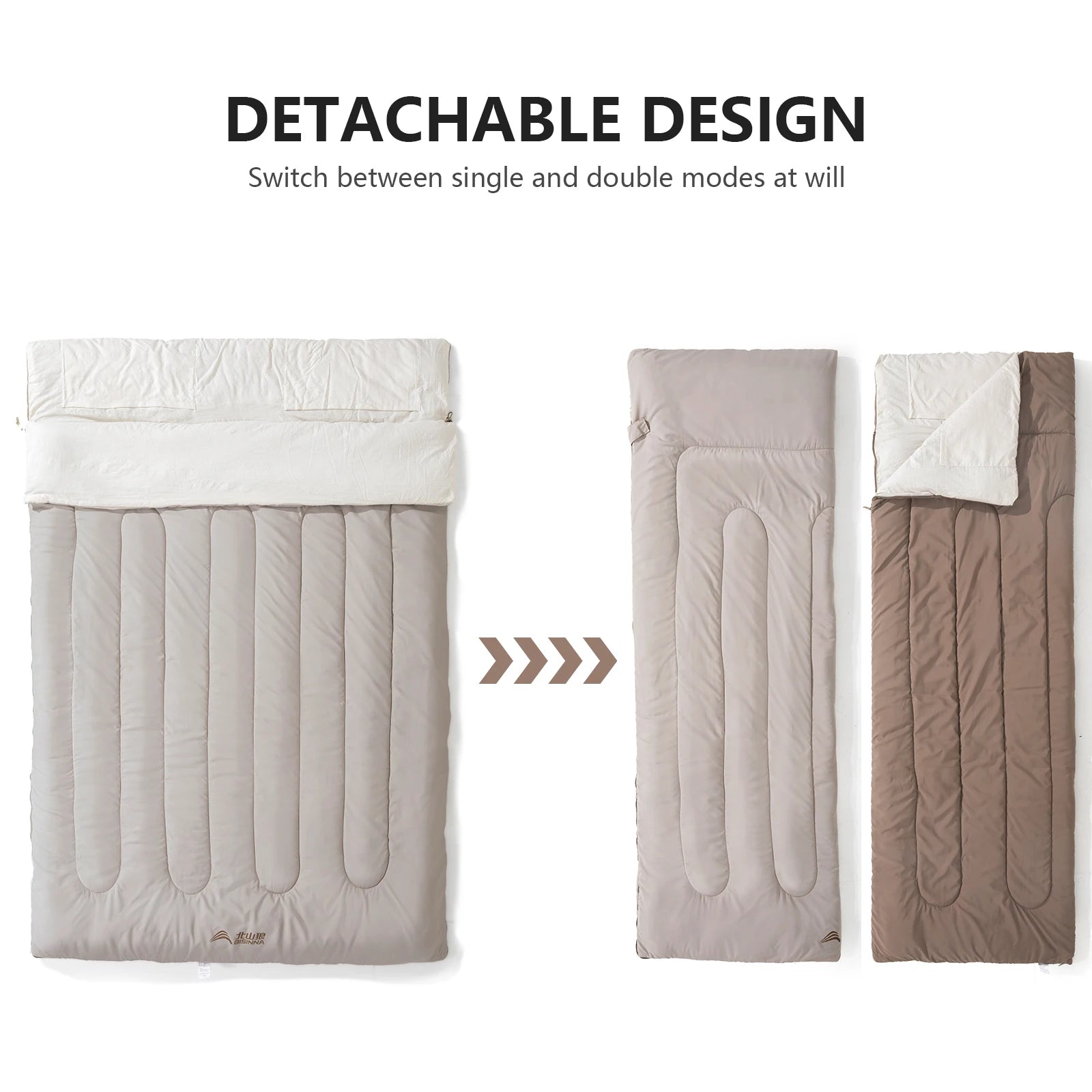
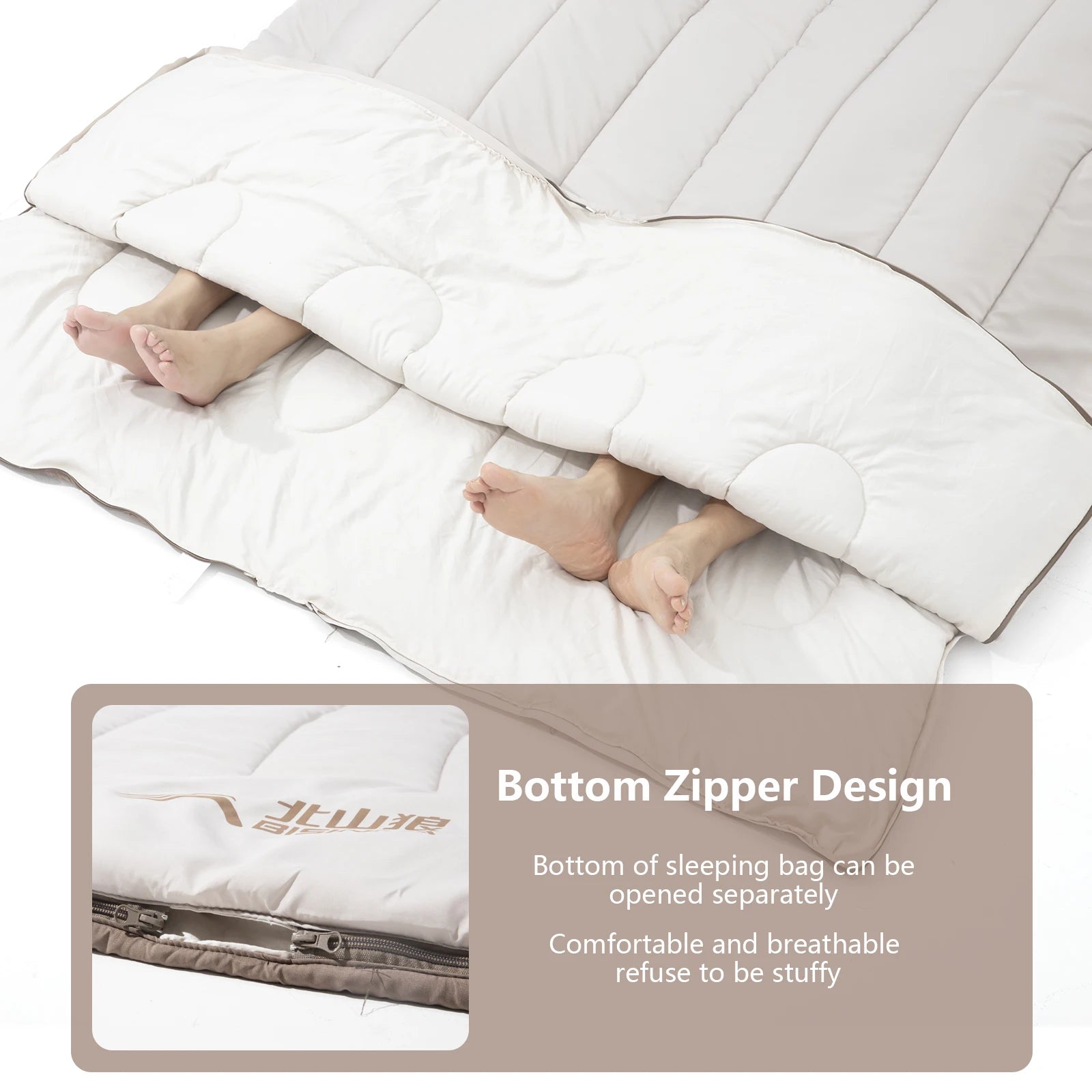
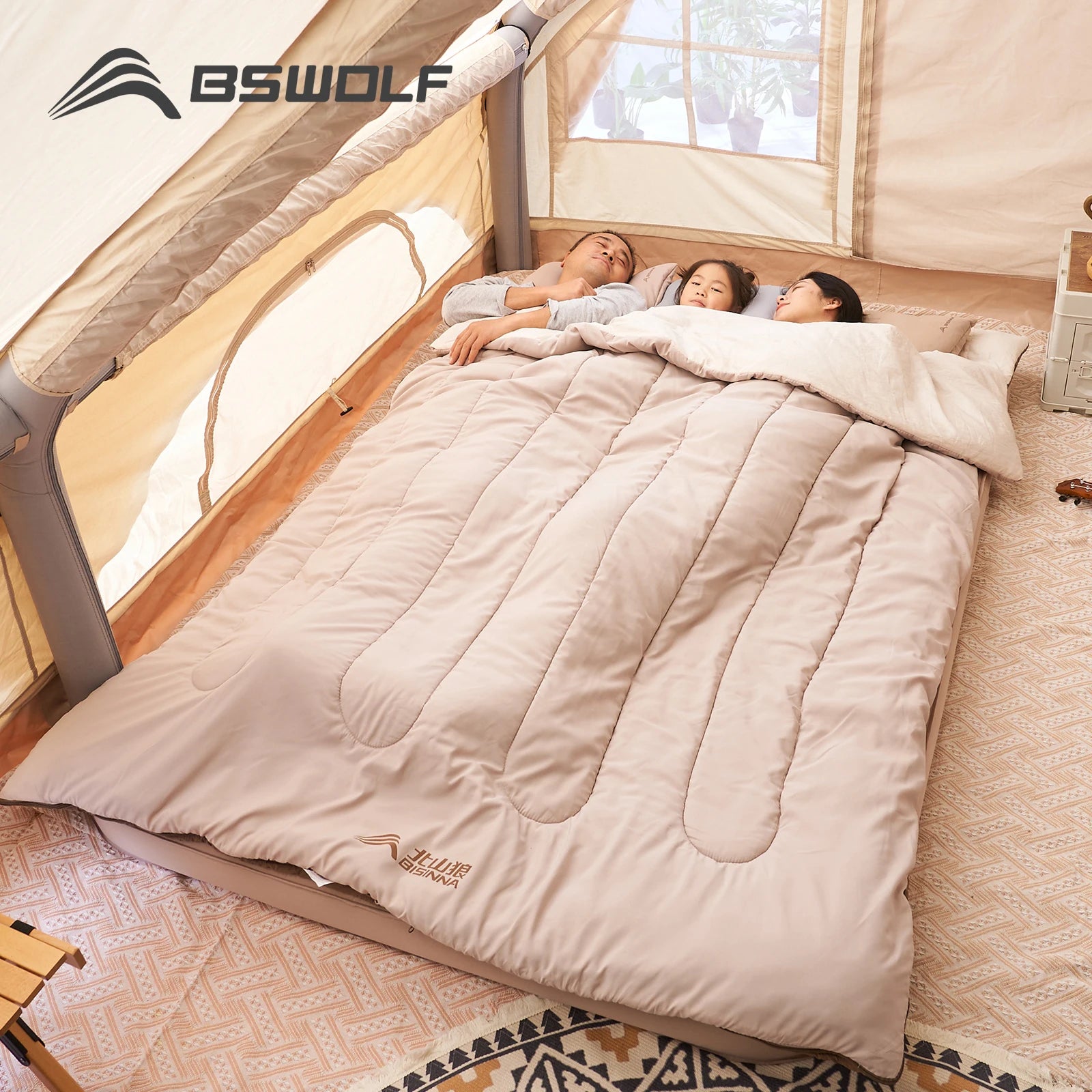
For group trips or couples camping, the 2-person camping sleeping bag detachable setup offers additional flexibility and warmth-sharing advantages.
Upgrade your sleep system before cold weather camping season arrives: 2-person camping sleeping bag detachable
Who Benefits Most From Down Insulation
A down lightweight sleeping bag benefits backpackers, hikers, cold-weather campers, and travelers who prioritize warmth, compact packing, and reduced carrying weight. It is especially valuable for people struggling with bulky sleeping bag hard packing during multi-day outdoor adventures.
Lightweight insulation is not only for expert hikers. Casual weekend campers also notice major improvements in comfort and convenience.
Best Use Cases
- Weekend camping trips
- Long-distance backpacking
- National park adventures
- Road trips and car camping
- Cold-season outdoor festivals
Travelers frequently combine compact sleep gear with Car Camping Accessories and Foldable Travel Gear for easier transportation and campsite organization.
💡 See it in action
Gear That Works Best With Your Sleeping Bag
A down lightweight sleeping bag performs best when paired with weather protection, compact storage systems, and reliable camping accessories. Combining these tools improves warmth, organization, and overall outdoor comfort during overnight adventures.
Smart campers think about complete sleep systems instead of isolated gear purchases.
Recommended Camping Pairings
- Camping Tents & Shelter
- Tent & Camping Lanterns
- Portable Power Banks
- Camping Storage & Boxes
- Fire Starters & Ignition
Campers consistently report better sleep quality when using lightweight, organized gear systems instead of overloaded setups with mismatched equipment.
One experienced backpacker shared that switching to down insulation cut nearly five pounds from their hiking load while freeing enough backpack space for food and emergency gear.
Why More Campers Are Switching to Down Insulation
Outdoor adventures become more enjoyable when your gear supports movement instead of slowing you down. Lightweight insulation improves hiking efficiency, simplifies packing, and helps campers stay warmer during unpredictable weather.
Whether you are preparing for your first overnight trip or upgrading a long-term backpacking setup, a down lightweight sleeping bag offers a practical advantage that many campers immediately notice after their first cold-weather night outdoors.
FAQ
Is a down lightweight sleeping bag better for backpacking?
Yes. Down insulation provides excellent warmth while minimizing carry weight and packed size, making it ideal for backpacking and long-distance hiking trips.
How does down improve warmth in camping sleeping bag systems?
Down creates lofted air pockets that trap body heat efficiently, helping campers stay warmer without needing thicker or heavier insulation layers.
Why do campers dislike bulky sleeping bag hard packing?
Bulky sleeping bags consume backpack space, increase weight, and make packing frustrating. Down insulation compresses smaller and simplifies travel organization.
Can down sleeping bags work for car camping?
Absolutely. Car campers benefit from improved comfort, easier storage, and better overnight warmth during cold-weather road trips and outdoor adventures.
What gear pairs well with a lightweight insulated camping sleeping bag?
Campers often combine sleeping bags with tents, insulated pads, waterproof bags, lanterns, and compact storage systems for better overall campsite comfort.
Pillar Article: Best Lightweight Sleeping Bag For Backpacking: Why It Performs Better
Other Related Articles:
Explore More:





