

100W Vs 200W Camping Solar Chargers: Which Wins Outdoors?
100W Vs 200W Camping Solar Chargers: Which Wins Outdoors?
⏱ 9 min read
Are 200W Camping Solar Chargers Better for Outdoor Trips?
Camping solar chargers with 200W output usually charge faster, recover more power during cloudy weather, and support larger devices like portable fridges and power stations. A 100W setup remains lighter and easier to carry, but campers needing reliable off-grid energy often prefer 200W systems for longer trips and multiple devices.
Camping trips can quickly turn frustrating when your phone dies, camp lights fade overnight, or your power station barely recharges before sunset. Many campers wonder whether a 100W setup is enough or if upgrading to a 200W panel finally solves slow charging problems outdoors. This guide compares real-world charging performance, portability, efficiency, and practical camping scenarios so you can choose the right setup for your next adventure.
What gear actually makes camping easier when you are miles from the nearest outlet? Reliable solar charging can mean the difference between a relaxing trip and constantly hunting for battery life.
Pair your charging setup with essentials from Solar Lights & Chargers, Lighting & Power, and Car Camping Accessories for a more dependable campsite setup.
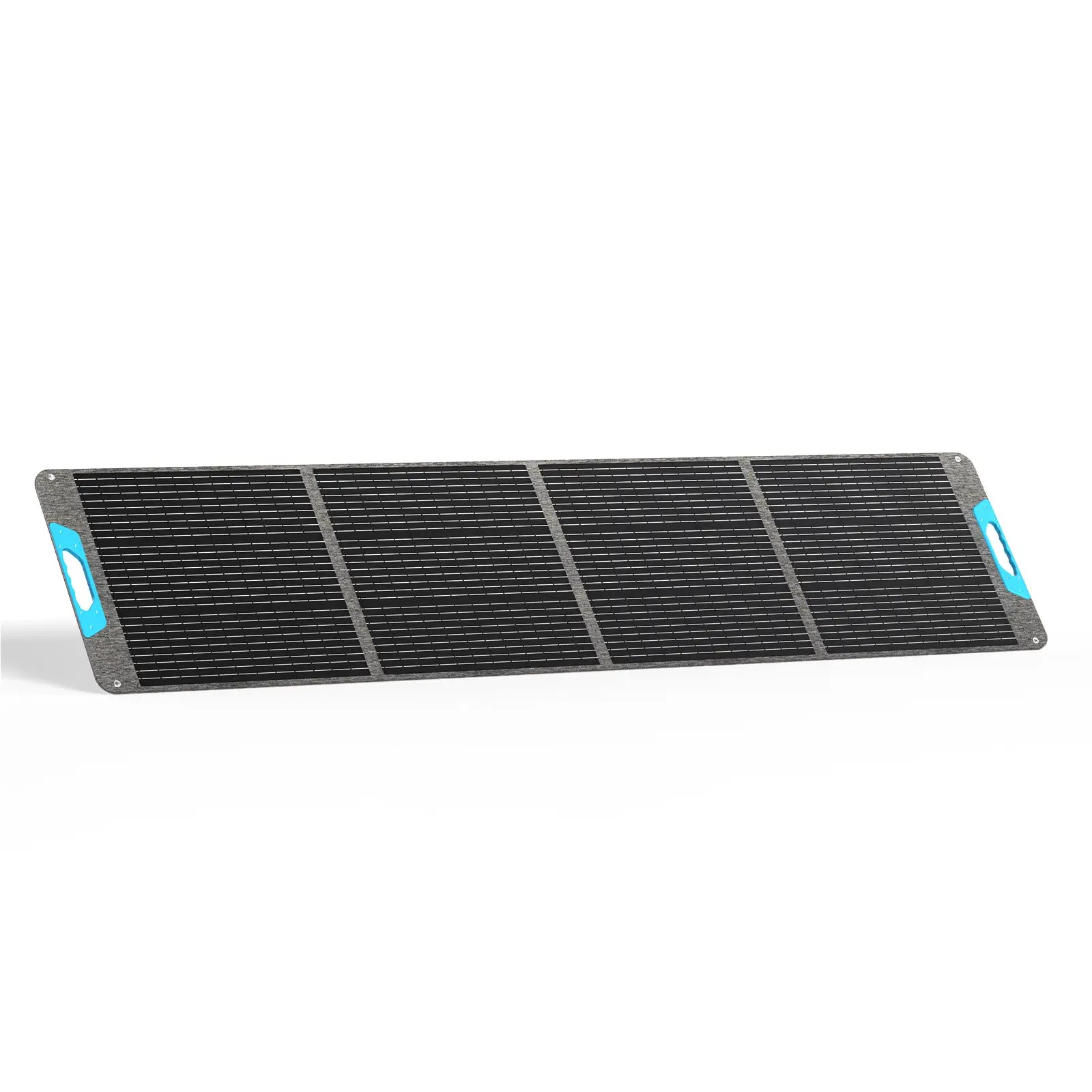
💡 See it in action
Why Faster Solar Charging Matters Outdoors
Camping solar chargers are no longer just backup gear. Many campers now rely on them to run phones, GPS devices, lanterns, drones, cameras, fans, and portable refrigerators.
When charging speed falls behind your energy use, problems appear fast:
- Phones drain before morning
- Lights dim overnight
- Power stations never fully recharge
- Cloudy weather ruins charging efficiency
- Shared group charging becomes impossible
Modern campers increasingly build complete outdoor systems using Portable Power Banks, Tent & Camping Lanterns, and Emergency Lighting to stay powered through multi-day adventures.
100W Vs 200W Camping Solar Chargers Comparison
A 100W solar setup works well for light weekend trips and small electronics. A 200W solar panel produces significantly more energy during limited sunlight hours, making it better for cloudy weather, larger batteries, and campers running several devices at once.
| Feature | 100W Solar Panel | 200W Solar Panel |
|---|---|---|
| Weight | Lighter and easier to carry | Heavier but more powerful |
| Charging Speed | Moderate | Much faster |
| Best For | Phones, lights, small batteries | Power stations, fridges, multiple devices |
| Cloudy Weather Performance | Can struggle | More reliable |
| Setup Space | Compact | Requires larger area |
| Weekend Trips | Excellent | Excellent |
| Extended Off-Grid Trips | Limited | Much better |
Typical Daily Charging Differences
- 100W panels may recharge a small power station in 8–10 hours of strong sun.
- 200W panels can often cut charging time nearly in half.
- Morning and evening sunlight affects 100W systems more dramatically.
- Cloud cover impacts both setups, but larger panels recover energy faster.
Campers combining solar setups with Weather Protection & Environment gear often improve panel positioning and protect batteries during sudden weather changes.
When a 100W Solar Setup Works Best
Not every camper needs a massive solar setup. A 100W system still performs well in many situations.
Best Uses for 100W Solar
- Weekend camping trips
- Solo hikers and backpackers
- Charging phones and cameras
- Running small camp lights overnight
- Minimalist camping setups
The biggest advantage is portability. A smaller panel folds easier, packs faster, and works better for mobile campers constantly moving campsites.
Pairing compact solar systems with Lightweight Daypacks and Waterproof & Dry Bags helps reduce carrying weight while protecting electronics from rain and dirt.
Pros of 100W Panels
- Easier to transport
- Lower cost
- Simpler setup
- Good for emergency backup charging
Cons of 100W Panels
- Slower charging speeds
- Limited during cloudy weather
- Can struggle with larger batteries
- Less efficient for family camping setups
Combine efficient solar charging with practical storage from Gear Organizers & Pouches and travel-friendly solutions from Foldable Travel Gear for easier campsite organization.
Why 200W Panels Win for Longer Trips
A 200W solar panel becomes much more valuable once your trip extends beyond a weekend or your gear list grows.
Families, car campers, van travelers, and photographers often use far more energy than expected. Devices like electric coolers, drones, laptops, fans, and larger battery stations consume power quickly.
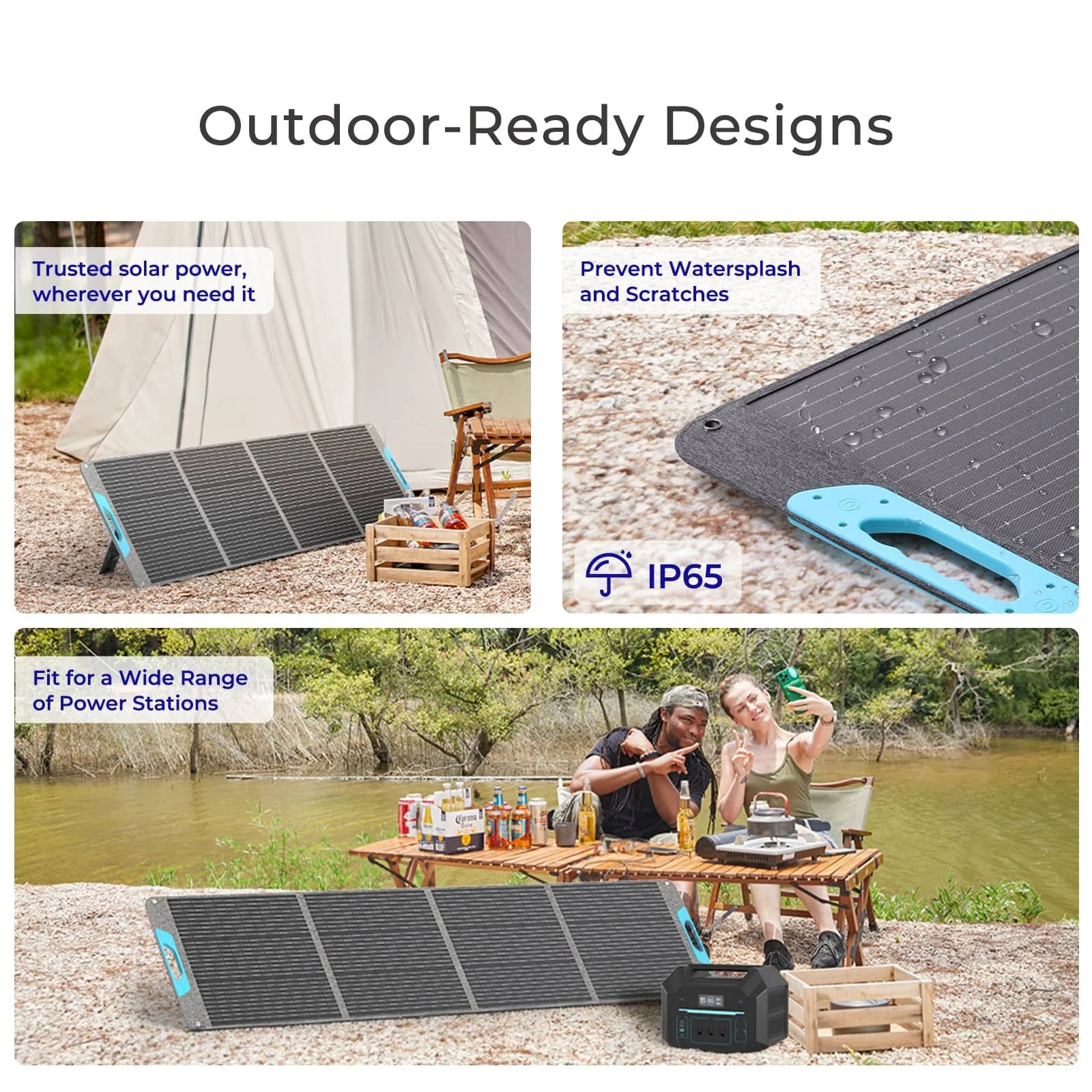
💡 See it in action
Why 200W Solar Feels More Reliable
- Recovers faster after overnight battery drain
- Handles cloudy weather better
- Supports larger battery stations
- Charges multiple devices simultaneously
- Provides extra power reserve before sunset
Many experienced campers say oversized solar systems reduce stress because they stop worrying about every percentage point of battery life.
| Camping Style | Recommended Wattage |
|---|---|
| Solo backpacking | 100W |
| Weekend car camping | 100W–200W |
| Family camping | 200W |
| Van life or RV travel | 200W+ |
| Photography/drone trips | 200W |
For larger campsites, combining solar charging gear with Sun Shades & Canopies and Ground Sheets & Tarps creates better panel positioning and protects gear from harsh terrain.
Why Your Solar Panel Feels Too Slow for Camping
Camping solar chargers often underperform because real-world outdoor conditions rarely match laboratory testing.
Common Reasons Solar Charging Slows Down
- Panels not facing direct sunlight
- Cloud cover reducing efficiency
- Trees casting partial shadows
- Dirty panel surfaces
- Poor cable quality
- Overheated power stations
- Undersized solar systems
Even a tiny shadow crossing one section of a panel can dramatically reduce output. Campers frequently place panels near tents or vehicles where sunlight changes throughout the day.
That is why experienced campers reposition panels every few hours and keep batteries shaded using products from Weather Accessories and Car Organizers & Storage.
Tips for Faster Solar Charging Outdoors
Camping solar chargers work best when you optimize both sunlight exposure and energy usage.
How to Improve Solar Charging Performance
-
Face panels directly toward the sun
Small angle adjustments can noticeably increase charging speed. -
Start charging early
Morning sunlight adds valuable charging time before clouds or shade appear. -
Keep panels cool
Overheated solar panels lose efficiency in extreme temperatures. -
Use shorter, better-quality cables
Long cables create power loss. -
Charge power stations before phones
This creates stable energy storage for later use. -
Clean panel surfaces regularly
Dust, pollen, and dirt reduce sunlight absorption.
Many campers improve charging consistency by pairing solar setups with Hooks, Clips & Carabiners to secure panel angles throughout the day.
Simple Solar Efficiency Checklist
- ✔ No shadows on the panel
- ✔ Battery kept cool
- ✔ Correct panel angle
- ✔ Clean surface
- ✔ Devices unplugged when fully charged
- ✔ Backup battery available
Best Way to Power Camping Electronics
The best way to power camping electronics is usually a combination of solar panels and portable battery storage rather than charging devices directly from panels all day.
This setup provides stable power during evenings, cloudy weather, and emergencies.
Recommended Camping Power Setup
| Gear | Purpose |
|---|---|
| 200W Solar Panel | Fast daytime charging |
| Portable Power Station | Energy storage |
| LED Lanterns | Efficient nighttime lighting |
| Power Banks | Portable backup charging |
| USB Fans | Comfort during hot weather |
Campers preparing longer off-grid trips often combine power systems with Camping Storage & Boxes, Outdoor Cookware, and Family Outdoor Bundles for a more organized and reliable setup.
If you are considering upgrading your solar system, the 200W Portable Solar Panel offers faster charging performance for larger campsites and extended outdoor trips.
Real Camper Experiences With 100W and 200W Solar
Outdoor travelers often notice the biggest difference during bad weather or heavy device usage.
Common Feedback From Campers
- “Our 100W setup worked perfectly for two-day hikes.”
- “The 200W panel finally kept our fridge running consistently.”
- “Cloudy mornings destroyed charging speeds on smaller panels.”
- “We stopped worrying about battery levels after upgrading.”
Family campers especially appreciate larger solar systems because multiple people usually charge devices simultaneously. Kids running tablets, parents using GPS devices, and nighttime lighting all add up faster than expected.
Upgrade your outdoor power setup with the 200W Portable Solar Panel and pair it with gear from Portable Power Banks and Camping & Picnic for smoother off-grid adventures.
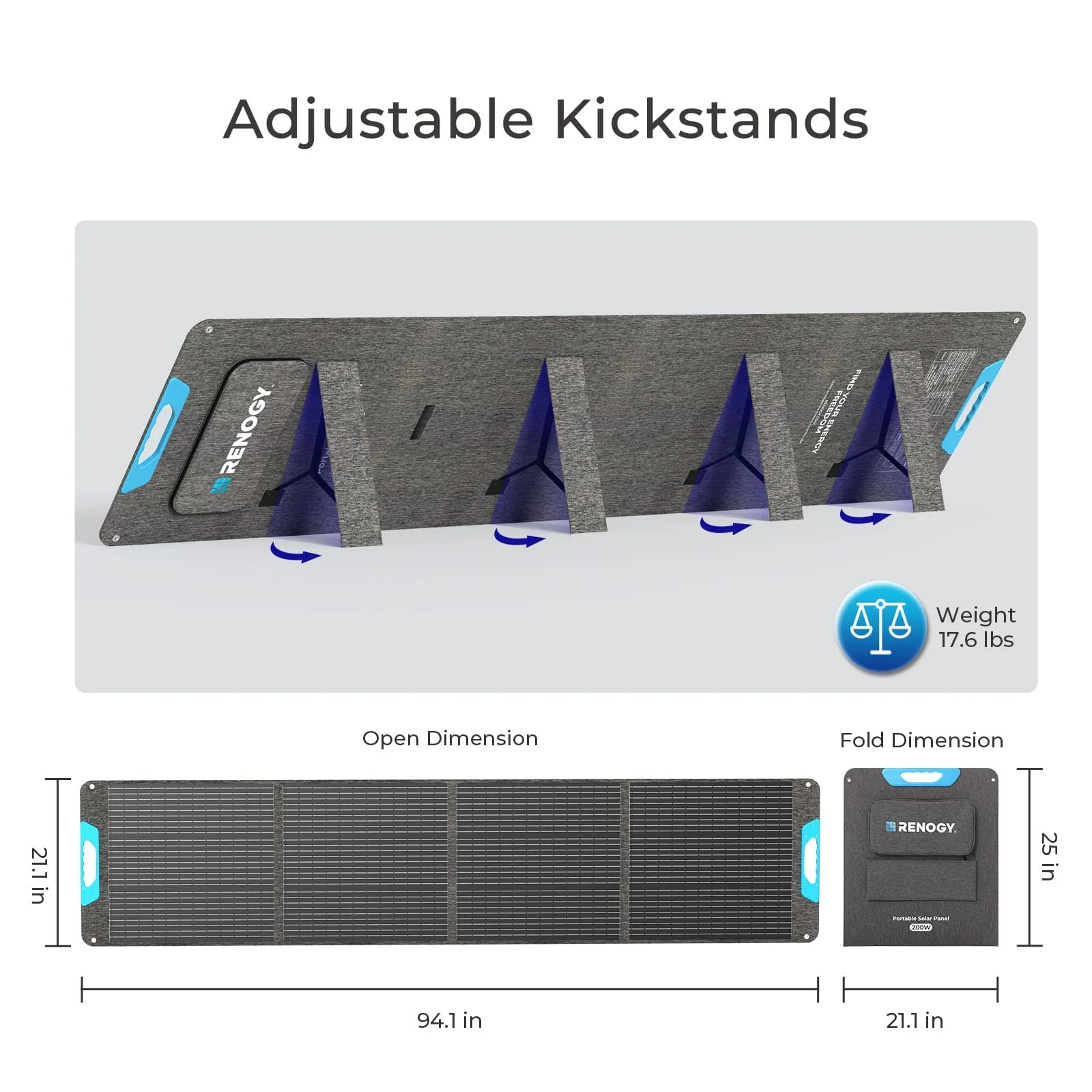
💡 See it in action
Which Camping Solar Charger Wins Outdoors?
If your trips are short and lightweight, a 100W panel can still handle essential charging needs effectively. But if your solar panel feels too slow for camping, or you regularly power multiple devices, a 200W setup provides faster charging, greater reliability, and far less stress during extended outdoor trips.
Most campers eventually realize that having extra charging capacity feels far better than constantly rationing power. The right setup depends on your trip length, weather conditions, and how many electronics you rely on outdoors.
FAQ
Is a 100W solar panel enough for camping?
A 100W solar panel works well for short trips and small electronics like phones, lights, and cameras. It may struggle with larger power stations or extended cloudy conditions.
How fast does a 200W solar panel charge a power station?
A 200W panel can recharge medium-sized power stations significantly faster than a 100W setup, often reducing charging time by several hours depending on sunlight conditions.
Why is my solar panel too slow for camping?
Shadows, poor panel positioning, dirty surfaces, overheating, and cloudy weather all reduce charging performance outdoors.
What is the best way to power camping electronics?
The most reliable solution combines solar panels with a portable power station or battery bank for stable energy storage day and night.
Are larger solar panels harder to carry?
Yes. A 200W panel is heavier and requires more setup space, but the extra power output often outweighs the portability tradeoff for longer trips.
Pillar Article: Best Portable Solar Panels For Rv Compared For 2026
Other Related Articles:
- Best Portable Solar Charger For Camping In Bad Weather
- Are Foldable Solar Panels Worth It For Travel And Rv Use?
- Portable Power Station For Outdoor Use Compared Side By Side
- Solar Panel Efficiency Comparison That Actually Matters
Explore More:





