

Straps For A Hammock: How To Set Up Safely Outdoors
What are the safest straps for a hammock setup outdoors?
Straps for a hammock are safest when they are wide, tree-friendly, adjustable, and rated for more weight than the user plans to carry. A reliable setup uses strong anchor points, proper hanging angles, and reinforced loops to prevent slipping, tree damage, and uncomfortable sagging during camping or backpacking trips.
⏱ 9 min read
Straps For A Hammock: How To Set Up Safely Outdoors
Straps for a hammock can turn a shaky campsite into a safe, relaxing retreat when you know the right techniques. Whether you are backpacking into the mountains, car camping with family, or setting up beside a lake after a long hike, the right hammock system makes all the difference. This guide explains securing hammock straps for outdoor safety, choosing reliable anchor points, and creating a quick setup double camping hammock system that feels stable, comfortable, and easy to use.
Have you ever arrived at camp exhausted, only to spend 30 frustrating minutes fixing sagging straps and uneven hammock angles? A safer setup starts with understanding how your suspension system works before you leave home.
👉 Discover must-have camping gear for smoother outdoor adventures.
💡 See it in action
Why Safe Hammock Straps Matter Outdoors
Straps for a hammock improve outdoor safety by distributing weight evenly across anchor points, reducing stress on trees, and preventing sudden slipping. Wide tree-friendly straps also help campers maintain a stable sleeping angle while protecting bark from damage during overnight stays in forests or parks.
Cheap rope systems often cut into bark and loosen overnight. Wide hammock straps with reinforced stitching hold tension better while staying safer for both campers and trees.
Many experienced backpackers now avoid thin rope entirely because modern straps provide:
- Faster campsite setup
- More stable weight distribution
- Less tree damage
- Better comfort during overnight use
- Easier adjustments on uneven terrain
A portable parachute nylon hammock for camping performs best when paired with strong straps and secure carabiners. Even the most durable hammock fabric cannot compensate for weak suspension points.
| Suspension Type | Comfort | Tree Protection | Ease of Setup | Best Use |
|---|---|---|---|---|
| Thin Rope | Low | Poor | Slow | Emergency use |
| Basic Straps | Moderate | Good | Fast | Casual camping |
| Wide Daisy Chain Straps | Excellent | Excellent | Very Fast | Backpacking and car camping |
Campers who combine reliable straps with gear from Hooks, Clips & Carabiners often report fewer setup issues during windy or rainy evenings.
How the Best Way Set Up Camping Hammock Improves Comfort
The best way set up camping hammock systems is to hang straps at about head height with a 30-degree suspension angle. This creates a flatter sleeping position, reduces pressure on the back, and helps prevent dangerous overnight strap slippage during outdoor use.
Comfort starts with positioning. New campers often hang hammocks too tightly, creating shoulder pressure and an unstable center point.
Choose Strong Anchor Trees
Look for healthy trees at least 6 inches thick. Avoid dead branches overhead and soft ground that could shift after rain.
Use Proper Hanging Angles
- Wrap straps around trees at head height
- Clip carabiners securely through reinforced loops
- Allow the hammock to sag slightly
- Sit gently before fully entering
- Adjust tension until your back feels supported
Many campers pair hammock systems with Ground Sheets & Tarps to create dry shelter underneath during storms.
Why Sag Matters More Than Tightness
A slight curve distributes weight more evenly across the hammock body. This improves sleep quality and reduces pressure on knees, hips, and shoulders.
Outdoor travelers using a quick setup double camping hammock system especially benefit from proper sag because extra weight increases suspension stress.
👉 Learn how to choose the right hiking gear before your next overnight trip.
Backpacking & Carry | Lightweight Daypacks | 2 Person Camping Hammock With Mosquito Net
Step-By-Step Hammock Strap Setup Guide
Securing hammock straps for outdoor safety becomes easier when you follow a repeatable setup routine. Consistency reduces mistakes, speeds up campsite preparation, and helps campers stay comfortable in changing weather conditions.
1. Check Your Campsite First
- Avoid steep slopes
- Watch for loose rocks
- Check overhead branches
- Look for flooding risk near rivers
- Stay away from insect nests
2. Protect Trees With Wide Straps
Tree-friendly straps spread force across a wider surface area. This protects bark and improves grip during overnight use.
3. Adjust for Uneven Terrain
One tree may sit higher than the other. Compensate by shortening one strap loop while loosening the opposite side.
4. Test Weight Gradually
Never jump directly into a hammock. Sit slowly first, then shift weight carefully.
💡 See it in action
Common Hammock Strap Mistakes That Ruin Outdoor Comfort
One small setup error can ruin an otherwise perfect campsite. Many beginners blame the hammock itself when the real problem comes from poor strap positioning.
| Mistake | What Happens | Better Solution |
|---|---|---|
| Hanging too tight | Back pain and instability | Maintain gentle sag |
| Using weak trees | Unsafe support | Choose healthy trunks |
| Low strap placement | Hammock touches ground | Hang near head height |
| Ignoring weather | Wet sleeping gear | Add tarp protection |
Skipping Weather Protection
Even lightweight campers benefit from compact rain systems. Combining hammock gear with Weather Protection & Environment accessories improves comfort dramatically during unpredictable storms.
Using Old or Damaged Straps
Frayed stitching weakens under repeated tension. Inspect straps before every trip, especially after muddy or wet conditions.
Poor Weight Distribution
Double hammocks need balanced loading. Uneven movement can loosen suspension points overnight.
Why Campers Love a Quick Setup Double Camping Hammock System
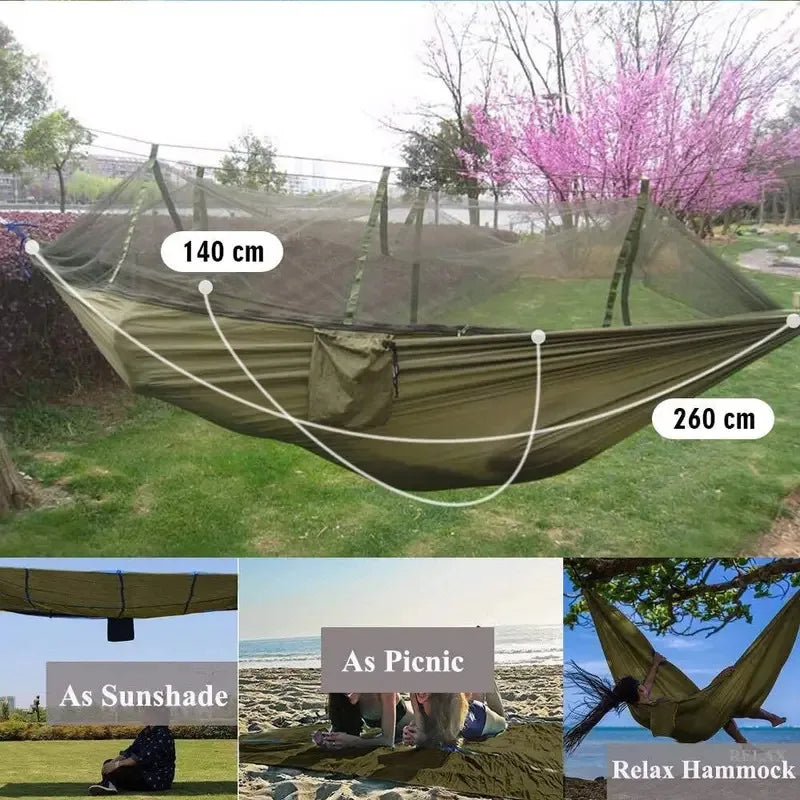
A quick setup double camping hammock system saves time after long hikes and creates a more flexible sleeping area for couples, families, or campers with extra gear. Strong straps allow larger hammocks to remain stable while supporting heavier combined loads safely outdoors.
Many couples switch from tents to double hammocks because they pack smaller and dry faster after rain.
Benefits Backpackers Notice Immediately
- Less setup time at camp
- Reduced pack weight
- Faster drying fabric
- Better airflow during hot weather
- Easier packing for weekend trips
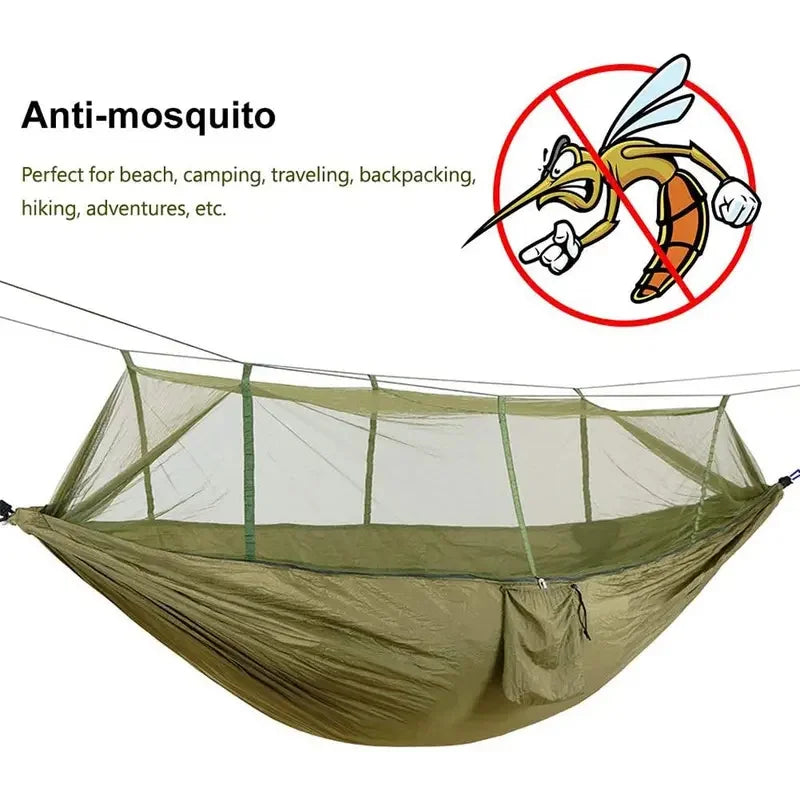
The 2 Person Camping Hammock With Mosquito Net works especially well for campers who want extra bug protection without carrying a bulky tent.
Campers also combine hammock systems with Compression & Packing Bags to reduce storage space inside backpacks.
When Double Hammocks Work Best
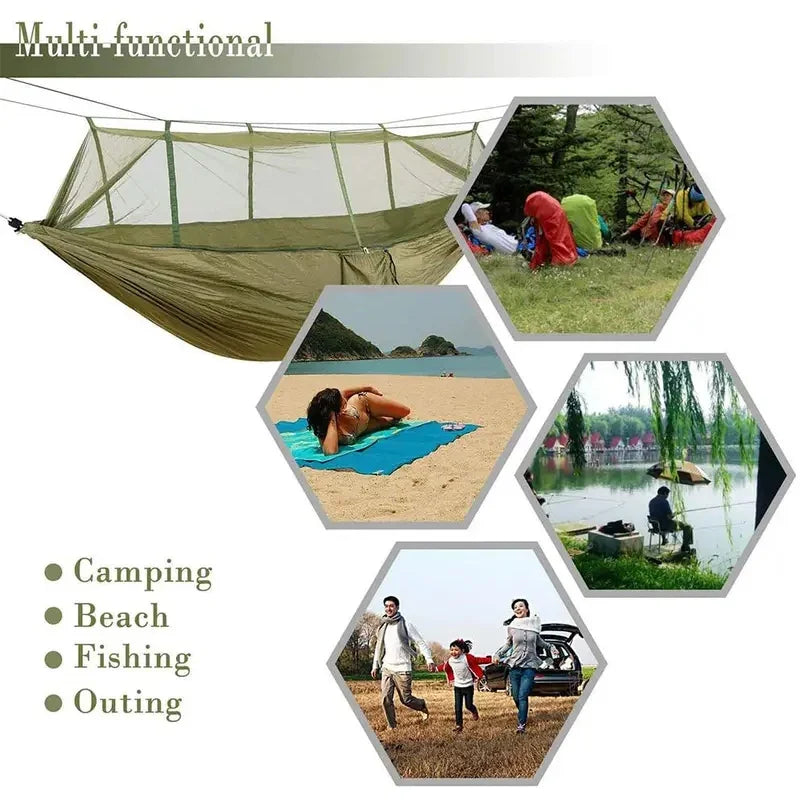
They are ideal for:
- Warm-weather camping
- Weekend festivals
- Lake trips
- Car camping adventures
- Backyard relaxation after hiking
Several hikers reported sleeping better in hammocks than ground tents because airflow reduced overheating during humid summer nights.
How Portable Parachute Nylon Hammock Systems Handle Weather
Portable parachute nylon hammock for camping systems resist moisture better than many traditional camping fabrics. They dry quickly, stay lightweight after rain, and provide breathable comfort during humid weather when paired with secure hammock straps and rain protection.
Weather changes quickly outdoors. Hammock users who prepare for rain and wind stay more comfortable during multi-day trips.
Rain Protection Tips
- Use tarps above your hammock
- Angle rainfly edges downward
- Store gear in waterproof bags
- Keep spare dry layers nearby
Campers often store electronics safely inside gear from Waterproof & Dry Bags during heavy rain.
Cold Weather Comfort
Airflow underneath a hammock can create cold spots at night. Adding insulated blankets or pads helps retain warmth.
Useful companion gear includes:
Essential Hammock Packing Checklist
A well-organized hammock setup saves time and prevents forgotten essentials.
| Gear Item | Why It Helps |
|---|---|
| Wide hammock straps | Protects trees and improves stability |
| Carabiners | Fast secure attachment |
| Rain tarp | Weather protection |
| Headlamp | Easy nighttime setup |
| Dry bags | Keeps clothing protected |
| Portable hammock | Comfortable sleeping system |
Adding gear from Headlamps & Wearable Lights helps campers safely adjust straps after dark.
For longer adventures, many travelers also carry compact safety supplies from Safety, Survival & Emergency.
👉 Get yours now before your next trip!
Real Outdoor Stories From Experienced Campers
Marcus, a weekend hiker from Colorado, switched to hammock camping after years of sleeping on uneven ground.
“The biggest surprise was how much better my back felt. Once I learned proper strap angles, I stopped waking up sore.”
Emily and Sarah used a quick setup double camping hammock system during a rainy Appalachian trail weekend.
“Everything around us stayed soaked, but our hammock dried quickly every morning. Wide straps kept the setup stable even in wet weather.”
Another backpacker shared that switching to tree-friendly straps reduced campsite setup time from nearly 25 minutes to under 5 minutes.
💡 See it in action
Why Proper Hammock Straps Make Every Outdoor Trip Easier
The right straps for a hammock create more than convenience. They improve sleep quality, increase campsite safety, protect trees, and simplify setup after long days outdoors.
Whether you need a lightweight backpacking solution or a comfortable double hammock for weekend adventures, focusing on strong straps, reliable suspension angles, and weather-ready accessories helps every trip feel smoother and more relaxing.
Combining your hammock with dependable gear from Car Camping Accessories, Camping Lights & Lanterns, and Hammocks & Straps can turn an ordinary campsite into a far more comfortable outdoor retreat.
FAQ About Straps for a Hammock
How high should straps for a hammock be placed?
Most campers place hammock straps around head height. This creates a comfortable hanging angle while preventing the hammock from sagging too close to the ground.
Are wide hammock straps better for trees?
Yes. Wide tree-friendly straps spread pressure across bark more evenly, reducing damage and improving grip during overnight camping.
What is the best way set up camping hammock systems in windy weather?
Use strong anchor trees, lower the tarp profile, tighten rainfly lines, and avoid exposed ridges where wind gusts become stronger overnight.
Can a portable parachute nylon hammock for camping hold two people?
Many double hammocks safely support two adults when paired with high-capacity straps and quality carabiners. Always check the manufacturer’s weight rating before use.
How do I make hammock setup faster?
Daisy-chain straps, pre-attached carabiners, and organized packing systems help campers create a quick setup double camping hammock system in just a few minutes.
Pillar Article: Mosquito Nets For Hammock: Best Use Cases For Bug-Free Sleep
Other Related Articles:
Explore More:





