

Travel Compression Bag With Pump: Deep Dive Into Performance
Does a travel compression bag with pump really save space?
A travel compression bag with pump can reduce bulky clothing volume by up to 80%, helping travelers fit more gear into backpacks, carry-ons, and car storage setups. It also protects clothing from moisture, dirt, and odors while improving organization for camping, hiking, flights, and long road trips.
Travel Compression Bag With Pump: Deep Dive Into Performance
⏱ 9 min read
Travel compression bag with pump systems are changing how travelers pack for flights, hiking trips, camping weekends, and road adventures. Instead of overstuffed backpacks and wrinkled jackets, travelers can compress clothing, sleeping layers, and soft gear into compact, organized bundles. If you have ever struggled to close a carry-on before a trip, this guide explains how modern compression technology improves packing efficiency, protects gear, and creates more usable space.
Need more space for your next adventure? Discover how a compact vacuum compression setup can simplify flights, camping trips, and road travel.
💡 See it in action
Why Travelers Use Compression Bags for Better Packing
A travel compression bag with pump creates more usable storage by removing trapped air from clothing and soft gear. This allows travelers to pack winter jackets, hoodies, blankets, and hiking layers without wasting space inside backpacks or carry-ons.
What gear actually makes camping easier when storage space is limited? For many travelers, compression systems rank near the top because they reduce clutter immediately.
- Compress bulky clothing quickly
- Protect gear from moisture and dust
- Improve carry-on organization
- Separate clean and dirty clothes
- Reduce overpacking stress
- Create extra room for outdoor essentials
Many travelers combine compression storage with Compression & Packing Bags and Gear Organizers & Pouches to create layered packing systems that stay organized during long trips.
How Pump Compression Technology Improves Packing
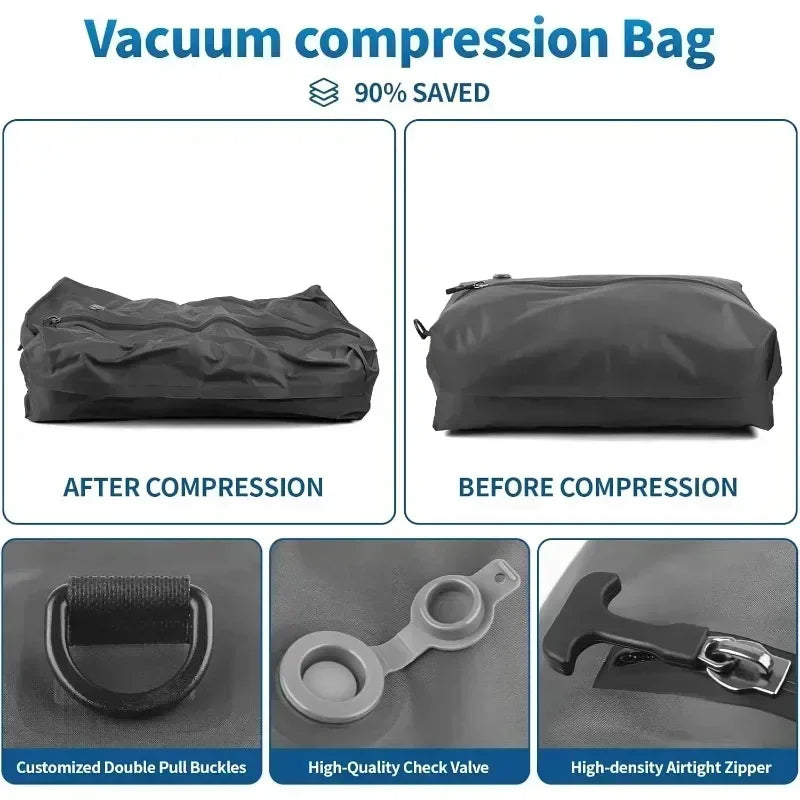
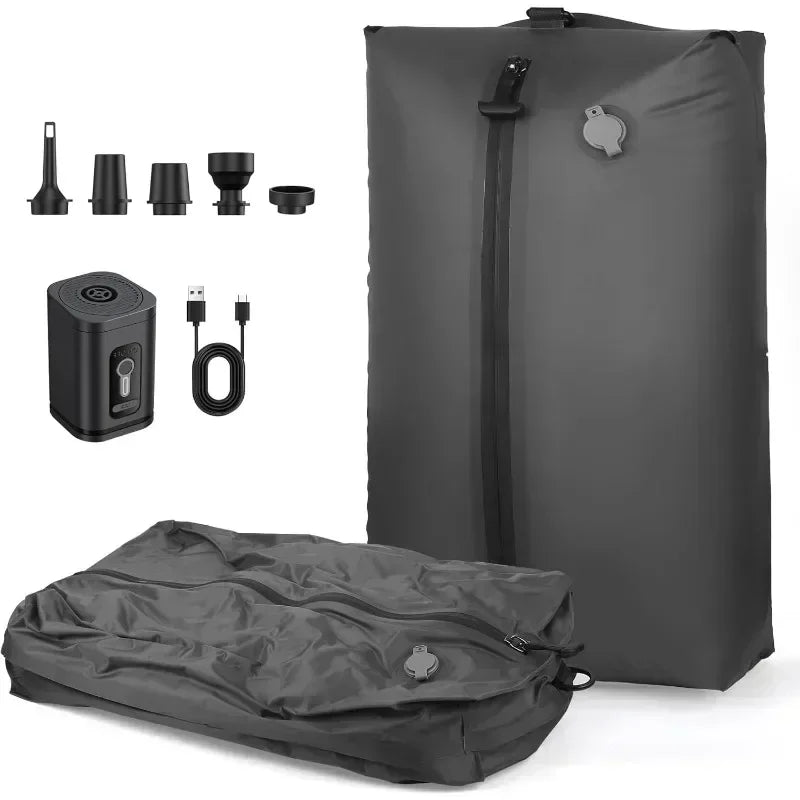
A travel compression bag with pump works by sealing clothing inside an airtight bag and removing excess air through a one-way valve. This reduces wasted volume while maintaining organized, compact storage that fits efficiently into backpacks, luggage, and car storage compartments.
Unlike traditional roll-up bags, pump-equipped systems create stronger and more consistent compression. That matters when packing thick travel hoodies, insulated layers, or camping clothing.
Key Performance Features
| Feature | Benefit |
|---|---|
| One-way air valve | Prevents air from leaking back in |
| Portable pump system | Fast compression without manual rolling |
| Reusable material | Handles repeated travel cycles |
| Water-resistant sealing | Protects clothing from damp environments |
| Compact storage shape | Fits more efficiently in carry-ons |
Travelers using Backpacking & Carry gear often prioritize compression because every inch of available space matters during hiking, flights, and road trips.
Why Pump Systems Outperform Roll Bags
Roll compression bags depend on manual pressure, which often leaves trapped air inside. Pump systems remove more air consistently, creating flatter and tighter packing results.
This becomes especially useful when packing:
- Cold-weather clothing
- Camping blankets
- Puffer jackets
- Sweaters and hoodies
- Travel towels
- Extra family clothing
Step by Step Vacuum Bag Packing Guide
A step by step vacuum bag packing guide helps travelers avoid wrinkles, overcompression, and wasted space. Proper loading techniques also protect zippers and improve long-term bag durability during repeated trips.
- Fold clothing neatly to reduce trapped air pockets.
- Place heavier items at the bottom of the bag.
- Avoid overstuffing beyond seal capacity.
- Close the zipper seal completely.
- Attach the pump to the air valve.
- Remove excess air until the bag becomes compact.
- Store compressed bags vertically inside luggage.
Best Clothing Items for Compression
- Jackets
- Sweatshirts
- Base layers
- Fleece tops
- Travel pants
- Socks and underwear bundles
Avoid compressing delicate formalwear or clothing that wrinkles easily for extended periods.
Packing for camping or hiking? A compact compression system helps create room for lights, cookware, hydration gear, and weather protection.
Tips for Maximizing Backpack Space on Trips
Tips for maximizing backpack space on trips often focus on smarter organization instead of simply packing less. Compression systems help travelers distribute weight evenly while protecting essential gear.
Smart Backpack Organization Strategies
- Store compressed clothing at the bottom of the backpack
- Keep frequently used gear near the top
- Separate wet and dry items
- Use smaller organizers for cables and accessories
- Reserve side pockets for hydration items
Pairing compression storage with Lightweight Daypacks improves mobility during airport transfers and outdoor adventures.
How Compression Improves Carry-On Efficiency
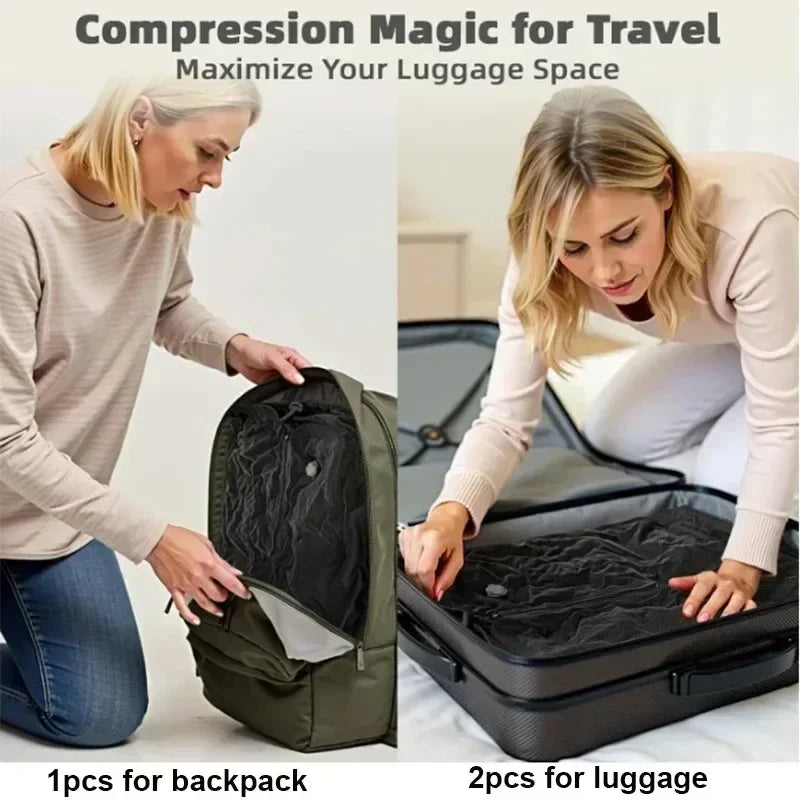
Carry-on travelers benefit significantly from compact clothing storage because airlines continue tightening luggage size restrictions.
Compressed storage creates room for:
- Electronics
- Travel shoes
- Outdoor accessories
- Emergency layers
- Portable toiletries
- Compact camping gear
Travelers combining compression bags with Foldable Travel Gear can often avoid checked luggage entirely during shorter trips.
💡 See it in action
Travel Compression Bag With Pump vs Standard Packing Cubes
A travel compression bag with pump provides stronger space reduction than traditional packing cubes because it removes air instead of simply organizing clothing. Travelers needing maximum storage efficiency often prefer pump compression systems for bulky clothing and extended trips.
| Feature | Pump Compression Bags | Standard Packing Cubes |
|---|---|---|
| Space reduction | Excellent | Moderate |
| Moisture protection | Strong | Limited |
| Organization | Very good | Excellent |
| Compression consistency | High | Low |
| Best for bulky gear | Yes | Limited |
When Packing Cubes Still Help
Many experienced travelers combine both systems together. Compression bags handle bulky clothing while packing cubes organize smaller essentials.
Useful companion collections include:
Best Trip Types for Compression Travel Gear
Not every trip requires vacuum compression systems, but certain travel styles benefit dramatically from reduced clothing volume.
Best Uses for Compression Bags
- Winter travel
- Backpacking adventures
- Family road trips
- Camping weekends
- International flights
- Long-term travel
- Motorcycle touring
Camping and Outdoor Adventures
Outdoor travelers often carry extra layers because weather conditions shift quickly. Compression storage helps free up room for essential equipment like:
This flexibility becomes valuable during multi-day hiking and camping trips where packing efficiency directly affects comfort.
Why Durable Reusable Compression Bags Matter
A durable reusable compression bag for backpacks provides long-term value because it withstands repeated travel cycles, rough handling, and changing weather conditions. Strong seams, reinforced valves, and quality zipper closures prevent leaks that reduce compression performance over time.
Signs of High-Quality Compression Bags
- Thick multi-layer plastic construction
- Reinforced corners
- Reliable air valves
- Smooth zipper seals
- Reusable pump compatibility
- Flexible material that resists cracking
Cheap bags often fail after only a few trips due to weak seams or valve leaks. Reliable compression systems remain effective through repeated airport handling, car packing, and camping use.
Long-Term Storage Benefits
Compression bags also help during off-season storage by protecting:
- Winter jackets
- Camping blankets
- Spare bedding
- Outdoor clothing
- Travel accessories
Travelers frequently combine storage systems with Blankets & Sleeping Comfort gear for organized vehicle or camping setups.
Packing Mistakes That Waste Valuable Space
Even strong compression gear cannot fix inefficient packing habits. Travelers often lose space because of poor organization decisions.
Common Packing Errors
- Rolling bulky jackets loosely
- Packing duplicate clothing
- Leaving empty air gaps in backpacks
- Ignoring vertical storage layouts
- Using oversized luggage for short trips
How to Avoid Overcompression
Overcompressing clothing can create wrinkles and strain zipper seals. Balance compression with accessibility by grouping clothing categories separately.
For example:
- Cold-weather layers in one bag
- Sleepwear in another
- Emergency clothing separately
This organization method improves unpacking speed during hotel stays and campsite setups.
💡 See it in action
Real Travel Scenarios and User Experiences
Many travelers initially underestimate how much space bulky clothing consumes until they begin using vacuum compression systems.
Weekend Hiking Example
A hiker packing for a three-day mountain trip used compression storage to fit:
- Two fleece layers
- A rain jacket
- Thermal clothing
- Extra socks
- A compact blanket
The saved space allowed room for Personal Water Filters and additional weather gear without increasing backpack size.
Family Road Trip Example
Families often struggle with soft gear overflow during long road trips. Compression storage simplifies vehicle organization by reducing blanket and clothing bulk.
Combined with Travel, Car & Road Trip storage solutions, compressed bags help reduce trunk clutter dramatically.
Ready to travel with less bulk and more organization? Compact packing systems make airports, campsites, and road trips far easier to manage.
Why Compression Packing Changes Travel Efficiency
A travel compression bag with pump is more than a simple storage accessory. It creates meaningful space savings, improves organization, protects clothing, and reduces packing stress across flights, hiking adventures, camping weekends, and family travel.
Whether you are trying to avoid checked luggage, organize outdoor equipment, or simplify road trip packing, compression systems deliver practical results that standard luggage organization methods often cannot match.
FAQ
How much space can a travel compression bag with pump save?
Most compression systems reduce soft clothing volume by approximately 50% to 80%, depending on fabric thickness and packing technique.
Can compression bags damage clothing?
Most everyday clothing handles compression well, especially jackets, sweaters, and travel layers. Avoid storing delicate fabrics compressed for long periods.
Are reusable compression bags better than disposable ones?
Reusable bags usually provide stronger seams, more reliable valves, and better long-term durability for frequent travelers and outdoor use.
Do pump compression bags work for backpacking trips?
Yes. Backpackers often use compression systems to reduce bulky clothing size and create additional room for food, hydration, and outdoor gear.
What should not go inside compression bags?
Avoid compressing electronics, sharp objects, delicate formalwear, or anything that could puncture the bag material.
Pillar Article: Best Compression Bags For Traveling: Features And Benefits Explained
Other Related Articles:
Explore More:





